Planting Hope in Northern Indiana’s Prairies
Ryan Sensenig restores tallgrass prairies. This work has given him a deeper hope that when communities recreate natural systems, they renew themselves.
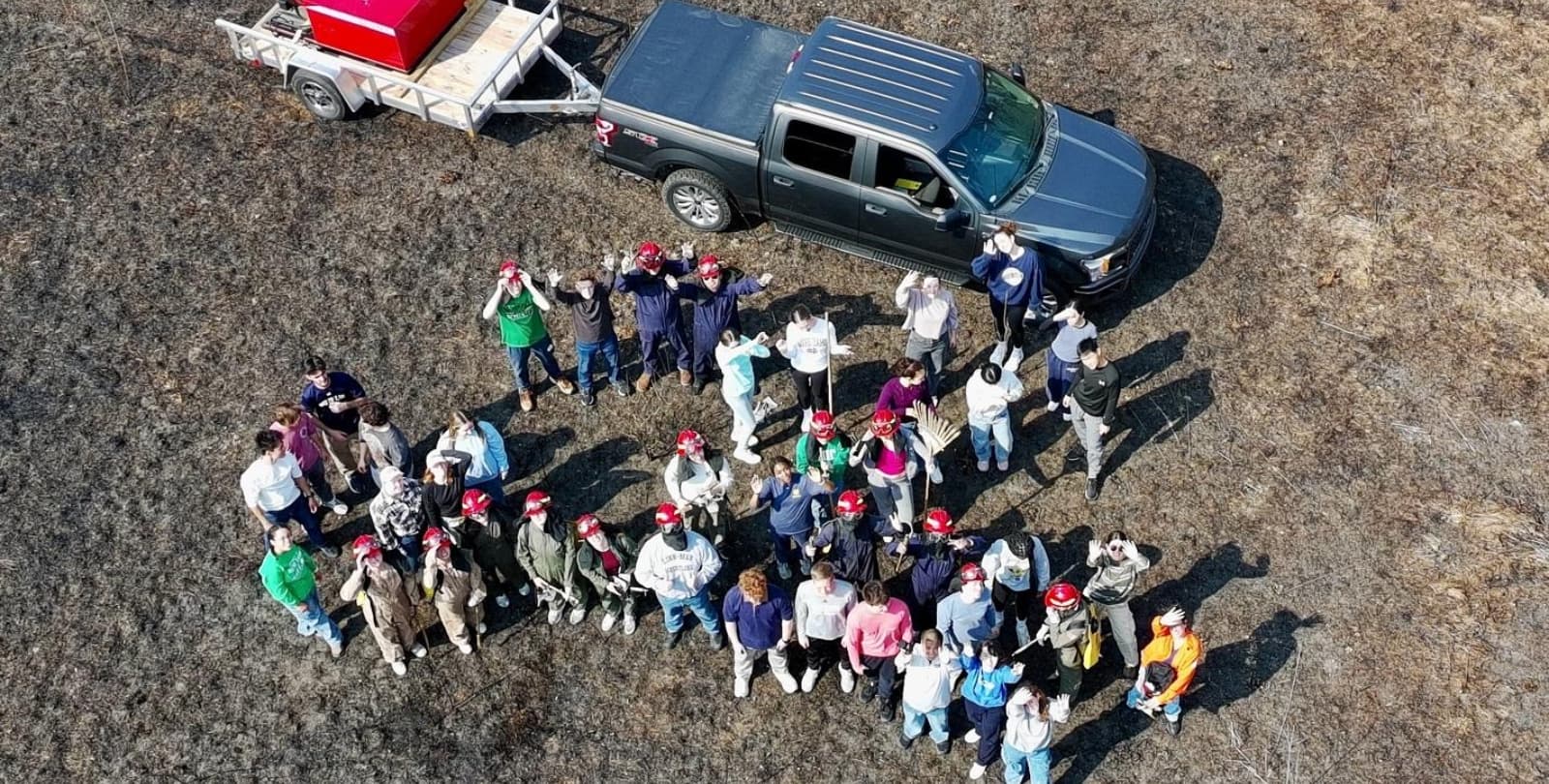
Photo provided by the author.
If you look at the science about what is happening on Earth and aren’t pessimistic, you don’t understand the data. But if you meet the people working to restore this Earth and the lives of the poor and you aren’t optimistic, you haven’t got a pulse.
One morning last month, I rose to an eerily hazy sky.
In mid-July, much of the Midwest U.S. awoke to the acrid smell of smoke. We ventured outside, trying to make sense of why the Sun—though high in the sky—gleamed a dim red.
The fires that rolled through central Canada’s forests and brought this smoke into our skies made one thing clear: Our backyards are not disconnected from global ecological change.
Thankfully, the story does not end here.
It might sound odd, but as an ecologist and Christian, it is clear to me that we live in a time of tremendous opportunity. Grappling with climate change offers a chance for us to acknowledge and lament the loss—and then pursue restoration.
Amidst climate change, faith communities can reflect true hope to our world.
The Longer View
Beyond Your Backyard
I have called northern Indiana home for the last 19 years. In that time, I have seen the mark of climate change, including increased fire-induced air quality warnings. However, changes began long before I moved here.
The average temperature in northern Indiana has increased by 2°F in the last four decades. As a result, the growing season is almost two weeks longer, we receive more precipitation in the winter (particularly in the form of rain, not snow), and we experience hotter, drier summers. These changes have had cascading impacts on insects, agriculture, and urban flooding.
This year’s Canadian wildfires may feel like sudden, shocking occurrences. But in reality, they reflect a myriad of changes that have taken place over larger scales and longer histories.
When it comes to climate change, there is always a longer view.
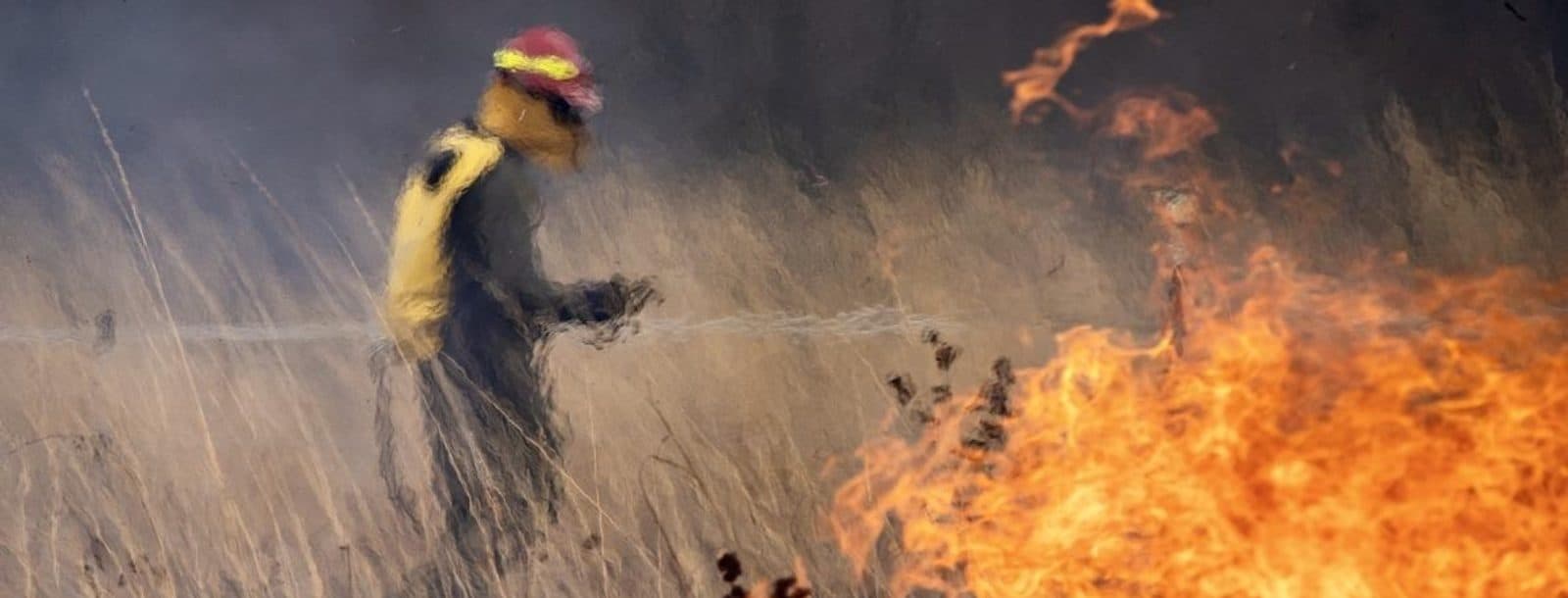
A student in protective gear sprays water onto fire in a prescribed burn at Little Bluestem Farm prairie. Photo: Angie Hubert.
Sharing the Responsibility
Warmer temperatures that increase the probability of catastrophic fires are due in part to thousands of communities near and far, past and present, changing their local habitats. In this sense, the toxic air we breathe is our shared human story—one in which we are all actors.
In the 1830s, the nation’s wetlands, tallgrass prairies, and forests stored between 20-40% of the carbon that now resides in the atmosphere. The thousands of communities—our communities—that drained wetlands, cut forests, and plowed the prairies each contributed to the climate change we experience today.
At the individual level, none of us caused this problem. Yet at the community level, we all had a hand in it.
What Does Deeper Hope Look Like?
Climate change is both an ecological and spiritual problem. Though each of our communities has contributed to the unfolding human climate change story, Christians today have an opportunity to acknowledge our part in creating these challenges and confess the suffering they cause. Through this, we have the opportunity to embody hope and care.
While I’ve observed profound pain and loss in the ecological communities around me, I’ve also seen unmistakable signs of hope. And not just hope in a technical solution to “solve” climate change. Hope in a deeper way—the kind that asks us to allow our very nature and the responsibility of being human to be renewed.
Climate change is a story of our relationships with one another and creation. It is therefore an opportunity for us to heal ourselves as we mend the broken communities and ecosystems we live in. We do this when we engage with nature and one another with more restraint, love, curiosity, and patience.
Hope in Restoring Tallgrass Prairies

Hoary vervain. Photo provided by author.
Historically, tallgrass prairies made up 15% of northern Indiana habitats. Today, 99% of these prairies have been lost.
As a restoration ecologist, I spend a portion of my days working with students and local residents to resurrect a portion of the splendor that was the tallgrass prairies. We are trying to better understand how prairies could help rewrite a new chapter in the climate story by moving carbon from the atmosphere back to the soil.
I have partnered with stakeholders and students from local universities to research historical prairie locations, design management plans, procure seeds, and ultimately plant those seeds.
We watch, wait, subdue invasive species, and revive the lost practice of prescribed burning. We measure root growth, quantify the soil carbon, assess plant composition, and isolate DNA to unveil which soil microbes are helping store carbon.
Hope in Community
But data alone does not yield the type of active hope that changes us. If we are open to it, restoration changes us as much as it changes the plants and pollinators.
I experienced this when my family and students began a relationship with a 20-acre parcel of land which had been used to grow corn and soybeans for almost a century.
We collected soil samples to understand which native plants used to grow there. Once deciphered, the ornate cursive handwriting in copies of the original 1830 public land surveys revealed that prairies, wetlands, and oak savannas used to fill the land.
Becoming Communities of Creation
Becoming Communities of Creation is a one-stop guide for ministry and lay leaders looking to bring their community together in the act of caring for creation.
Hope in the Waiting
Then we took the risk of joining nature in recreating something previously lost. We spent thousands of dollars on seeds and tree seedlings, even forfeiting some grants and vacation funds to do so.
The first year yielded a monocrop of crabgrass—not a native plant in sight. We responded with mowing and nervous waiting.
In the second year, more weeds arrived. I swallowed daily doubts and returned to my tractor to mow the weeds.
Finally, in the third year, numerous native species emerged and the system began to resemble a tallgrass prairie once again. Nine years later, the burr oaks are now 20 feet tall with little bluestem and false sunflower nestled under their canopies.
The process forced us to remake our relationship with nature and one another—to take notice of the small changes with curiosity, to balance action with restraint, and to work long hours for the benefit of something yet unseen.
Since then, I have worked on similar projects in the places I teach, the church I attend, a local investment firm, and even friends’ backyards. In all of these restoration stories, the people change as much as the habitats—a recipe for hope that we all seem to crave.
How Can Restoration Balance Lament and Hope?
Expanding Our Neighborhood
The work of restoration ecology breeds a curiosity-infused humility as we slowly begin to see our social and ecological communities as chapters nested in a much longer and wider history.
Restoration is a process. It reveals how much we have lost, but it also inspires us to dream of a different future.
The emergence of deeper hope seems to require both lament and a new vision, held in constant tension. It requires us to recognize our neighbors—whom we are called to love—as including communities that live afar and those yet unborn.
Building Our Community
Restoration is an inherently relational, communal process.
My community’s prairie requires consistent effort and attention. It is sometimes hot and uncomfortable work: removing invasive Callery pear seedlings brought in by visiting birds, timing a burn to maintain plant diversity, and using grazing to promote deeper roots.
But as in many relationships, the rewards are plentiful too. This communal work strengthens our social fabric. For example, we have an annual burn party at our farm and friends come to reconnect with each other and the prairie.
For my community, the process of planting a prairie to return carbon to the soil is a faith statement. It is a belief in the long-term—the ultimate “pay-it-forward.” Restoration is a bold commitment to be part of the longer human story.
Hundreds of students and community members have been part of our research, and a few even got married in front of the swaying little bluestem grass. In this sense, the restoration of habitats to address climate change has reconnected us to the land and to one another.
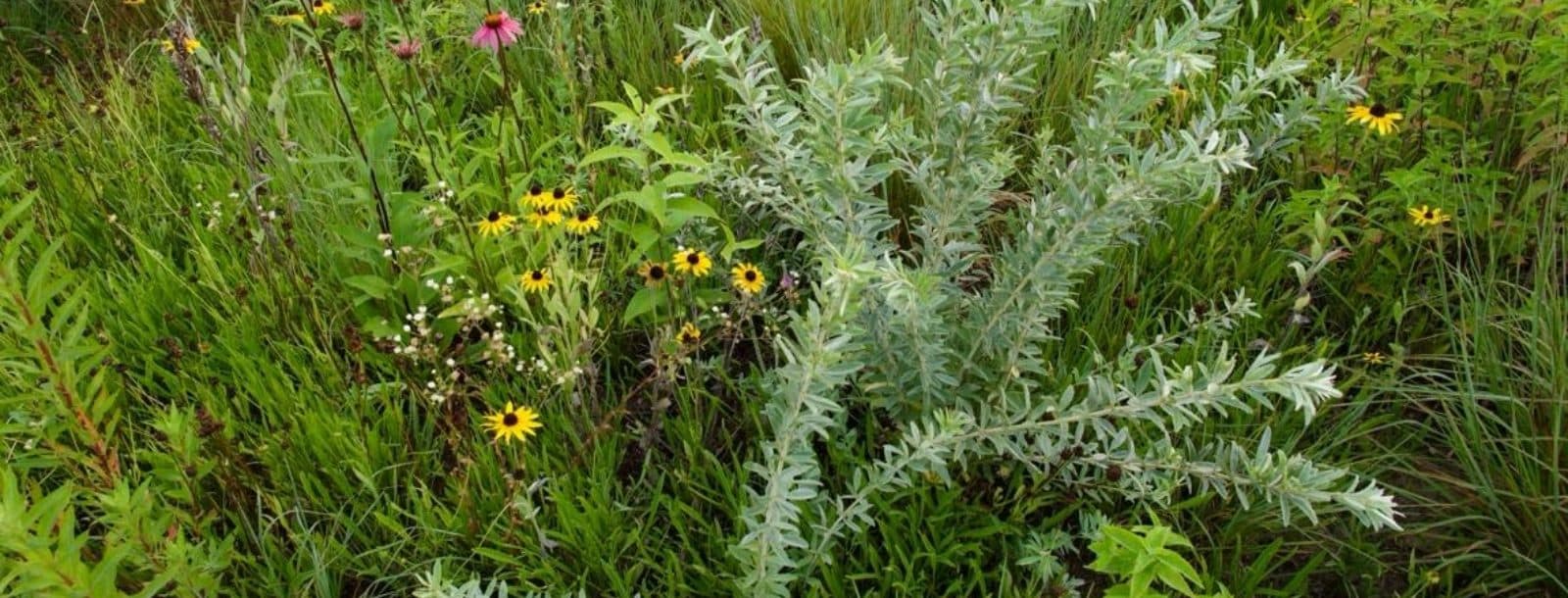
Round-headed bush clover, prairie grass, and forbs grow in a restored field at Little Bluestem Farm. Photo provided by the author.
And it’s not just us here in Indiana. Communities all over the country are tasting the joy of responding to the climate crisis with small acts of restoration and healing. The Homegrown National Park movement—in which largely suburban landowners plant native plants to aid pollinators—now includes more than 50,000 participants who tend 180,000 acres of native plantings.
All of us can participate in renewed relationships with our creaturely neighbors and social communities. One hope-filled story can inspire another, and that story can inspire yet another.
Planting Hope Within Our Communities
Just as none of us individually “caused” climate change, none of us can individually reverse it. And herein lies the opportunity.
Our society craves a way to embody hope. We all need opportunities to belong and grow our joy by participating in something bigger, in a story that extends beyond our individual stories.
By accepting the transformational challenge of restoring what has been lost in nature, we also work toward our own renewal. With deeper hope guiding us, we flourish not because we put our hope in technical solutions, but because we embrace our role in God’s restorative work. By showing loving restraint, tending another’s roots, and looking hundreds of years into the future, we are renewed.
Each of us can work toward renewal by taking small, practical actions to care for creation. That could mean having a conversation with someone in your life about your love of God’s creation. It might look like starting a green team in your church. Or, if you’re like me, it could be bringing your community together to get your hands in the dirt.
No matter what action you take, all of our small stories can weave together to grow a new chapter in the hope-filled book of changed human-nature relationships. Perhaps this is exactly why God created us as part of ecological systems.
About the author

Ryan Sensenig
Related resources
If you enjoyed this article, we recommend you check out the following resources:
Language of God

Downloads

Language of God

Downloads