Learning to See: A Little Stream and the Patient Work of God
How a tiny, overlooked stream helped our Grandville, Michigan, church connect with and care for creation—and, in the process, to grow closer to God.
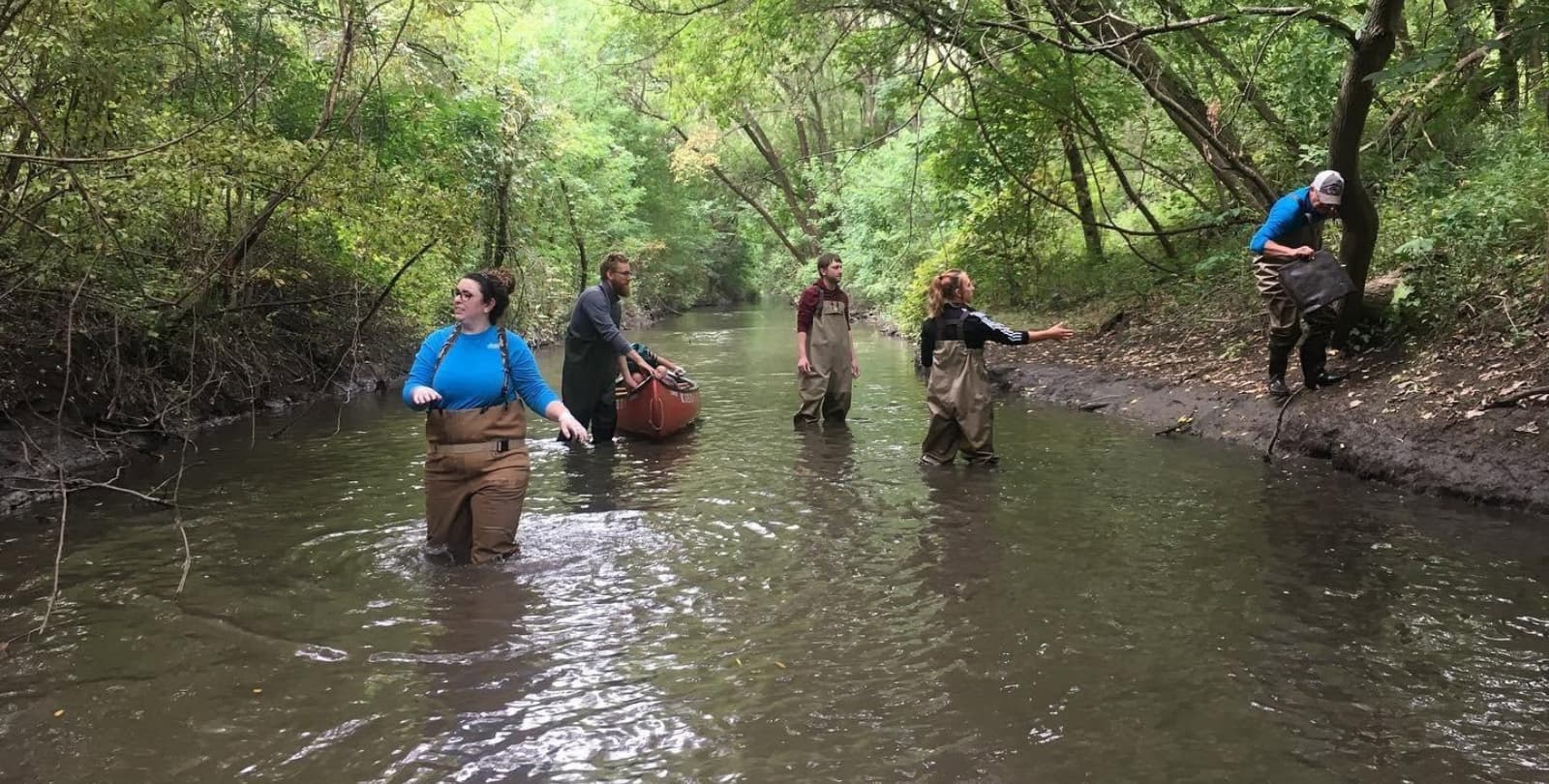
Photo provided by the author.
On my first visit to The Refuge Church, in Grandville, Michigan, I drove over the little stream without ever seeing it.
It crosses quietly beneath the entrance road, hidden from view. There are no waterfalls or sweeping vistas that invite you to stop and take a picture. It simply trickles through the property as it has for years.
That day, I had journeyed to Grandville to learn about The Refuge and discern whether we might be a good fit for one another.
But I did not yet realize that beneath the road I had just crossed, another community—one small, hidden, and entirely dependent upon the goodness of God—had been quietly living its life all along.
Noticing What Had Always Been There
Months later, I found myself standing beside that same stream with my predecessor, Pastor Gerry Koning.
He invited me to slow down, kneel beside the water, and pay careful attention. Only then did I begin to discover the abundance of life the stream carried. What had seemed to be little more than a drainage ditch—one that I had driven over without a second thought—became something entirely different.
The stream was alive. Tiny aquatic insects clung to the rocks and foliage. Freshwater mussels rested quietly in the sandy bottom. Everywhere I looked, there were signs of a flourishing community.
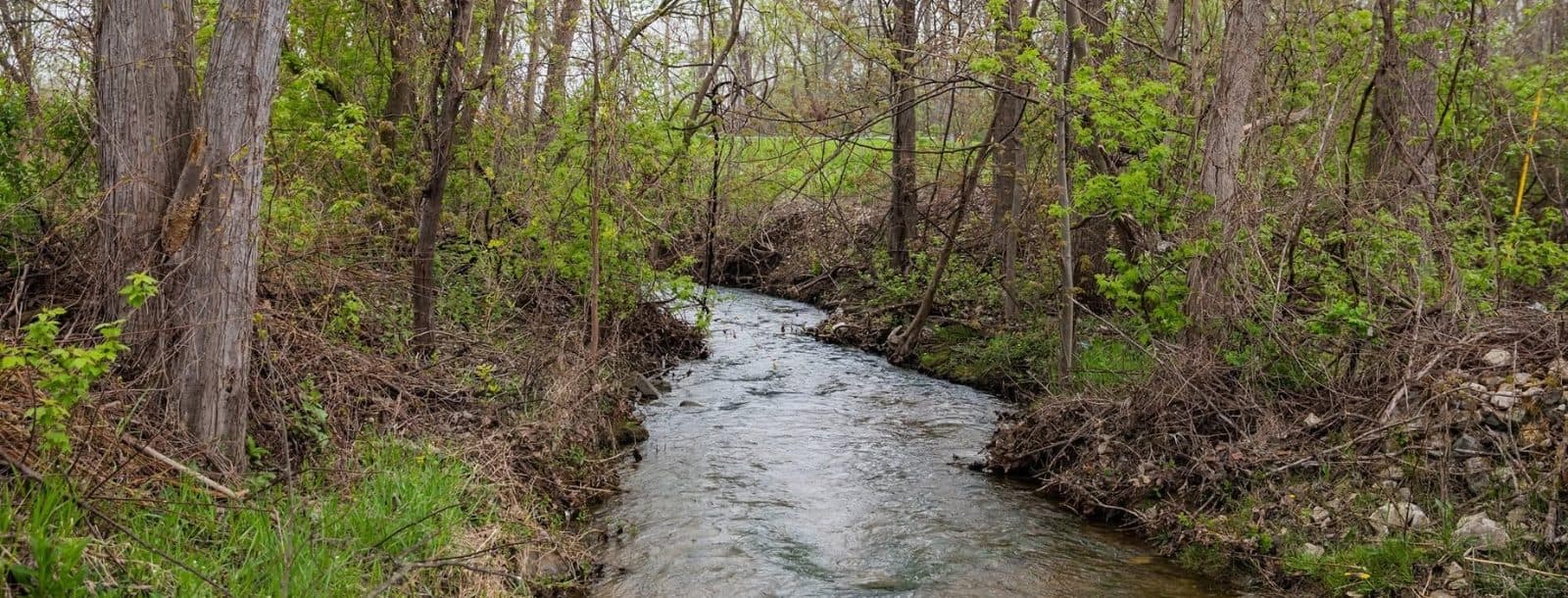
The little stream near The Refuge. Photo provided by the author.
Pastor Gerry had been teaching the congregation to notice this hidden world for years. His lessons left an indelible mark on the life of the congregation—one that runs so deep that even now, when children gather along the streambank and stretch out a hand to grasp a mussel, the church’s oldest members gently remind them, “Let’s leave them where they belong.”
There is something beautiful in that moment. The awe of children meets the wonder of octogenarians beside the same shallow water. One generation bends close to discover what is there; another has learned that loving God’s creatures sometimes means leaving them right where God placed them.
Before Caring for Creation, We Learned to See It
Once you begin to recognize creation as a community of lives sustained by the goodness of God, caring for it feels less like an obligation and more a natural expression of gratitude and love.
That is what happened at The Refuge. As Pastor Gerry taught the congregation to notice what had always been there, the church started seeing the entire campus in a new light.
Viewing Our Church With Fresh Eyes
The stream became a place where the congregation learned to see everything else differently.
We replaced ornamental landscaping with native plants. We restored the habitat around the church. More than two hundred panels now form a small solar farm on the church’s flat roof, allowing us to generate our own electricity while returning excess power to the surrounding grid.
Even our fellowship meals changed. Disposable plates, cups, and silverware gave way to dishes and flatware that could be washed and used again.
Decisions that may once have been guided by convenience or appearance are now shaped by a faithful question: how do we care well for what God has entrusted to us?
None of these changes happened because someone handed the congregation a new environmental agenda.
Rather, it began with someone kneeling beside a stream. It was sparked by a pastor who believed that paying attention was itself a spiritual discipline. It started because we learned to truly see.
Becoming Communities of Creation
Becoming Communities of Creation is a one-stop guide for ministry and lay leaders looking to bring their community together in the act of caring for creation.
Learning to See As Jesus Did
Before anyone at The Refuge spoke about stewardship, sustainability, or conservation, they learned to slow down long enough to notice the quiet abundance of God’s world.
Perhaps that is not accidental.
Scripture repeatedly portrays creation as declaring the glory of God. Yet declarations can be missed by people who never stop long enough to listen.
We hurry past burning bushes, overlook lilies of the field, and drive over streams without ever imagining the lives they sustain. The world is not silent—it still speaks of its Creator. We have simply become too distracted to notice it.
That could be why Jesus so often taught outdoors.
He pointed to seeds scattered across a field (Matthew 13:1-23), birds gathering food without anxious striving (Matthew 6:26), lilies clothed in beauty beyond Solomon’s splendor (Luke 12:27-28), fig trees putting forth leaves (Matthew 24:32-35), vineyards heavy with fruit (Matthew 21:33-46), and fishermen casting their nets into the sea (John 21:6, Luke 5:4).
Creation was never merely a backdrop for his teaching. For those who had eyes to see, it was a living testimony to the Father’s character.
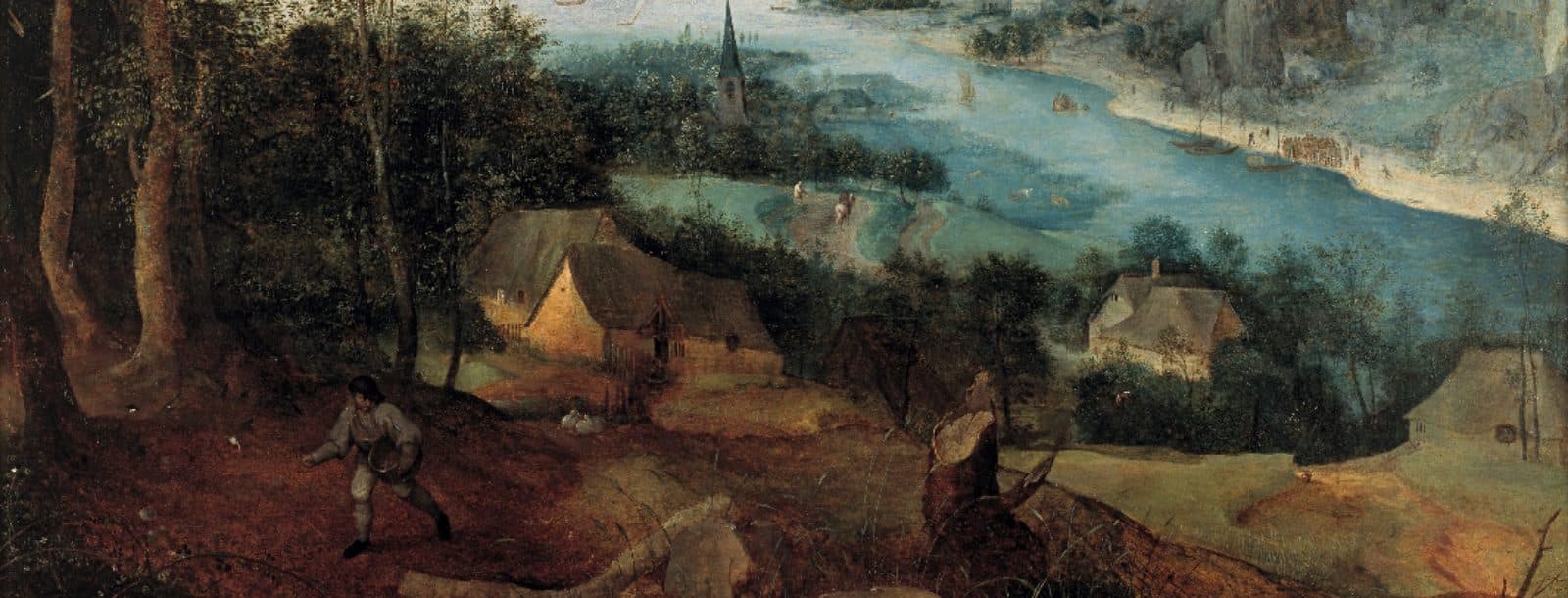
Pieter Bruegel the Elder, Parable of the Sower, 1557. Pieter Brueghel the Elder, Public domain, via Wikimedia Commons
Connecting With Creation Helps Us Know and Love God
The more I reflect on that little stream, the more convinced I become that creation has always been one of God’s patient teachers.
Not because it replaces Scripture, but because it continually echoes the God whom Scripture reveals. It slows us down. It awakens wonder. It reminds us that we inhabit a world we did not make, sustained by a Creator whose generosity reaches far beyond ourselves.
In our hurried age, learning to see again may be one of the most important acts of discipleship.
Today, I never pass over that little stream without slowing down. As I cross one of the three bridges that lead me to the other side, I purposefully pause, even if just for a moment or two. I look again at the water God used to open my eyes.
I know what lies beneath the surface now. I know there are tiny creatures holding fast to stones, freshwater mussels laying quietly in the sand, and an entire community of life that continues whether anyone notices it or not.
Loving Creation Means Learning to See
If the stream has taught me anything, it is that paying attention is one of the ways love expresses itself.
We tend to notice what we cherish. Perhaps that is why Scripture so often portrays God as the One who sees.
He sees Hagar in the wilderness (Genesis 21:8-21). He hears Israel’s cries in Egypt (Exodus 2:23-3:22). Jesus notices sparrows, lilies, and overlooked people standing at the edge of the crowd.
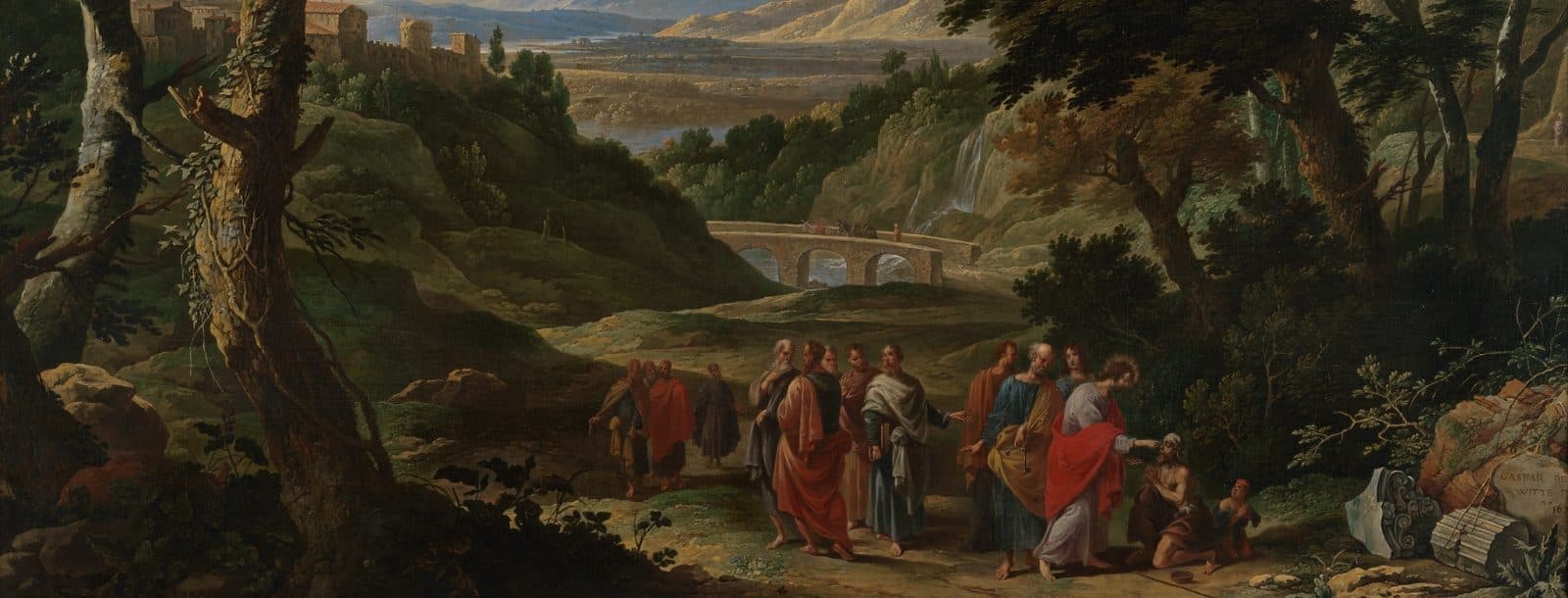
Christ stopped so that he could heal Bartimaeus, a blind man. This is just one example of many in which Jesus notices overlooked people and things. Gaspar de Witte, Public domain, via Wikimedia Commons
Long before we learn to notice God’s world, we discover that God has already noticed us. Perhaps that is one of creation’s greatest gifts. It reminds us that God has always been at work in the places we overlook.
The world is filled with quiet witnesses to the goodness, beauty, and generosity of its Creator. We do not bring them meaning by paying attention to them. We simply discover the meaning God has already placed there.
For me, that little stream will always be more than a stream. It is where I first began to understand that caring for creation does not begin with saving the planet, but rather with learning to see the One whose glory creation has been proclaiming all along.
About the author

Derek Noorman
Related resources
If you enjoyed this article, we recommend you check out the following resources:

Language of God