What Studying Microscopic Marine Life Taught Me About God
Studying foraminifera reveals a Creator who is attentive, faithful across vast stretches of time, and accomplishes great things through small forms.
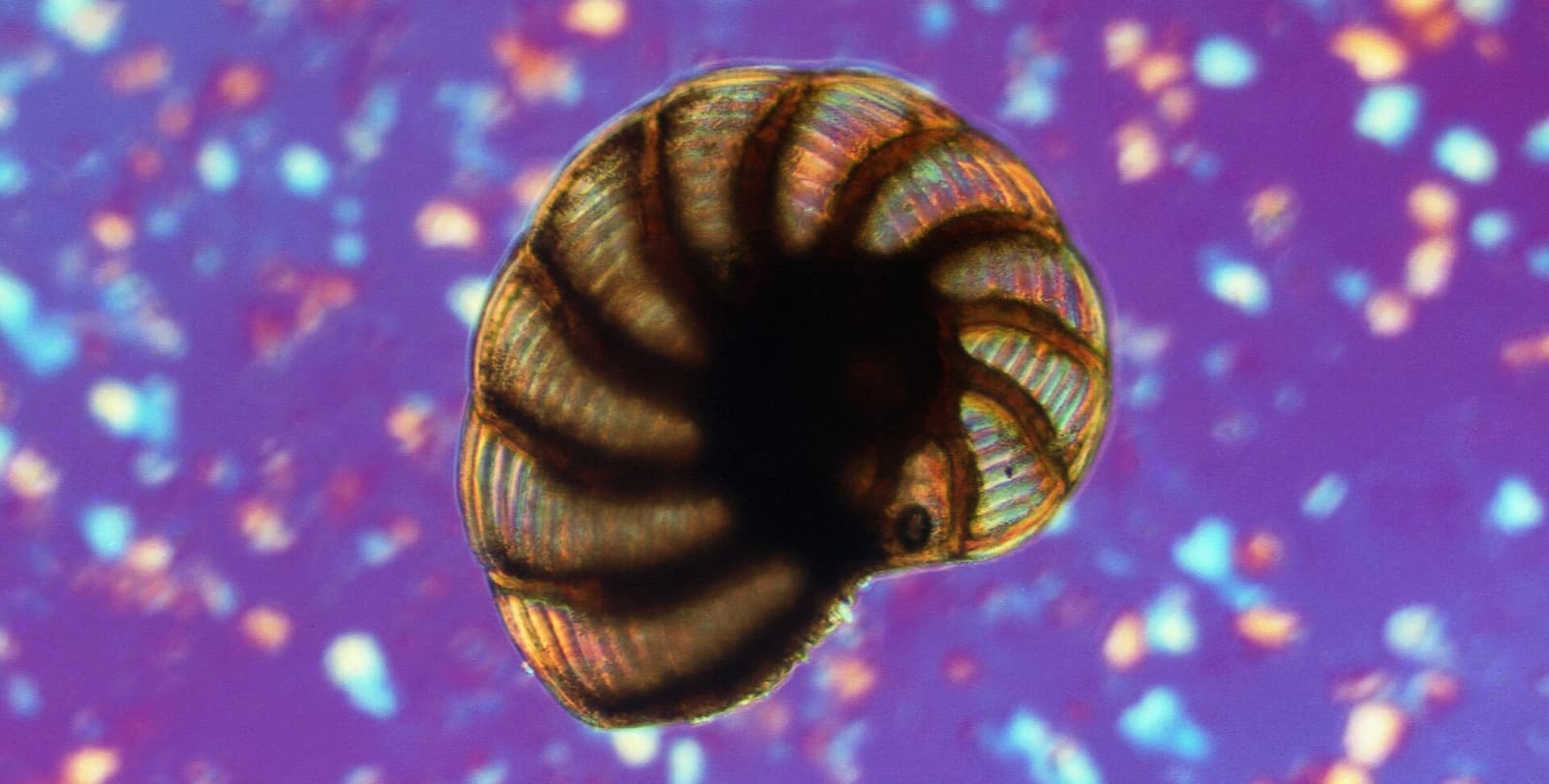
Doc. RNDr. Josef Reischig, CSc., CC BY-SA 3.0 <https://creativecommons.org/licenses/by-sa/3.0>, via Wikimedia Commons
When you think about God’s creation, what do you see?
Often, we picture the obvious wonders of the natural world: towering mountains, painted sunsets, vast oceans, or galaxies stretching beyond imagination. These marvels inspire awe because, in their obvious magnificence, they point us toward the creativity and power of their Creator.
Yet some of creation’s most remarkable stories are hidden from view. As a recent marine biology graduate studying largely microscopic organisms, I’ve learned that small organisms can reveal big things about God. Here’s how:
What Are Foraminifera?
Foraminifera, or forams, are single-celled marine organisms that build intricate calcium-carbonate shells, called tests, around themselves.
Most are no larger than a grain of sand. Though nearly invisible to the naked eye, forams play important roles in marine ecosystems.
They are also some of the most valuable tools scientists have to reconstruct Earth’s climate history. Since they utilize oxygen in the creation of their tests, scientists can study fossilized forams to model ancient ocean temperatures millions of years in the past.
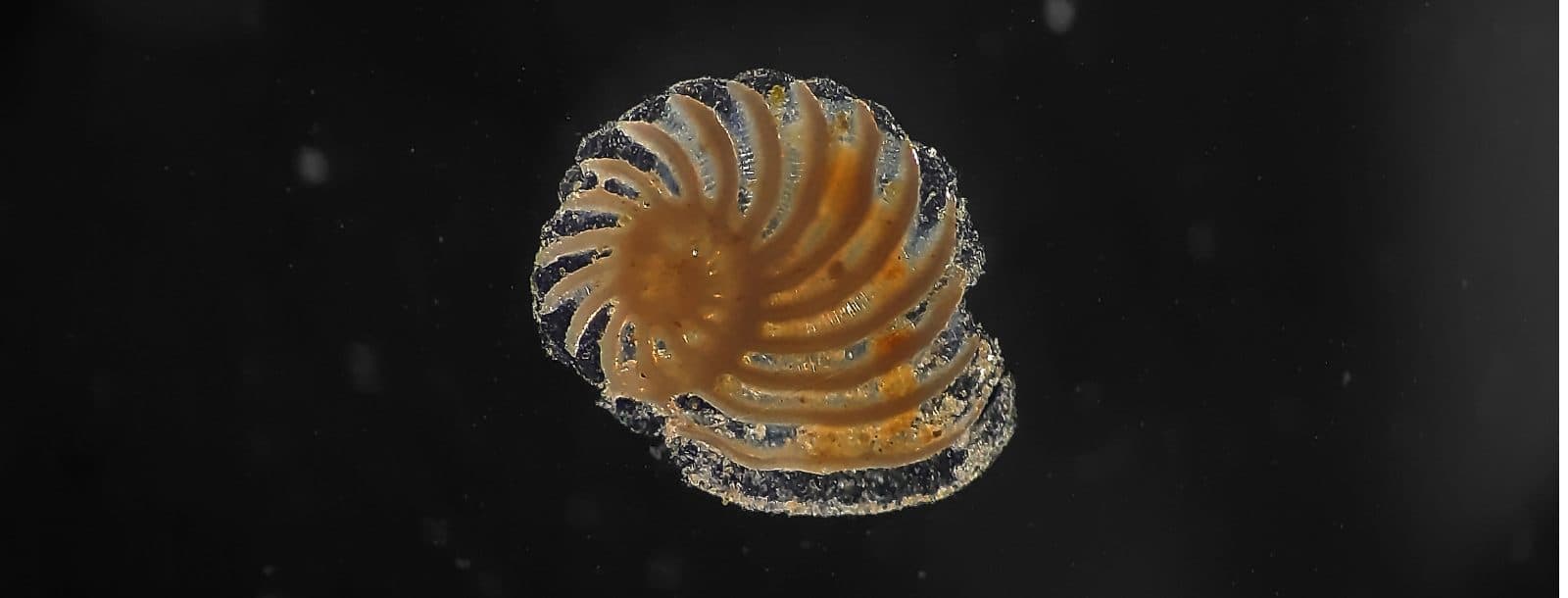
Image of a foraminifera shell taken by a stereomicroscope. Havboka, CC BY 4.0 <https://creativecommons.org/licenses/by/4.0>, via Wikimedia Commons
Different species of forams thrive under varying environmental conditions. Some prefer colder waters, while others flourish in warmer oceans. Factors like temperature, salinity, light availability, and pH all determine which species of forams are found in a given location.
As they die, their calcium-carbonate tests sink to the sea floor, where they are buried by sediment and more organic matter.
At first glance, these microscopic organisms may not seem significant. But the more I studied them, the more I realized they reveal profound things about God’s character.
Alongside climate history, they tell the story of a Creator who works with extraordinary attention to detail, whose faithfulness extends across vast stretches of time, and who often accomplishes great things through what at first appears small and inconsequential.
Three Things Studying Foraminifera Has Taught Me About God
A God of Remarkable Detail
Scripture frequently points us toward creation as a witness to God’s wisdom and care. In Psalm 19, the psalmist tells us how “the heavens declare the glory of God; the skies proclaim the work of his hands” (Psalm 19:1).
But scientific research often reveals another layer of complexity hidden beneath the surface. Foraminifera are one example of this.
Despite their microscopic size, they play important roles in marine ecosystems. They participate in food webs, contribute to ocean chemistry, and help store carbon in marine sediments. Some species form symbiotic relationships with other organisms. Others occupy ecological niches so specialized that their presence can reveal subtle environmental changes.

Seven Wonders of the Microcosmos
From dancing molecules to zooming microbes, all of creation declares the glory of God, even the more weird than wonderful.
Most people will never notice them, yet God carefully created them for a purpose. How much, then, does he care for us!
Psalm 139 describes a deeply personal God: One who knows when we sit and we rise, who understands our thoughts from afar, and who knows every word before it leaves our mouths. He formed our innermost being and saw us before we were born. Even before we knew him, he knew us completely.
Nothing in creation is accidental. Studying foraminifera reminded me that God’s attention to detail extends far beyond what we can see.
The God of the Prehistoric
One of the most remarkable things about foraminifera is their ability to preserve evidence of worlds that no longer exist.
After death, foraminifera tests sink to the seafloor and become buried beneath layer after layer of sediment.
But their stories—and their contributions—don’t end there. Over thousands of years, these layers preserve snapshots of ancient environments.
Scientists can remove slices of the seafloor, preserving meters of ancient layers full of microfossils. By closely examining which foraminifera species are present and in what abundances, we can get a better picture of what the climate was like when they were alive.
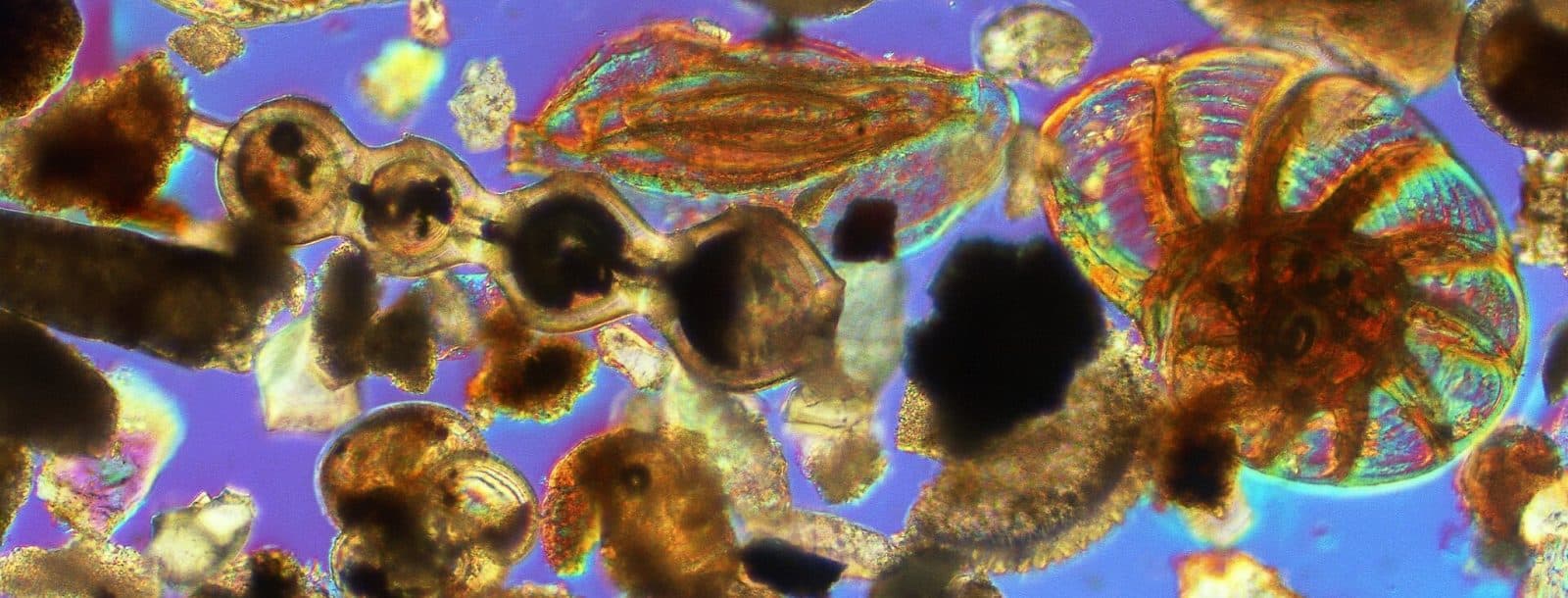
A collection of foraminifera. Doc. RNDr. Josef Reischig, CSc., CC BY-SA 3.0 <https://creativecommons.org/licenses/by-sa/3.0>, via Wikimedia Commons
The world has always been changing, and the environments preserved in the fossil record often look very different from the world we know today. Continents have drifted. Climates have shifted. Species have appeared and disappeared.
Yet throughout all of those changes, God has remained the same.
Scripture repeatedly describes God as steadfast and unchanging. The prophet Malachi records God as saying, “I the Lord do not change” (Malachi 3:6). James describes him as the Father “who does not change like shifting shadows” (James 1:17).
While creation itself is dynamic and constantly developing, its Creator remains faithful.
Studying Earth’s history can expand our appreciation for what that faithfulness means. The God we worship today is not merely the God of our generation. He is the God of every generation. He was present during every environmental transition recorded in the rocks and sediments of our planet. Long before humans walked the Earth, creation existed under his care and authority.
The same Creator who sustained ancient oceans and the tiny organisms living within them millions of years ago is the same Creator who sustains us today.
Small Things, Great Impact
Despite their microscopic size, foraminifera have an extraordinary cumulative impact on the world around them.
An individual foram may seem insignificant, but countless shells accumulating over time contribute to marine sediments, influence ocean chemistry, and even help form entire beaches. In fact, Bermuda’s famous pink sand beaches and the star-shaped sands of Okinawa owe part of their existence to the remains of tiny organisms like these.
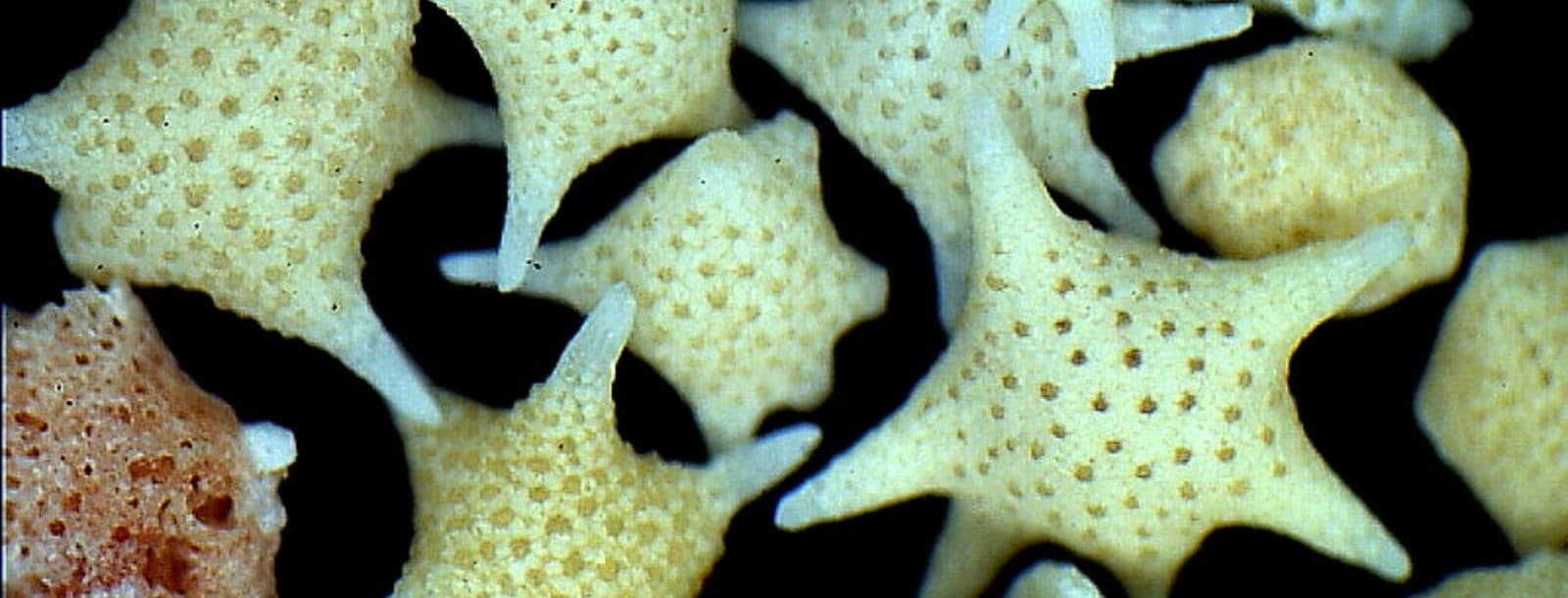
Magnified star sand found in Okinawa. labormikro from Deutschland, CC BY-SA 2.0 <https://creativecommons.org/licenses/by-sa/2.0>, via Wikimedia Commons
In the case of foraminifera, what appears small and inconsequential in isolation becomes significant through persistence and accumulation.
I see a similar pattern in faith.
It can be easy to assume that spiritual growth is defined by dramatic moments: a powerful conversion experience, a life-changing revelation, or a season of extraordinary transformation.
Of course, God certainly works through those kinds of moments. Throughout Scripture, we see examples of sudden encounters that altered the course of people’s lives.
Yet, much of the Christian life is built through quieter acts of faithfulness.
Faith is often formed through humble decisions repeated over time: prayers in uncertainty, moments spent in Scripture, conversations with fellow believers, acts of service, and daily choices to trust God when the future is unclear.
These moments may seem small individually. But collectively, they shape who we become. Perhaps that is one reason why Jesus so often taught using images of seeds, yeast, and other seemingly small things.
The Kingdom of God frequently grows in ways that are gradual rather than eye-catching. What appears insignificant today may, in time, reveal itself to be part of something much larger.
Foraminifera remind us that significance is not always measured by size or visibility. Sometimes the most meaningful transformations occur slowly, through the steady accumulation of small acts. Faith often works the same way.
Seeing the Unseen
One of the great gifts of science is that it teaches us to notice what we might otherwise overlook.
The oceans have always appeared vast and beautiful from the surface. But for me, studying foraminifera has revealed a deeper story hidden beneath the waves.
Though nearly invisible, they preserve Earth’s history, shape marine environments, and leave traces that endure long after their lives have ended. In their own way, they bear witness to a Creator whose wisdom extends from the largest galaxies to the smallest shells.
We live in a world that often measures value by visibility, influence, or scale. But the God revealed in Scripture consistently works through things that appear small, whether a shepherd boy (1 Samuel 17), a manger in Bethlehem (Luke 2:11-12), a mustard seed (Matthew 13:31-32), or a group of ordinary disciples (Acts 4:13). Again and again, God demonstrates that significance is not determined by size.
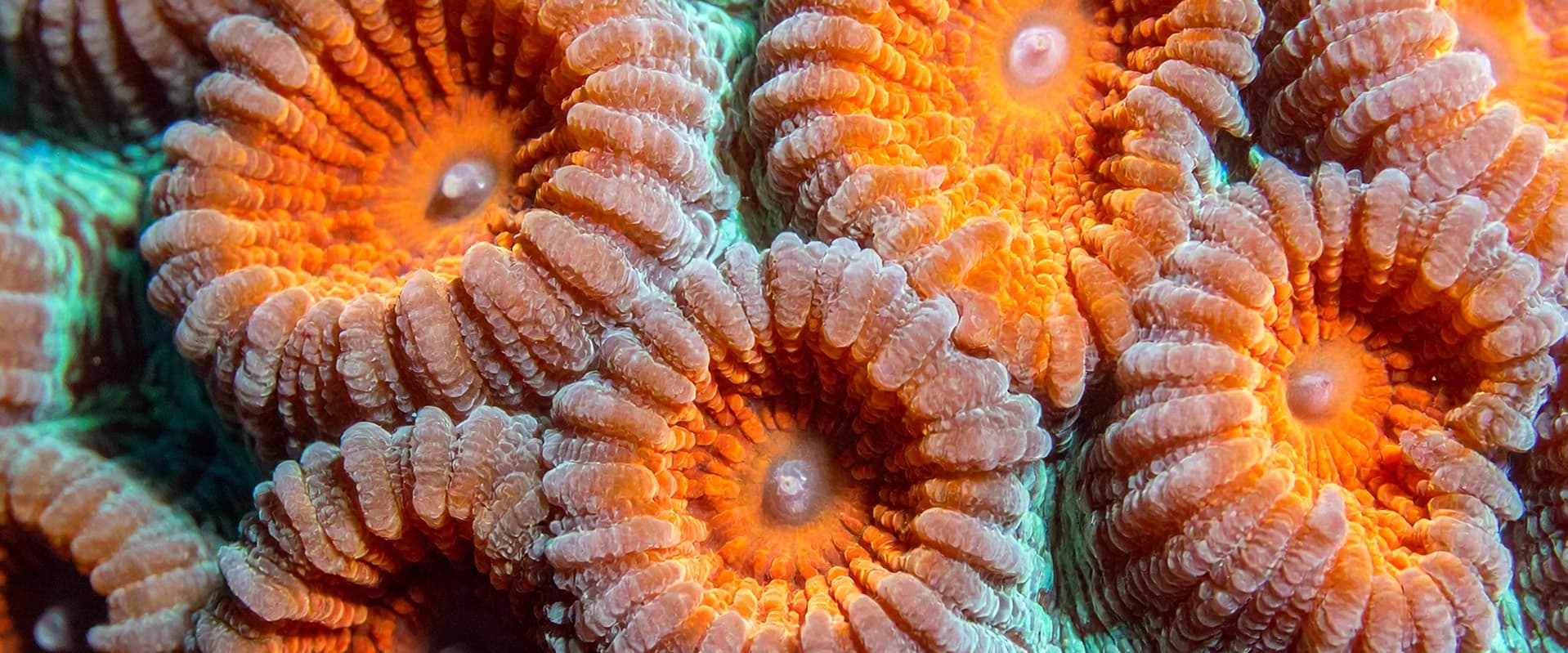
Cool Creatures | Coral
Coral may look like rock from a distance. Up close, it becomes something much harder to categorize—and much harder to forget.
The next time you stand beside the ocean, take a moment to consider what lies beneath your feet. Mixed among the grains of sand may be the remains of organisms that lived centuries or even millennia ago. Hidden from view, they helped shape the shoreline long before you arrived.
I find hope in this image.
The same God who has faithfully sustained creation through changing climates, shifting oceans, and the passing of ages is still at work today. We may not always see what he is doing. We may not understand the full scope of his plans. But just as the ocean holds stories far deeper than what we see from the shore, God’s work in the world often extends beyond the limits of our perspective.
And that is good news. The God of the prehistoric is also the God of the present—the One who remains faithful, attentive, and at work in creation still.
About the author

Rachel Mutti
Related resources
If you enjoyed this article, we recommend you check out the following resources:


Language of God
Cool Creatures | Coral

Language of God