Cool Creatures | Coral
Coral may look like rock from a distance. Up close, it becomes something much harder to categorize—and much harder to forget.
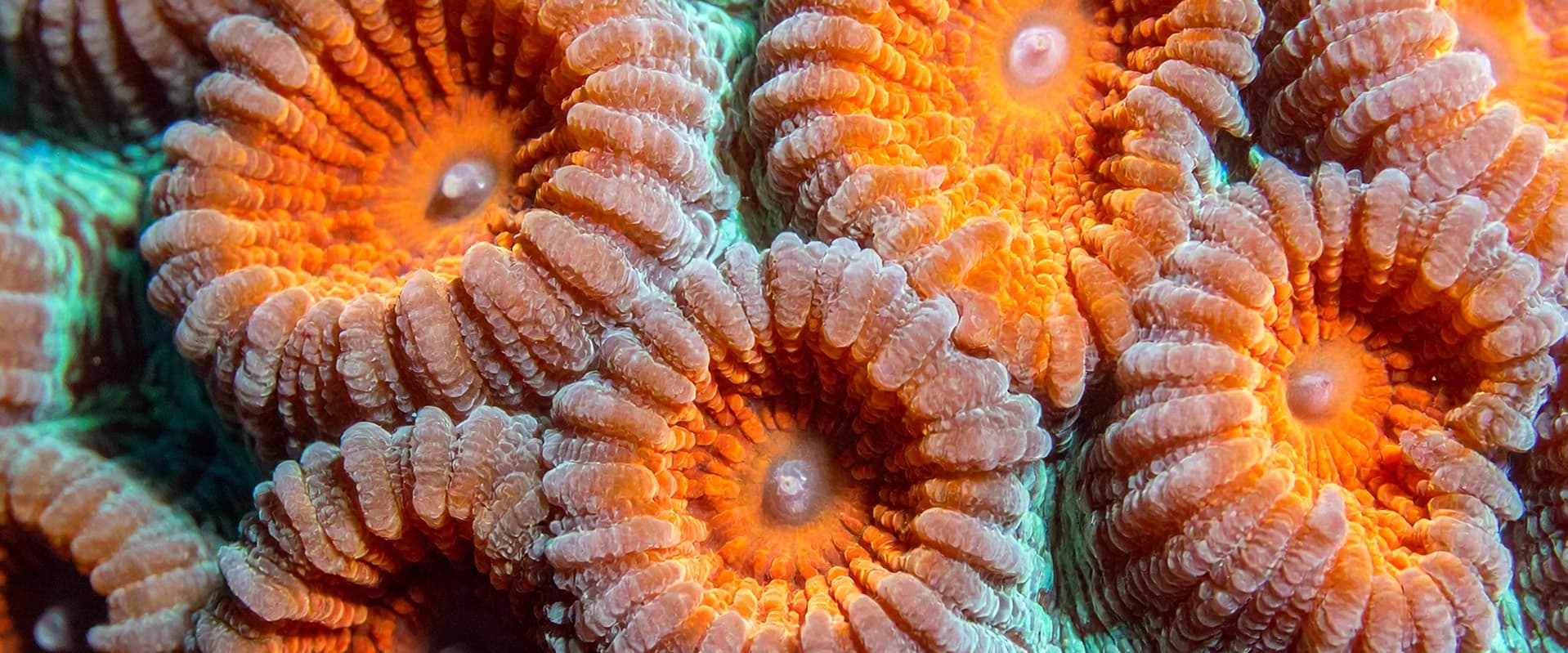
Image used under license from Shutterstock.com
Description
Coral reefs are easy to mistake for rock or plant life. But corals are animals—colonies of tiny polyps living in partnership with algae, building vast reef structures over generations. They are complicated creatures and they stretch our normal categories for living things.
In this episode, we try to really get a grasp on this creature, with the help of coral biologists, writers, filmmakers and those who have been working to care for corals as they face many challenges. These experts see coral not just as an individual creature, but as a community—one built through symbiosis, cooperation, grief, and hope.
Along the way, the episode wrestles with climate change, extinction, restoration, and the spiritual weight of loving something vulnerable enough to disappear within a lifetime.
Coral may look like rock from a distance. Up close, it becomes something much harder to categorize—and much harder to forget.
- Originally aired on June 04, 2026
- WithColin Hoogerwerf
Transcript
Jones:
The feeding is in five minutes…
Hoogerwerf:
Welcome to Language of God. I’m Colin Hoogerwerf.
Jones:
All right, let’s do it. Follow me.
Hoogerwerf:
We’re starting our story in Miami, at the Frost Museum of Science.
Jones:
And this is like prime time for entry of the kids. [sounds of museum and children’s voices]
Hoogerwerf:
Shannon was my guide of the museum and the aquarium and right away, after meeting in the main hall in the midst of thousands of children from school groups who came to explore the museum that day, we took the elevator up to the top of the museum.
Jones:
Come on in. [museum sounds transition to aquarium tank sounds]
Hoogerwerf:
To go and see the coral.
Jones:
This is the marine conservation wet lab and we have a lot of different things going on in this space. It’s a really good spot for us to care for the corals, but also to enhance our partnerships with different organizations that are doing corals. This is our curator of animal husbandry, Aaron, and he’s a coral guy. He takes care of all the coral.
Hoogerwerf:
‘Aaron’ is Aaron Gavin.
Gavin:
Let’s see if I can get this guy to grab some. [aquarium tank sounds]
Hoogerwerf:
And ‘the coral guy’ is short for the Curator of Animal Husbandry at the aquarium at the Frost Science Museum.
Gavin:
They’re waving around in the water because they like lots of water flow. So you can see some here and there, especially.
Hoogerwerf:
I’ve always been kind of drawn toward things that are hard to define.
Gavin:
It’s kind of hard to explain—on a coral like this, all the polyps are kind of linked together, and they share anatomy.
Hoogerwerf:
I like books and music that don’t fit neatly into genre categories.
Gavin:
So like that, that tentacle is closest to that mouth, so it’s going to bring it to that mouth
Hoogerwerf:
I like to find out that people are not actually the way I had guessed when I first met them.
Gavin:
But all those tentacles are lined right next to a series of mouths.
Hoogerwerf:
And I like creatures that break the simple categories we like to make for them.
Gavin:
People don’t realize that, you know, we tell them that they’re animals, and until they see it eat or do some kind of reaction like this, they don’t really understand what they’re looking at. So it’s really cool to show people this reaction.
Hoogerwerf:
For a long time I have been wanting to see coral up close, to really get a sense of this creature. And here was a whole room of tanks of growing coral.
Gavin:
So up here, what we have going on is a couple generations of sexually recruited corals. They’re all native to our Florida Reef track here.
Hoogerwerf:
The tanks right up front had a series of different ages of coral, with the newest corals on the right, still so small that they were pretty hard to distinguish.
Gavin:
But what you’re looking at here, so you can see, they’re really tiny. These are a year and six months old, and they’re very, very small right now.
Hoogerwerf:
But in the next couple of tanks you could see the ones that had grown into something more recognizable as coral, like miniature purple and blue brains a few inches wide.
Even though they don’t necessarily shout “animal,” these are in fact animals. And even if that fact is not surprising, I don’t know that it’s something most of us have really internalized. I find that I often don’t think of corals as being animals.
Miller:
There’s the old adage, like the kids game you pla—is it animal, vegetable or mineral? And so I think one of the coolest things about corals is, sort of, the answer is all three.
Hoogerwerf:
This is Margaret Miller. She’s a returning guest to the podcast and has been working with corals for many years.
Miller:
I serve with the Chief Science Officer for Secore International.
Hoogerwerf:
Secore is a non-profit conservation organization that works to restore fruitfulness for corals.
Miller:
Reefs are built by the skeletons that corals build, and that’s limestone—that is, corals are made of limestone, in some sense, the skeletons that they build, and that’s what we refer to as coral reef structures. But the live part of the coral, of reef building corals, most corals, is actually a combination of an animal—that’s the main host organism—but that animal houses individual plankton cells, plant cells within their tissue. And so the coral itself is a combination of plant cells in an animal body.
Hoogerwerf:
The basic unit of a coral is a polyp. Up close a polyp looks a little like a tiny sea anemone, which is appropriate since they are close relatives. Both have tentacles arranged around a central mouth, but where anemones are solitary creatures, corals are anything but solitary.
Miller:
Corals are what we call modular organisms. So it’s a fundamentally sort of different body plan or type of animal than ones we’re familiar with, like, you know, mammals and things like that. It relates to the skeleton also, actually, because, you know, we have a finite size. We can grow. Because when a baby human grows, its head gets bigger, it gets taller, its arms get longer, its legs get longer, but it doesn’t grow more heads and more arms and more legs. And that’s the difference with a modular organism.
Hoogerwerf:
When learning about coral I kept trying to find other examples to help me process what is happening with coral. In this case I thought of aspen trees, which can grow as a singular genetic colony, with all the trees connected underground as clones. In this case a single aspen tree is like a polyp and a coral colony is like a forest. But it’s not a perfect analogy because while aspen colonies do function in some ways as a single organism, sharing resources, each tree leans more toward being independent, whereas coral polyps in a colony are much more integrated.
Jordan:
Coral colonies are such incredible metaphors for community, because each of the polyps is an individual coral, but when they’re the same and they’re together, they function as a whole unit, and they take care of each other.
Hoogerwerf:
This is Rachel Jordan.
Jordan:
I’m a marine biologist dedicated to helping people understand science accurately, represent Jesus fully and engage in conversations respectfully.
Hoogerwerf:
Rachel is also the author of If The Ocean Has a Soul which describes her work with coral and reflections on how the ocean and her science relates to her Christian life and practice. And like Rachel said, on e of the things coral is really good at is being a model of community.
Jordan:
They share nutrition. Like, they share their food. They communicate with each other through chemical signaling and even like physical reactions. And so the corals on the edges of that colony will primarily be the ones growing and dumping their energy into that and they will be essentially provided for by the corals further in who are maximizing their ability to catch and create food, things like that. So the community element of how a coral colony functions is really special.
Hoogerwerf:
This kind of coral growth, at the edges of the colony, happens through cloning. Those polyps duplicate themselves, growing outward, which then creates new skeleton and the growth can continue on…well…for at least a very long time…
Miller:
…one of those amazing, yeah, amazing questions that biologists have wondered about a lot, like, are corals really immortal? But for the genetic individuals, certainly we know that they can persist for 1000s of years.
Hoogerwerf:
Coral doesn’t only reproduce through cloning though. They also reproduce sexually, which is important both to share genetic information, but also for corals to find new places to live.
Miller:
Corals engage in what we call mass spawning. So oftentimes, many types of corals spawn—so again, different modes of reproduction for different species—but the majority of reef building coral species are what we call spawners. So they develop those gametes inside the polyps, like they were talking about, but then they’re expelled into the ocean, and fertilization happens externally, out in the open ocean.
Hoogerwerf:
At this point the gametes are floating up at the ocean surface.
Jordan:
Once fertilization occurs, the chemistry of those packets has changed. The lipids are now being absorbed by this little, tiny baby animal and the subsequent creature. What you have is something called a planula. And microscopically, it’s, well, it’s about the size of a period at the end of a sentence, usually. And these are shaped like little tiny tubes, little fleshy tubes. And they sort of swim around. They go back down to the sea floor, and they sniff around for a good place to settle. So this is basically the baby coral picking the home that will become its permanent resting place for its life.
Hoogerwerf:
What’s really incredible is to think about how an organism with no brain and no eyes and no ears is able to coordinate an event like this where all the individual corals have to be synchronized to spawn within minutes or maybe an hour of each other.
Miller:
We know that they use lunar cycles, right? So that’s something that they’re able to do even though they don’t have brains or eyes or neurons in the common sense, but then just synchronizing with their neighbors and making you know—so there’s one thing, knowing what time it is that they have to keep track of, but then knowing and agreeing on the same time with all of their neighbors, that’s kind of two things, when you think about are pretty amazing that corals are even able to do.
Hoogerwerf:
There’s another aspect to corals that pushes this idea of community even further.
Jordan:
So corals live in a special kind of symbiosis, a relationship with an algae called zooxanthellae. It’s typically a mutually beneficial relationship. I oftentimes describe it as a kind of marriage, because the coral provides the zooxanthellae with shelter and a home, and the zooxanthellae provides the coral with food from its ability to photosynthesize and color from its pigment.
Hoogerwerf:
With all of this you can start to see why corals don’t fit easily within the simple categories we like for animals. You have polyps, which are corals, but also cloned colonies of polyps, which are also corals, and then there’s the fact that all of those polyps are actually a partnership between a plant and an animal.
Miller:
What’s an individual organism becomes a really complicated question
[musical break]
Hoogerwerf:
Remember that adage we started with—animal, vegetable, mineral—well we’ve started to see how corals exhibit parts of all of these. But what’s really important is how these pieces work together over time.
Miller:
Corals can’t shed their skeleton there. They remain attached to it as long as they’re alive. But that’s the thing, when corals die, that skeleton is left behind, and that’s what we generally refer to as coral reefs, or reef structure is really those skeletons that are left behind when the historical corals died, and hopefully new corals grow on top of them. That’s the way it’s supposed to work.
Hoogerwerf:
But it’s not quite working like that anymore.
Miller:
Nowadays, there are not as many new live corals that are covering the top of that dead skeleton, and so many coral reefs are actually eroding away, because there are a lot of erosive forces in the ocean when that skeleton isn’t protected and continues to grow with new corals, live corals on top the reef structure is actually lost.
Hoogerwerf:
One of the things that is happening is coral bleaching.
Jordan:
So when a coral gets stressed, when environmental conditions are such that the coral is struggling, it can no longer support its zooxanthellae partner. In fact, we actually see some evidence that in conditions that are stressful for corals, the zooxanthellae can actually become almost parasitic, can start to take advantage of the coral and what it gives. And so the coral will respond to stress, oftentimes by expelling the zooxanthellae from its body. So each little coral polyp will take its zooxanthellae and basically spit it out.
And when this happens because the zooxanthellae has provided the coral with pigment, the color that makes it beautiful. When a coral spits the zooxanthellae out, the coral loses its color, and its body becomes translucent, revealing the white skeleton that it has underneath the tissue. And this process of a coral becoming stressed, expelling the zooxanthellae, and turning translucent, so where you can see the white skeleton that is called coral bleaching.
Hoogerwerf:
Coral bleaching is not a new phenomenon. It has always happened to some extent. But the stress is happening at a much wider scale and more often due to rising temperatures.
Jordan:
And the tricky part with bleaching is that if the stressful conditions go away, the coral can recover. It can start to do better and reacquire its zooxanthellae through horizontal transmission. But if the stressful conditions continue, the coral no longer has the aid of its zooxanthellae partner. It is no longer able to get energy from photosynthesis. It is now entirely relying on heterotrophic feeding—being able to catch food with its little polyps, tentacles. It doesn’t have the same support system that it did before, so the coral is far more susceptible to dying when it has bleached. So bleaching is not automatic death, but it is a sign that corals are on the brink.
van Hoose:
So we had had some severe bleaching in Florida before, but nothing like 2023. 2023 came, and the water temperatures were smashing all of the records. We had divers in 30 feet of water measuring 92 degrees.
Hoogerwerf:
This is Natalie van Hoose, a science writer and filmmaker.
van Hoose:
And I’ve been writing about science and sciences for nearly 14 years.
Hoogerwerf:
And somewhere along the way Natalie started meeting and hearing about the scientists in Florida working on coral.
van Hoose:
I started to think about coral because I was thinking about the people who work on coral.
Hoogerwerf:
Natalie grew up in Florida and so the ocean was deeply a part of her sense of place, but since she was from North Florida, coral didn’t factor into that very much. At least not until 2023.
van Hoose:
For the scientists who were on the front lines of seeing this happen, in some cases, they were observing just like a hot pulse of water rush into some of these reef areas, and where it would normally trigger bleaching, it was so hot so fast, the corals didn’t even have time to bleach. They just cooked. The tissue was just sloughing off of them, and you would have death within 48 hours of many of these corals.
Hoogerwerf:
And even though Natalie was in North Florida, several hours from the closest reef, the news of the Florida reefs was hard to miss.
van Hoose:
I was just reading headline after headline because this marine heat wave went on so long, and it just felt like there’s really nothing you could do but be a witness to this massive death and destruction happening on the reef. And as someone who works closely alongside scientists, I just began to wonder how they were doing, because the scientists would talk in the stories about what they were observing, how they were recalculating restoration plans and things like that. But I wanted to know how they themselves were holding up, especially if they were watching their life’s work blink out in a matter of 40 hours, in a matter of weeks.
Hoogerwerf:
The heat wave and the resulting bleaching was not the first or even the worst of the problems.
van Hoose:
This is where it gets really tricky. So there’s no one problem that’s affecting our corals. You could kind of think of our coral decline as a wicked problem in the sense of it’s very complex. It’s very hard to solve.
Hoogerwerf:
Hurricanes, and especially the intense hurricanes that have been more common in past decades can be damaging to reefs as can chemical pollutants including sunscreen but also pharmaceutical waste. On top of that is something relatively new to the Florida reefs.
van Hoose:
In 2014 we had the arrival of a new disease in Florida. This is called stony tissue coral loss disease. It has been absolutely devastating. So sometimes you have a disease show up and it will just affect a couple of species with stony tissue coral loss disease, it just seems to affect all of our coral species in pretty dramatic ways.
Hoogerwerf:
Stony coral tissue loss disease—also referred to as SCTLD—still has a lot of unknowns. Scientists understand the symptoms and how devastating it can be, but they don’t yet know the underlying cause, or whether it’s driven by a single pathogen or something more complex—a kind of disease system. There are also open questions about exactly how it spreads and why some corals are more affected than others.
Rachel Jordan was working as the coral biologist for Dry Tortugas National Park, way down off the tip of the Florida Keys, when SCTLD found its way to those reefs. I’m going to let her tell the whole story.
Jordan:
So in my experience, one of the best examples of the impacts of SCTLD comes from this incredible shipwreck site called the Windjammer. The shipwreck was originally called the Avanti. It sank in the 1800s off of Dry Tortugas, and the ship is still fairly intact, like you can pick out the hole and the mast that lies headlong in the sand. And since the wreck sank several 100 years ago, it’s become overgrown with corals, like these really large boulderous colonies and these large swaths of soft corals that bend to and fro In the current. And because corals are such an ecosystem builder and supporter, so many other kinds of marine life have flocked to the Windjammers site. Or at least this was the case when I first encountered the Windjammer.
So there were all different kinds of fish. Butterfly fish that would be flirting with each other along the hole of the ship. Or, like, there was a goliath grouper, like the size of a Volkswagen Beetle, who hung out under the edge of the shipwreck. And if you dove kind of beneath the side, he’d stare at you, and you’d stare at him and kind of have this little like check in. Like, “hey dude, how you doing?” I loved seeing the goliath there. But there would be amber, jacks and Barracuda and all kinds of fish swirling around. And it was just this incredible, incredible dive site. My very favorite fish who lived at the Windjammer shipwreck I named Porky. He was this adorable little brown speckled porcupine fish with yellow fins that he’d waggle around in these big googly eyes, and he’d kind of come up to me whenever I’d go diving there and say hello.
When stony coral tissue loss disease came to Dry Tortugas National Park, the team that I was working with, one of our primary jobs was to combat stony coral tissue loss disease, so we were tracking the way the disease moved through the park, and we were also working incredibly hard to try to treat sick corals with special antibiotic ointment that you basically smear on the lesions of coral the way that you would frost a cake. And it was horrendous when SCTLD arrived to the Windjammer. I remember one dive in particular, I got into the water with my team, and the whole place was just lit up. It was like— SCTLD is a violent disease, because it happens so quickly, like it kills, so fast. A coral can get sick, and a week later it can be dead, like a whole colony. Larger colonies, of course, take longer, but the rate at which lesions—sick patches— spread across the coral, it’s so fast. And when you’re trying to care for dozens of different dive sites, you know you show up one day to a site that you just saw a week ago, and it looks totally different.
When a lesion moves, when a sick patch of a coral colony happens, it starts by kind of melting away a couple polyps, and so you just see, like bare, raw, white skeleton on the face of that coral. And then that sore spot, the place where the disease spreads outward, and that lesion grows, the white skeleton surface area grows, and suddenly the coral’s entire face is melting off. The polyps are just sloughing away, chunks of tissue in the water, and you’re doing your best as a professional to keep it together and do your job and put the treatment on the coral, but you’re also underwater, and nobody’s going to hear you or see you if you cry.
And when the Windjammer got sick, and I realized that it was just never going to quite be—in my lifetime anyways—what it had been when I’d first seen it, I had to brace myself underwater and just take a minute, hang on to a coral that had died, and cry into my mask a bit, and just look around and process. And I remember seeing Porky. Porky, the porcupine fish—I wrote about this in the first chapter of my book, If the Ocean Has a Soul—but I remember just wanting to tell him that I’m sorry. I’m really sorry that happened to his home.
I’ve struggled for a long time since that happened, to know how to talk about it, and I’m so grateful that I had the chance to write about it in my book, and finally, tactfully put it into words in a way that maybe it’ll make sense to other people. Because I think it’s really easy for a scientist to kind of have a reputation of, you know, just being very logical and sterilized and rational about things. And we certainly can be that, but we’re also people, and we love our work. We love what we spend our time doing, and we want to care for it. And so there is a deeply emotional side to being a coral scientist in a world where corals are predicted to go extinct within my lifetime, that’s incredibly hard. And so every day that I work with corals, I recognize as a privilege that I’m incredibly thankful for. And I also recognize that although I could do everything in my power, for my entire life to save corals, I’m essentially working in hospice care. I’m not going to be able to save the animals that I love, but I can love them.
[musical interlude]
Hoogerwerf:
The Florida Coral Reefs are in a lot of trouble.
van Hoose:
Florida has lost 90%, or more than 90%, of its coral cover since the 1970s and it’s referring to that kind of living skin on the top of the reef. What happens when we lose that coral cover is that the reef underneath will start to erode.
Hoogerwerf:
It’s not looking much better globally. Predictions are that if we keep global warming to 1.5 degrees above pre-industrial levels—the goal set by the Paris Accord—that we‘ll still lose 70% to 90% of coral cover. At 2 degrees of warming, the estimate is 99% loss. Current trends put us somewhere around 2.7 degrees.
I’ve had a few chances to see live coral while snorkeling, both in Florida and also in Hawaii. Even there, I’ve heard stories that it’s not like it used to be. My kids are still young and just last year I swam out into the ocean, through some breakers coming into the beach, towing my 7 year old on my back and we were able to peer into the water and see some living reef, but I’ve often wondered what chance they will have to marvel at this obvious act of God’s creativity and abundance when they are older. I asked Margaret what I might tell my kids about what their chances of seeing coral reefs are when they are adults.
Miller:
I don’t know how to answer that question in a hopeful way, to be honest.
They’re not going to make it. There are not going to be corals in the future unless humans figure out how to change the trajectory that we are on. That 1.5 degree original Paris thing is already—we’re already there. And I would say that the predictions, you know, 10 years ago, when those Paris agreements and rate targets were put in place, we had predictions that if we get 1.5 degree of warming, the corals are going to be in really bad shape. And sure enough, you know, we’ve now experienced 1.5 degrees of warming. And yeah, the corals are not—it’s really bad.
Hoogerwerf:
As I’ve been working and learning in the field of climate and ecology, I’ve come to be much more careful with the word hope. I think that it is a word that has come to be used in a lot of different contexts and maybe because of that it has lost some of its deeper meaning. A lot of times people use it as synonymous with optimism where “I’m hopeful” means “I think the evidence points in this direction,” Other times it is used simply as “I want” regardless of any statistical outlook. “I hope it doesn’t rain this weekend” “I hope my team wins.”
When we’re talking about the future of life on earth we might need something with a bit more weight to it. A flimsy hope that is simply a desire won’t hold up very well against an existential threat with bad odds.
van Hoose:
I think for us as believers, hope is not just a practice but a spiritual discipline. It’s how you’re able to faithfully walk along a hard road when you don’t feel like it and when there is really no promise of success.
Hoogerwerf:
Back when Natalie was first starting to pay serious attention to this coral issue in Florida she had wondered how the scientists were dealing with it. So I asked her…how are they doing?
van Hoose:
How do you continue to show up to work every day when you know the task ahead of you is almost impossible? So some coral scientists left the field because it was too hard. And some scientists started to say, we just should not put more time, money and energy into Florida’s coral reef. It’s just too far gone. So there’s even dissension within the scientific community about whether restoration is wise or or possible. But you’ve got this band of people who are too stubborn to quit. They’re like, “we’re just not—we don’t want to hear it. We’re going to try something else. We’re going to try everything. We’re going to throw everything we have at this.”
Hoogerwerf:
Sometimes I wonder if “too stubborn to quit” is actually a form of hope that some people have been gifted with. The other thing I think is true is that different people come at a crisis like this with different needs and different emotional instincts, so that “hope” is something that may never look that same twice.
Now, still being careful to disentangle hope and optimism there are some things we can see that might be good signs, positive outcomes, more in line with optimism…
van Hoose:
I will say there are pockets of life on the reef. The reef can surprise us. Not everything died in 2023 and sometimes divers are going back to a site, you have two corals, same species, one bleached and perished in 2023 the one right next to it didn’t we don’t know why. So there’s still mystery there to puzzle out.
Miller:
There are lots of strategies that coral scientists and coral restoration experts, including myself, you know, have been working really hard over, I’d say, the past five years to figure out how are ways that we can kind of bolster corals. How can we, you know, tweak or encourage their evolutionary changes, or tweak these symbiosis that they use naturally. How can we, like, intervene and help them and give them a little bit more thermal tolerance than, you know, they have this, like, tiny little bit, and how can we bolster that a little bit? And there has been a bit of success in that area of research, I would say.
Hoogerwerf:
Some of these signs surely give some life and relief to the people who have devoted themselves to coral and to the health of coral reefs. But if that’s all you have, that kind of evidence-based optimism only goes so far when you’re facing a major bleaching event or the decimation of a reef from a new coral disease. In those moments, hope has to become something much deeper.
van Hoose:
I think for the scientists, some of them are Christians, and I know that they draw from their faith as part of the source of hope, but I think you’re right that hope is not a feeling. It’s a practice. And for every day that these scientists and conservationists get up and go back to work, they are exercising hope, whether or not they feel good about the day or good about the reef’s chances. I do think they work closely with corals, so they’re always surrounded by living corals, whether in the lab or in some of these nurseries on the coasts. And I think they feel responsible for these animals, and they’re not just going to turn the lights off and lock the door and say, ‘that’s it. I’m giving up on them.”
One scientist told us she walks in every morning and says hello to the corals. Another scientist, one of the corals that she had named out on the reef and watched die, there is a small fragment of it that’s alive at the Florida aquarium that she got to visit recently, and it’s not the same. It’s not the big saguaro cactus under the water that she remembers, but it is a piece of her friend, you know, and cried. So there is that grief, but there is that recognition too, of there you are, my friend.
Jordan:
I know why I don’t give up. I don’t give up because God created all things good, and the world is not the way it’s supposed to be because we’re hurting. Everything’s hurting. All creation is groaning. But God, when He created the earth, called humankind to serve and protect the world that God had made. He put us here as priests in his temple, and so even in a world that is hurting and broken and dying, I have an opportunity to participate in God’s mission. I have an invitation to understand, to know God’s character better by loving his creation. I don’t want to miss out on that, and maybe that’s a little selfish, but I don’t want to miss out on knowing who God is, what the truth is, just because I’m not willing to face pain. I’m going to face pain anyways. That’s what it is to be human and to live and really love. But I don’t want to miss out on any of that. And in not missing out and engaging with the hardship, I have an opportunity to love the corals, love other people, and love and know my Creator at such a deep level. So I think that that’s why I keep going. I see God most clearly when I’m outside. I understand my Creator best when I study His creation.
Miller:
So you know, I would say, as a Christian, my hope comes from the fact that God is eventually going to redeem creation, regardless of how successful or unsuccessful we are in carrying out his mandate and his command to us to be good stewards. So that’s the ultimate hope in the human planetary sense. The hope of corals has to depend on humans cleaning up their act. I mean, it boils down to that and that relates to coastal pollution and chemical pollution as well as the ultimate and immediate and very obvious threat from heat waves and climate change.
van Hoose:
if I don’t think if any of them was doing this alone, that they would still be doing it. They know that there are others around them, so on really hard days, if they need to take a rest, it’s not like everything comes to a standstill. There are hundreds of people who care about this reef and are also working on it. Yeah, I do think that that should spur us too, to look for ways that we can help, because if we all work on it, we really can make a meaningful difference.
Hoogerwerf:
Back in the Frost Museum the corals are growing, under the supervision and care of Aaron and the others working in the lab. Before we left the Wetlab where the corals were finishing up their shrimp meal, Shannon, my guide at the aquarium for the day, pointed out a big tank in the middle of the room.
Jones:
We have here over 62 unique genotypes, some of which are extinct in the wild. And there’s a bunch of other organizations that also have them so that, you know, hopefully we can keep this going. I don’t see a place for them going back out in the wild anytime soon. These guys were hit really hard, but we’re gonna keep taking care of them, and we’re doing a great job.
Hoogerwerf:
And it’s not just high-tech labs and professional scientists.
van Hoose:
There are a lot of recreational divers and volunteers who assist with coral restoration in Florida. Scouts are a big part of this as well. There’s an organization called Force Blue. They’re veterans involved in coral restoration, and those divers will often go into sites after a hurricane and rescue those corals that have been broken off the reef, bring them to land where they can still survive. So it’s been very heartening to see non scientists, to see everyday Floridians get involved with what they can and help restore the reef.
Hoogerwerf:
We need coral. For one thing because it provides a lot of important services for us.
Aaron:
If you dug anywhere in the ground here, more than a few feet, you would see limestone. Limestone is just coral skeleton. So if these corals aren’t alive and producing that skeleton, there’s no structure out there, meaning there’s no homes for any of the coral or any of the fish, and fisheries will die. And they protect us from storm surge. You know, obviously they’re a huge economic thing here, just because of the fisheries and the recreational aspect of them.
van Hoose:
So the reef serves to slow down wave energy from hurricanes and also flooding. It gives us billions of dollars worth of coastal defense, and we get that for free. So if the reef erodes, Florida and Floridians become a lot more vulnerable to storms. The other thing the reef does for us is that it provides habitat, especially for our fish. So if we don’t have the reef, we don’t have fish, a lot of our fish species just would not be here, and that would hurt us biologically, ecologically and also economically. Tourism is our top industry in Florida. Fishing is a big part of that. And the other thing the reef does is it supports the tourism industry with people who come to Florida or live in Florida who like to dive and snorkel. Nobody really wants to go out and dive a dead, lifeless reef.
Hoogerwerf:
I suppose I could have started this episode with all the reasons why coral is important for our coastal cities and economies, because while that story might be an important one and even an effective one if we’re trying to convince people to that coral needs saving, I think the story about coral as a category breaking organism and the story about the people who have fallen in love with coral is the story we need more right now as we all try to wrestle with how to continue falling in love with a world that is broken.
Jordan:
CS Lewis writes in his book The four loves: “There is no safe investment to love it all is to be vulnerable. Love anything, and your heart will be wrung and possibly be broken. If you want to make sure of keeping it intact, you must give your heart to no one, not even to an animal, if a man is not uncalculating towards the earthly beloveds whom he has seen he is none the more likely to be so towards God, whom he has not we shall draw nearer to God not by trying to avoid the sufferings inherent in all loves, but by accepting them and offering them to him, throwing away all defensive armor, if our hearts need to be broken, and if he chooses this as the way in which they should break, so be it.”
Credits
Hoogerwerf:
Language of God is produced by BioLogos. BioLogos is supported by individual donors and listeners like you. If you’d like to help keep this conversation going on the podcast and elsewhere you can find ways to contribute at biologos.org. You’ll find lots of other great resources on science and faith there as well.
Language of God is produced and mixed by Colin Hoogerwerf. That’s me. Our theme song is by Breakmaster Cylinder. BioLogos offices are located in Grand Rapids, Michigan in the Grand River watershed. Thanks for listening.
Featured guests

Margaret Miller
Rachel Jordan