Coral Reefs and the Character of God
What do coral reefs reveal about God? A coral biologist reflects on what their biodiversity, community, and restoration teach us about the Creator.
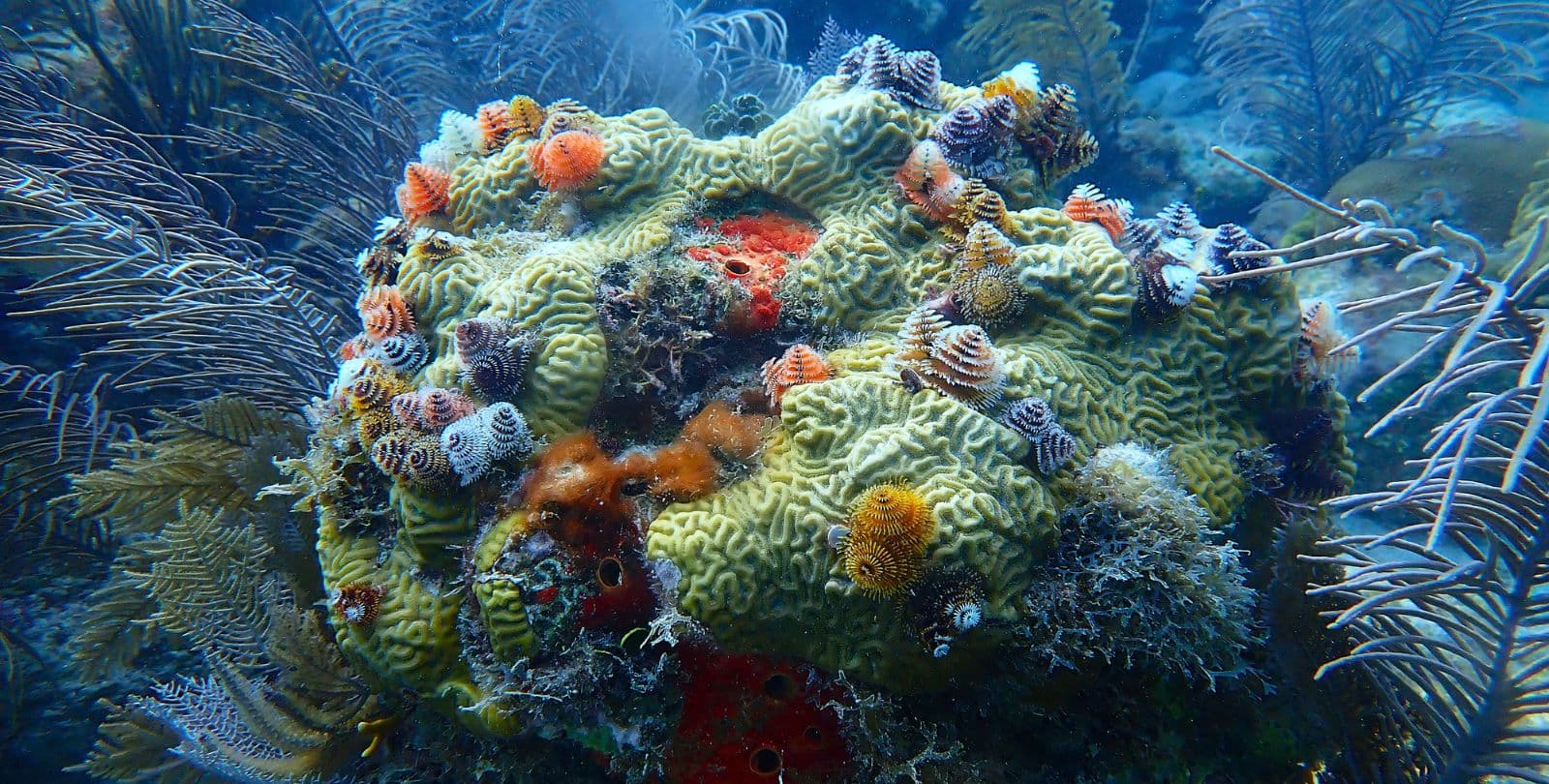
Colorful Christmas tree worms grow in coral. Image courtesy of the author.
Did you know that June is National Ocean Month? Throughout the month, we’ll be sharing stories of the ocean, the creatures that inhabit it, and the people who study and protect it. We hope this content inspires awe and helps you glimpse the character of its Creator.
What do coral reefs reveal about God?
This is my favorite question to ask as I scuba dive over a reef. Amidst a torrent of shimmery fish, I admire jewel-colored mounds of stony corals beside a thicket of purple sea fans that bend to and fro in the current. Curious grouper fish with droopy lips watch from the shadows as scuttling crabs peek between cracks in the coral foundations.
In Psalm 104, the psalmist tells us that the ocean is “vast and spacious, teeming with creatures beyond number—living things both large and small” (Psalm 104:25).
As a coral biologist, I am in the business of serving and protecting these remarkable underwater ecosystems. As a Christian, this work offers me the opportunity to learn more about God’s character by studying creation.
What are corals?
Corals are remarkable creatures. They might look like a rock and act like a plant, but they are actually animals.
Most corals live in a mutually beneficial relationship with a special kind of algae (called zooxanthellae), which gives them their beautiful pigmented colors.
Corals are modular organisms, meaning they are composed of small, individual animals called polyps that work together to form a larger animal, called a colony. Colonies build calcium carbonate skeletons through a chemical process similar to how human bones grow. These skeletons form the foundations of coral reefs, which support 25% of all the creatures that live in the ocean!
Despite their modular design, ecosystem-building ability, and resilience, coral reefs around the world are in trouble. Increasing water temperatures, ocean acidification, and disease outbreaks are making it harder than ever for corals to survive and thrive.
But even as they face a myriad of environmental challenges, corals testify alongside the rest of creation about the character of their Creator.
As I work to combat coral disease and restore degraded reefs, the corals teach me about God. Here’s what they’ve shown me.
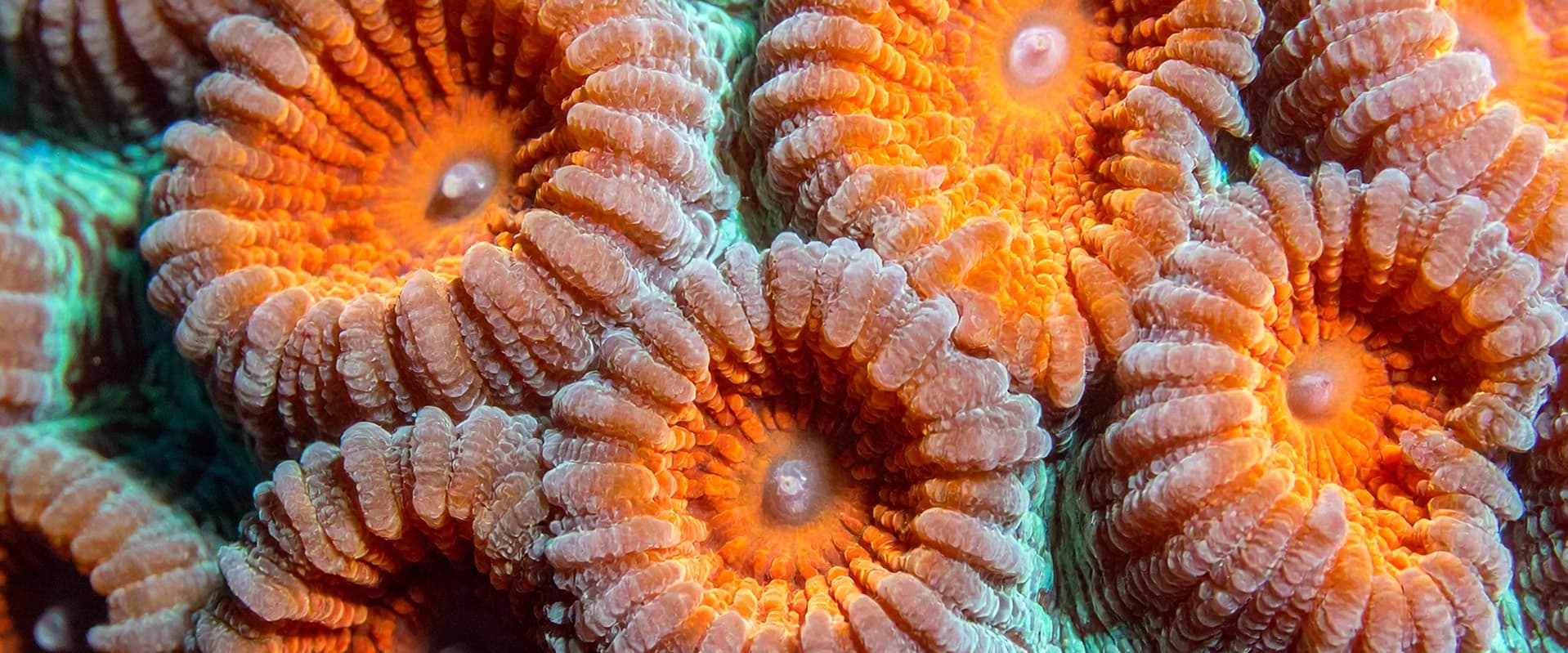
Cool Creatures | Coral
Coral may look like rock from a distance. Up close, it becomes something much harder to categorize—and much harder to forget.
Three Things Coral Reefs Have Taught Me About God
God Values Biodiversity
Biodiversity is defined as the number of different kinds of living things within a given area. That means a biodiverse ecosystem includes a lot of different kinds of creatures.
Coral certainly fits this description. There are over 6,000 known species of corals (compare this to the one and only species of humans existing today).
But the biodiversity of corals isn’t limited to their species classifications. The colors, sizes, and shapes of their bodies can be dramatically different, even within the same species.
This extreme amount of variety functions like a superpower. One principle of ecological communities is that the more biodiverse an ecosystem is, the more resilient it will be in the face of adversity. The high biodiversity of coral reefs makes them more resilient, demonstrating that God intentionally designed variety within creation.
I can’t help but see the parallel to this for humans as well. Just as biodiversity strengthens underwater ecosystems, human diversity benefits our communities. Our differences have the potential to help us grow and connect with each other more meaningfully.
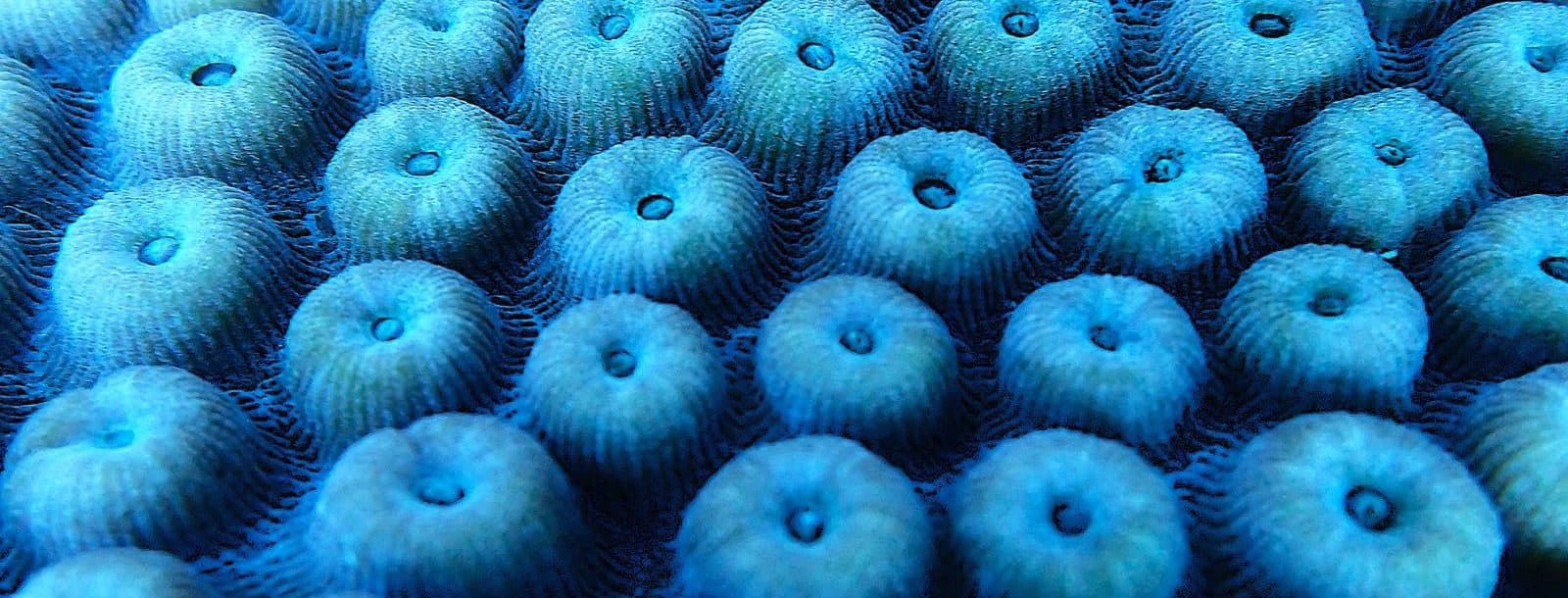
Close-up photo of coral polyps of a Montastraea cavernosa colony. Image courtesy of the author.
God Designed Community
Coral reefs create communities in two ways.
First, their modular bodies are themselves a community, as individual polyps work together to share resources to the benefit of the whole colony.
Second, the bodies of many colonies form the structure of a reef, which becomes a gathering place for millions of organisms.
Reefs are like underwater metropolises, providing homes, protection, and food for a quarter of all the creatures in the ocean. In fact, the more you study a reef, the more you see how integrated everything is.
In many ways, the communities that corals create serve as models for how God intends his Church to be at work in the world. I think of these words from First Corinthians:
“If one part suffers, every part suffers with it. If one part is honored, every part shares in its joy. You are the body of Christ. Each one of you is part of it” (1 Corinthians 12:26-27).
Like polyps, individual Christians should connect with one another with the intention of serving the world around them. Unified together in community, we have even greater opportunities to love one another, modeling God’s love for all of creation.
There’s no doubt that caring communities are part of God’s good design.
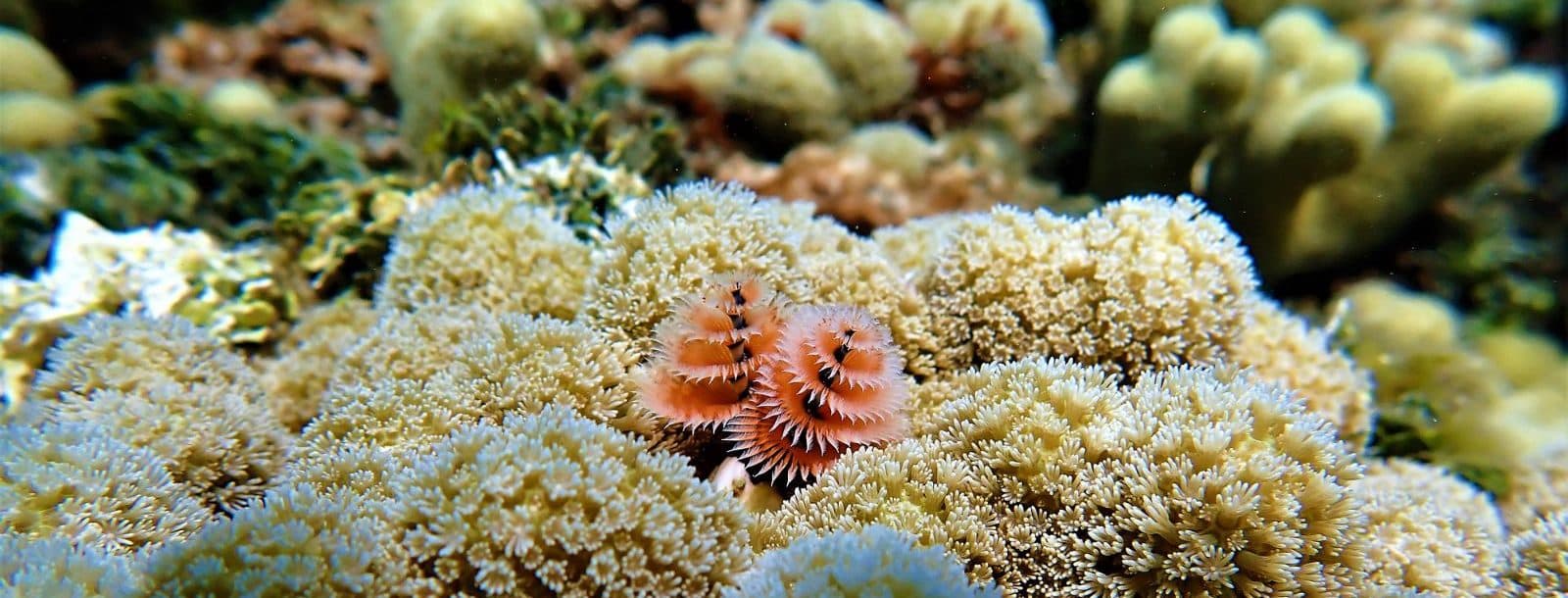
Christmas tree worm grows in coral. Image courtesy of the author.
God Promises Restoration for All of Creation
God loves the entire world, not merely the parts of it that are human. This is exciting because it means that the good news of the Gospel doesn’t just apply to us, but to everything God has made.
He has promised to “make all things new” (Isaiah 43:19, Revelation 21:5). And when his eternal, restored kingdom is described in the Bible, ecological language is used to portray the scene. There are trees and fruit, and from the throne of God descends “the river of the water of life, as clear as crystal,” (Revelation 22:1). I wonder if there will be corals there too.
Jesus came to redeem and restore all things, including coral reefs. To a coral biologist, this revelation makes the good news of the Gospel truly the best news ever. It also implies much more about what it means to be a coworker with Christ (1 Corinthians 3:7-9).
All of creation groans for fulfillment of God’s promises: “We know that the whole creation has been groaning as in the pains of childbirth right up to the present time. Not only so, but we ourselves… groan inwardly as we wait eagerly…” (Romans 8:22-23).”
Both corals and people labor and long for a world in which everything will be set right, where we will delight in the presence of our Creator forever. Because of this, I glimpse spiritual hope for coral reefs even where biological hope may otherwise falter.
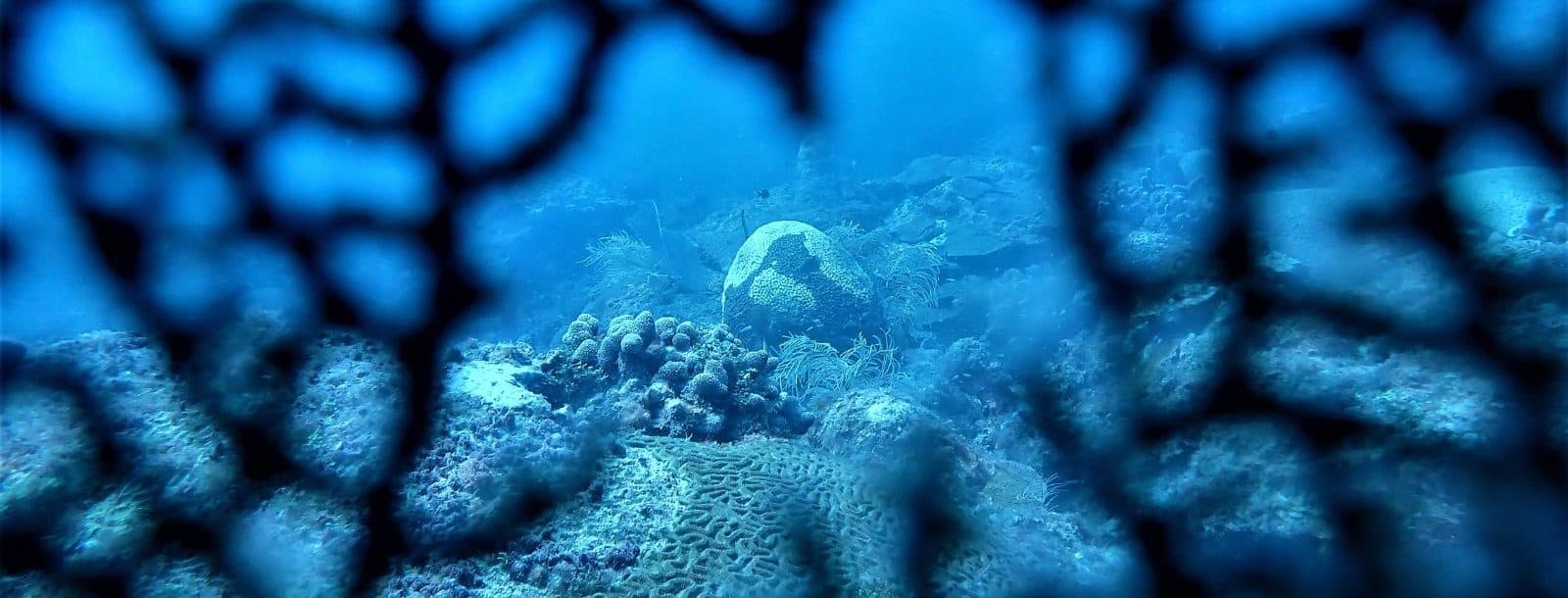
Diseased coral (stony coral tissue loss) seen in the distance through sea fan. Image courtesy of the author.
We Reflect God’s Character
Like coral reefs, we are able to reflect God’s character to the rest of creation. We testify with our lives about who he is and what he has done for the world.
This calling connects to our original purpose. God placed us in the world to “tend and keep,” to “serve and protect,” and to “work and take care of” what he has made (Genesis 2:15).
From the beginning, this was our special mission. We can still fulfill it now by valuing biodiversity, fostering community, and loving creation as God himself does.
In light of this, coral biology (or any career in science) can be a form of ecological ministry in which we minister directly to creation, as a pastor might shepherd their congregants.
As we care for creation, we recognize our fellow creatures as intentionally, wonderfully, and masterfully created by God. Corals are a great example of where we might begin.
Knowing God More Deeply
“For since the creation of the world God’s invisible qualities—his eternal power and divine nature—have been clearly seen, being understood from what has been made” (Romans 1:20).
If learning about coral reefs can help us see God’s character, we have all the more reason to notice, admire, and study everything God has made.
After all, if you had the opportunity to know God better, wouldn’t you want to do so, even if it meant diving a little deeper?
Caring for creation will bring us into even greater spiritual intimacy with our Creator. This has certainly been my story.
About the author
Rachel Jordan
Related resources
If you enjoyed this article, we recommend you check out the following resources:
Language of God
Cool Creatures | Coral

Language of God

Language of God
Dawn Wright | A Divine Abyss


Language of God
