How A California Biologist Sees God in Wildfire Recovery
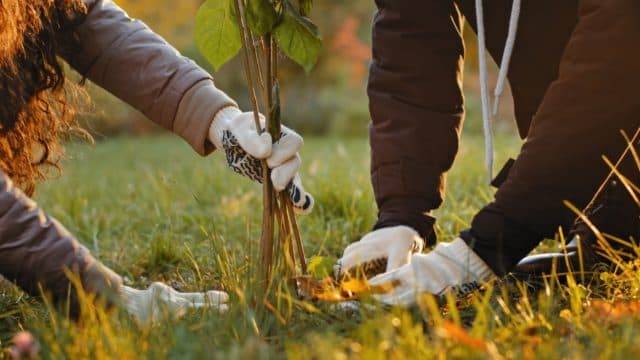
After a wildfire devastated Montecito, Laura Drake Schultheis saw a chance to restore the land’s native vegetation. Her faith both inspired her work and grew from it.
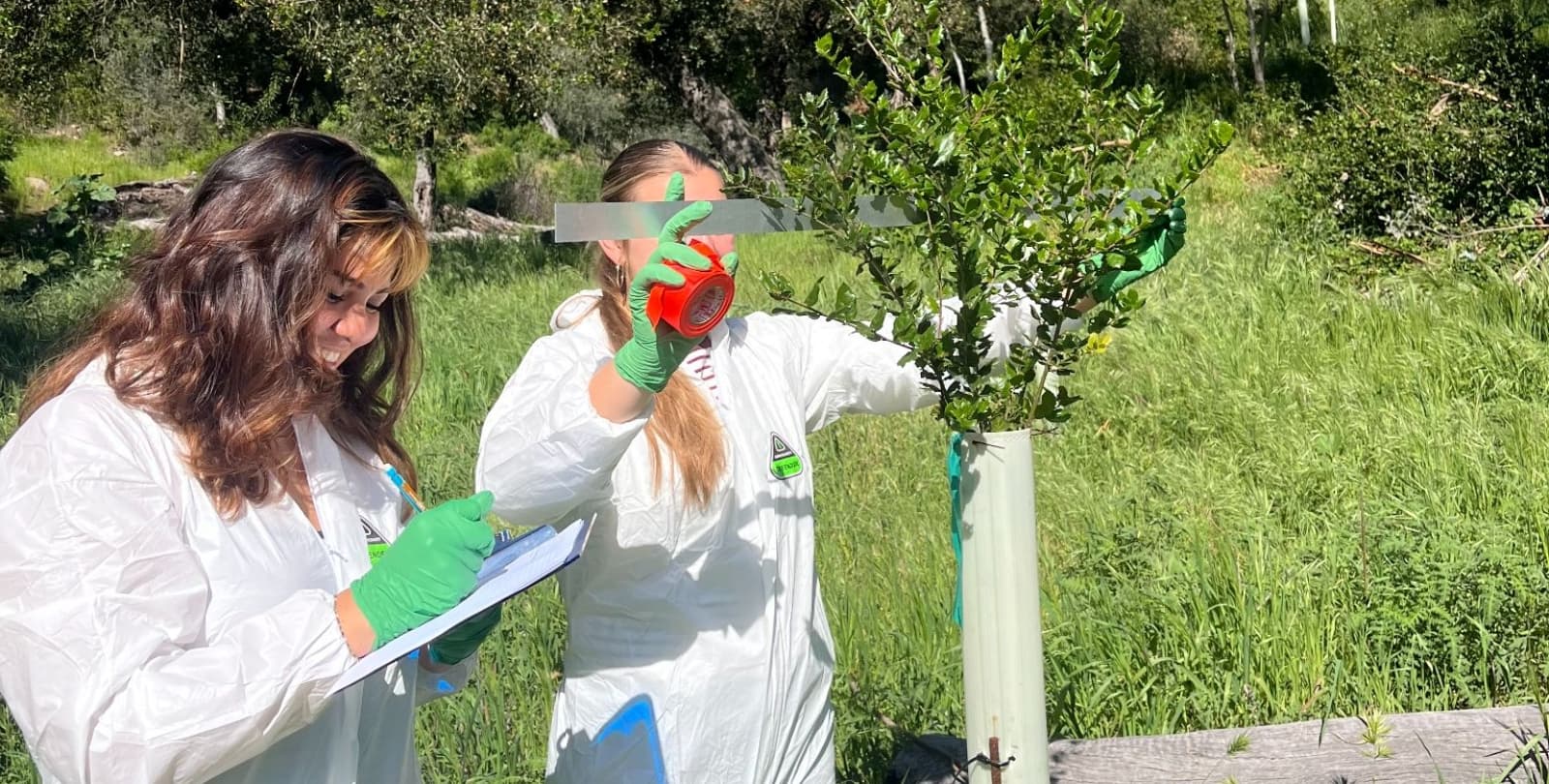
Photo provided by the author.
It was unseasonably warm and windy for a November evening in Santa Barbara, California.
As I drove down the hill and over the freeway, I looked back in time to catch a glimpse of a fire just breaking out in the foothills about ten miles south.
“That looks like it’s near Westmont,” I thought, picturing the small Christian liberal arts college—my alma mater—nestled in those foothills.
The 2008 Tea Fire, as it would come to be called, had indeed started just above the campus. It quickly spread downhill, pushed by strong sundowner winds and fueled by the drought-stricken canopies, exotic eucalyptus, and palms that surround Westmont College.
Students were forced to evacuate their dorms and shelter in the gym. By the time it was extinguished, the fire had burned almost 2,000 acres, tearing through campus and destroying 210 nearby homes.
Though relatively small by modern wildfire standards, the physical and emotional scars of that night remain today.
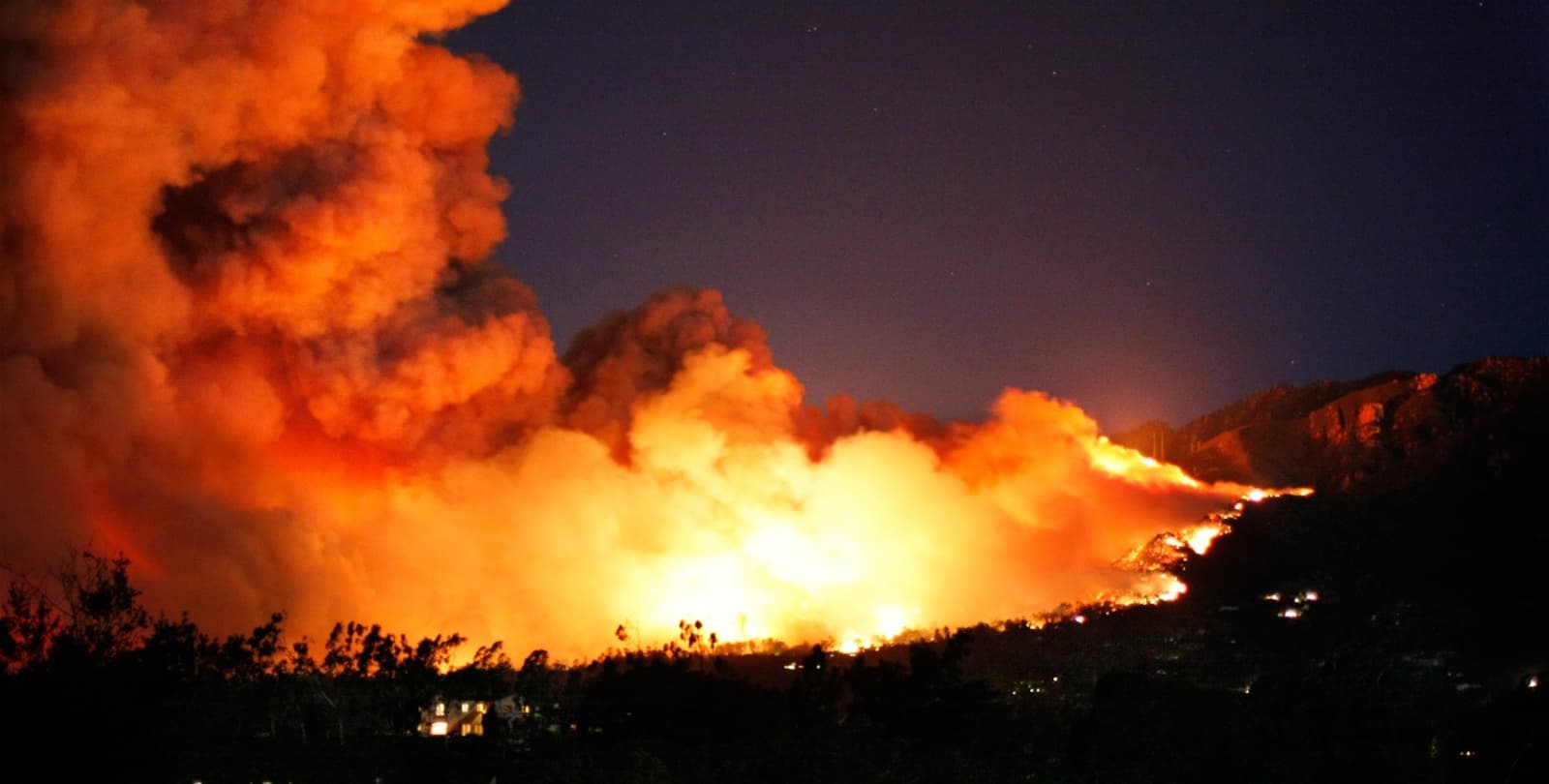
Photo taken during the 2008 Tea Fire in Montecito, California. Image: Justin David Fox, CC BY 2.0 <https://creativecommons.org/licenses/by/2.0>, via Wikimedia Commons
Part of A Global Pattern
It’s a story that is becoming all too common: Fire seasons are growing longer in many areas. Residents and firefighters in such communities share a common refrain: “every day is fire season.”
Climate change is the most significant catalyst of larger, more frequent, and more severe fires globally. Hotter, drier, and windier conditions in already fire-prone regions create the perfect environment to fuel fires year-round. These conditions also make them harder to contain.
In these regions, and in many others, the impacts of a changing climate are becoming much harder to ignore.
Opportunity in the Ashes
I am now a full-time biology professor at Westmont, and part of my research there focuses on the effects of climate change on native plant species and communities.
From my office window, I can see some of the tall eucalyptus trees that remain in the Westmont Creek watershed adjacent to the main campus—the steep, windy corridor that helped fuel the Tea Fire as it barreled toward the faculty housing community below.
Invasive grasses and noxious weeds also dominate much of the understory, causing increased risk of fire ignitability and spread. Now, the local Montecito Fire Department’s wildlands management team partners with Westmont College to routinely remove these weeds.
As an ecologist, I saw this partnership as an opportunity to restore the corridor back to its native ecosystem. In 2023 and 2024, we planted approximately 60 locally-sourced coast live oak seedlings across a one-acre plot.
Our goals are threefold. First, mitigate fire risk to Westmont College and surrounding neighborhoods. Second, enhance ecological functioning and resiliency of a native oak woodland and riparian zone. And third, establish a sustainable native habitat that can be used for ongoing local outreach, education, and research.
This March, we recorded an 86% survival rate of the 60 live oak planted. Today, the remaining individuals are thriving.
As they grow and mature, these oak trees will retain moisture year-round, shade out invasive plants, and act as a windbreak. We are hopeful that these factors will make our oak trees an important buffer against future fire risk.
Community Nourishment
Westmont students and community members alike have helped water and tend to the trees, and students have conducted surveys as part of classes and independent research. Neighbors walking by often stop and express gratitude for the work being done. Each time they do, it is a humbling reminder that we are doing so much more than planting trees.
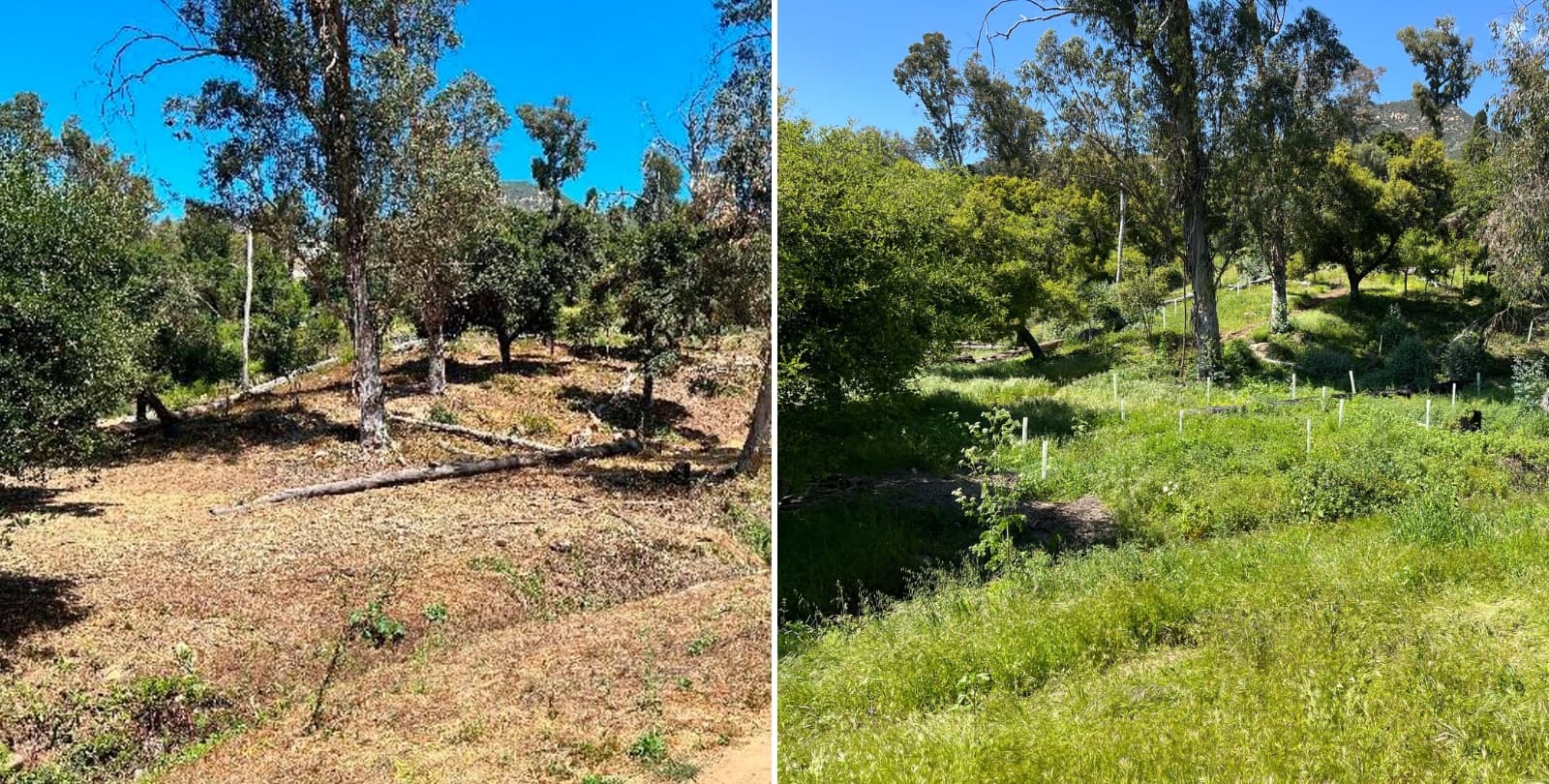
A side-by-side comparison of the same patch of land before and after our restorative work following the Montecito Fire. Photos provided by the author.
Ecological Restoration: A Biblical Response
Climate change can feel like an invisible enemy, or an unstoppable force of nature. Combating it on an individual level sometimes seems like grasping at straws. Even talking about it can easily become overwhelming.
But I believe restoration projects like this are tangible examples of what we can do, and Scripture reminds us how this is also a biblical response.
While gardening and tending the Earth have long been used as metaphors for connecting with the land, restoration reflects an even deeper alignment to our calling as Christians.
Biblical Stewardship and Ecological Restoration
A primary example of this is through environmental stewardship.
One of our first mandates bestowed on us as humans created in the image of God was to take care of the land (Genesis 2:15).
The concept of stewardship emphasizes this point by imploring us to act wisely and responsibly in our caretaking, recognizing when our actions have caused harm, and taking responsibility for those actions through healing and reconciliation.
Ecological restoration offers an opportunity to thoughtfully engage in this holy act.
Connecting With God Through Creation
Furthermore, environmental stewardship allows us to connect more deeply with our Creator.
I often ask my students how many of them feel connected to God when they are in nature. Of course, they all agree. I then ask if they know non-religious people who feel a spiritual presence in nature. Nearly all of them do.
The truth is that all of creation was breathed into life by God and we can find him there. To be God-centered, we must love what God loves; and God loves his creation (Genesis 1). When we care for it, we are connecting with the Creator, and we open our ears to hear what he has to say.
Building Community
Ecological restoration also helps fulfill the Christian calling to build community.
Humans were never meant to operate in isolation. We need each other to function as a whole, just as the physical body is made up of its parts (Romans 12:4-5).
Ecological restoration is a community effort. Our small project has brought together nearly a dozen diverse, local agencies as well as neighbors, faculty, and students. We have formed relationships, built trust, and shared ideas, time, and labor with one another, all in an act of service to this beautiful gift of creation.
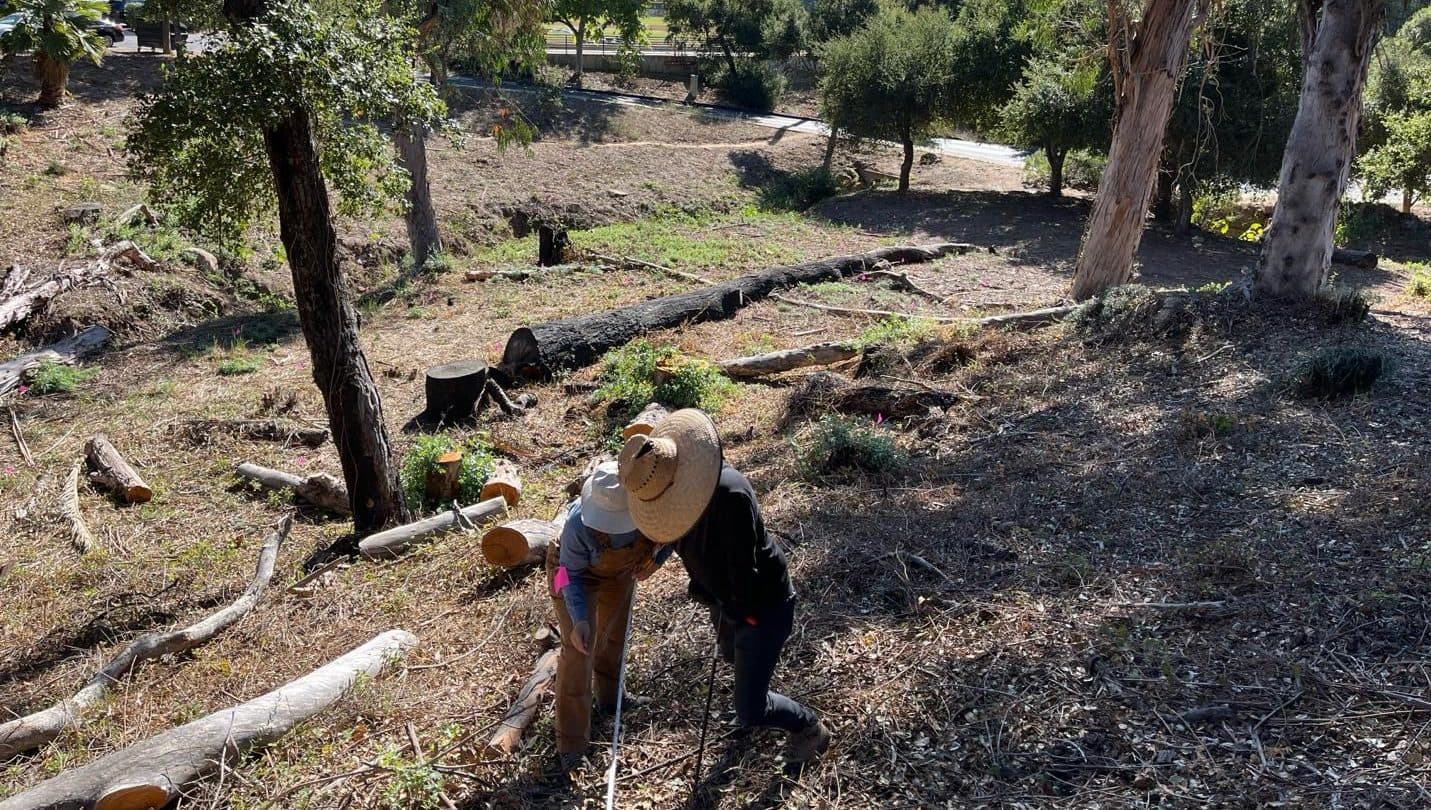
Photo provided by the author.
Small Actions, Big Faith
It has been nearly 20 years since the Tea Fire. The number of tragic and devastating wildfires—both in California and across the United States—has increased, and the world continues to get warmer.
Admittedly, local ecological restoration projects alone will not stop global climate change. Our tiny one-acre oak fuel break certainly won’t.
But I still believe that restoration is biblically inspired. And even the tiniest of efforts, multiplied many times over, create potential for a big impact. Small acts inspire. They provide agency. They restore hope. They build momentum. They can and do make a difference.
When climate change feels bigger than us, my advice (as it is with any problem that feels too great to solve) is to focus on the small, the tangible. Find out what projects are being done in your community and get involved.
Doing so not only enables us to engage in our Christian calling; it reminds us that hope, healing, and goodwill are all around us.
Note: This article was inspired by a talk given by the author, which can be viewed here.
About the author

Laura Drake Schultheis
Related resources
If you enjoyed this article, we recommend you check out the following resources:

Downloads
Common Question