Climate Change Is a Spiritual Problem
At COP, I’ve learned that we can’t solve climate change with more information alone. Instead, we must become the kind of people who can respond faithfully.
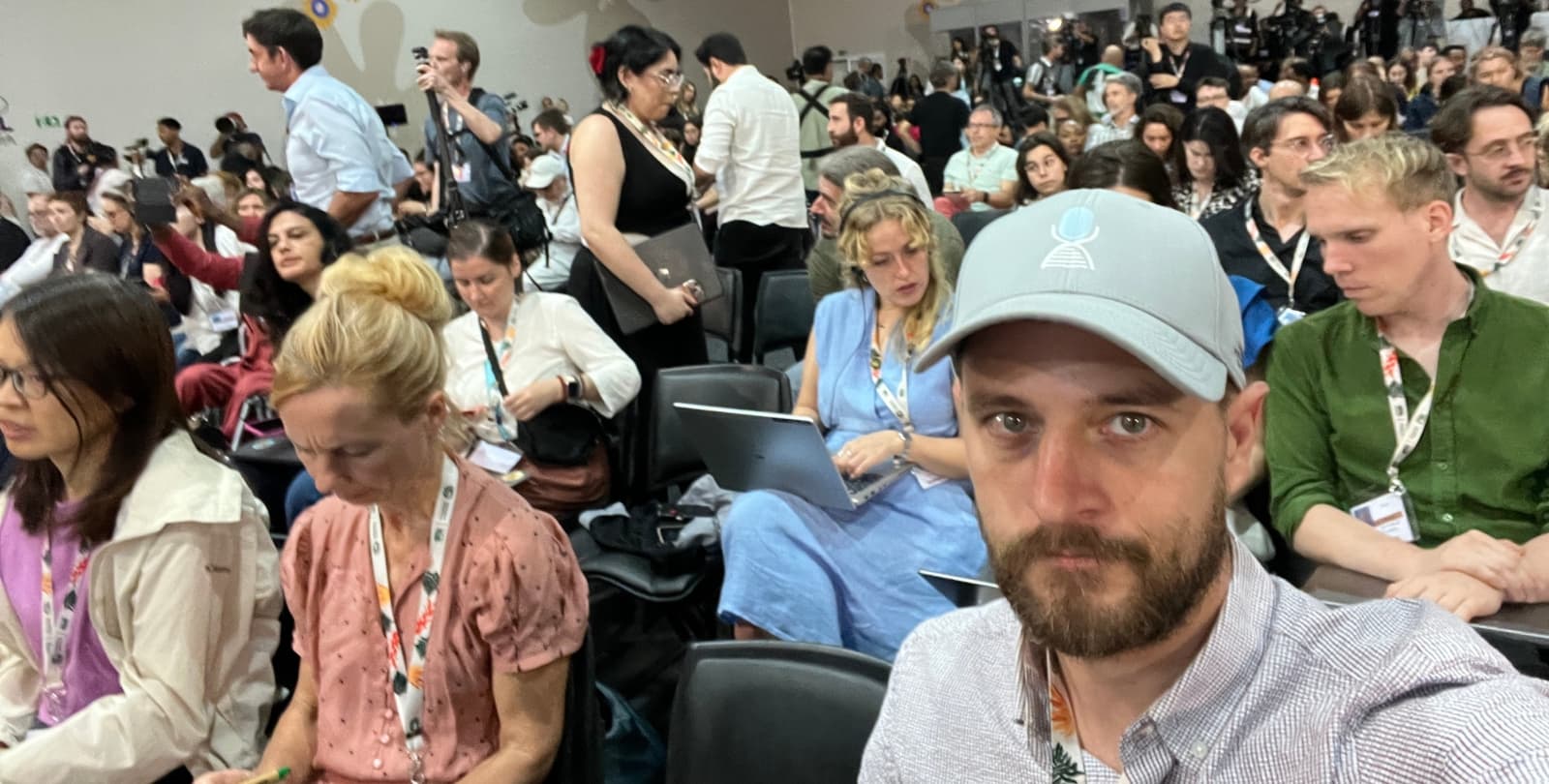
Photo provided by the author.
This November, I’ll board a plane bound for Antalya, Turkey. I’ll be going there to attend the annual United Nations climate conference, better known as COP31.
It will be my third time attending one of these gatherings. Each time I do, people ask me whether it’s worth going. My answer usually surprises them.
After attending two COPs, I haven’t come away convinced that the negotiations are working particularly well. In fact, I’ve left both of them fairly disappointed in the process.
And each time I arrive home after one of these conferences, people ask how it was. My (joking) response: “Well… they didn’t solve climate change.”
People laugh because, of course, no one expects two weeks of negotiations to resolve one of the largest collective problems humanity has ever faced. In fact, most people would be surprised if anything got done when representatives from just about every country in the world are gathered in stuffy rooms together.
But beneath the joke is a serious question: If COP isn’t where climate change gets solved, why do tens of thousands of people—including scientists, pastors, journalists, Indigenous leaders, and, apparently, me—keep coming back?
The answer I have found is rooted not in international policy, but in Christian formation.
Information Alone Isn’t Enough to Address Climate Change
Many conversations about climate change begin with a simple assumption: people aren’t working to address it because they don’t know the science. If only we could communicate the evidence more clearly, present better graphs, or explain the research more carefully, then minds would change.
Science communication researchers have a name for this way of thinking. They call it the deficit model: the idea that disagreement exists primarily because people lack information.
Becoming the Answer | Why Climate Facts Aren’t Enough (Part One)
Climate change can’t be solved by science alone so we move from Earth systems to the lived experiences of people already facing its impacts.
Decades of research suggest that belief formation is rarely so straightforward.
Fear, trust, loyalty, economics, politics, identity, and community all shape what we believe. They often do so far more powerfully than another set of facts or a carefully constructed argument. And when that argument is presented by someone who isn’t perceived as a trusted messenger, more evidence can even reinforce existing beliefs.
But recognizing the limits of information doesn’t mean science stops mattering. Far from it.
Science is much more than a collection of facts; it is a framework for understanding God’s world. If we hope to love our neighbors well, science remains an indispensable way to learn what those neighbors are experiencing and what is happening within creation itself.
The problem is that science alone cannot produce the kind of people who know how to respond faithfully to climate change.
That distinction became clear to me not from reading another report or attending another lecture, but by hearing people’s stories.
What COP Gives Me That Reports Cannot
Before attending my first COP, I imagined the conference would revolve around official statements and policy announcements.
Those things certainly happen. But the moments that have stayed with me happened away from the negotiating rooms—in hallways, over meals, and between sessions. They took the form of conversations with Christians from around the world who are living with the kind of climate change realities that many of us in North America still experience only as predictions.
The conference brings together a truly extraordinary range of people in one place. Scientists, journalists, church leaders, young activists, Indigenous communities, representatives from humanitarian organizations, and researchers all bring with them accounts from places many of us will never visit. Many of them carry stories of the harm climate change is already causing.
Again and again, I’ve heard from communities whose lives have become less predictable because the rhythms on which they have depended for generations have begun to change.
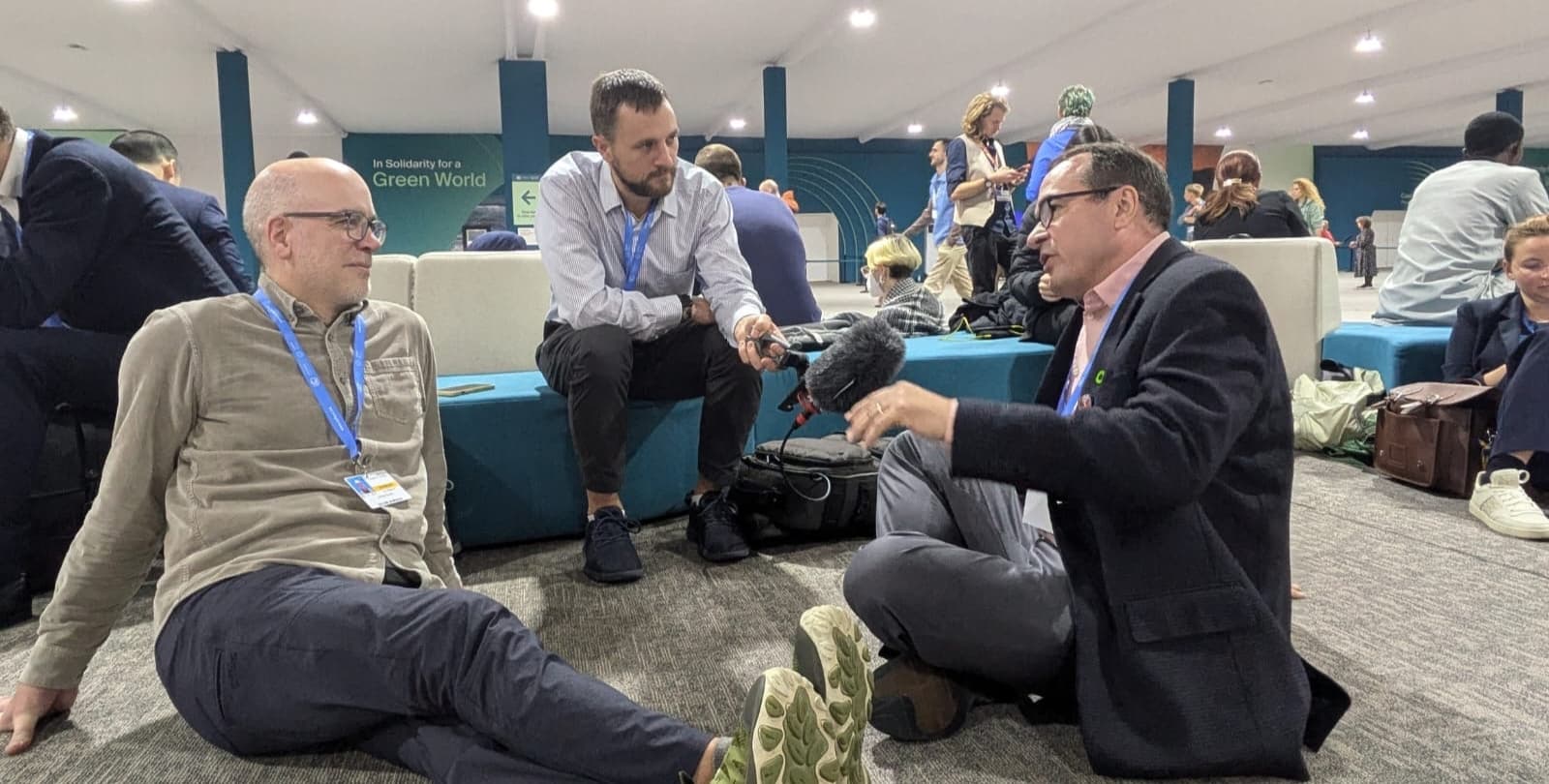
Photo provided by the author.
I’ve heard farmers speak about weather patterns that no longer match memory. Church leaders have told me about flooding that reshaped entire neighborhoods. And I’ve sat with individuals as they reflected on displacement, food insecurity, or the slow unraveling of places they always thought would be there.
These stories have given names and faces to what, in my head, had previously been graphs and projections. They remind me that climate change is felt locally—by particular communities, particular families, and particular places.
Listen: Guilherme reflects on the devastating floods in southern Brazil. (audio)
Listen: Svenja describes what climate disruption looked like while living in Nairobi. (audio)
Those conversations reshaped the way I think about climate communication. Now, I see that while facts help us recognize what is happening, stories help us understand why it matters.
That’s the value of COP. Even when negotiations stall—and they often do—the gathering is still a place where distant realities become immediate, and where global challenges acquire names and voices.
Climate Change Isn’t Just a Scientific Problem. It’s a Spiritual One, Too.
Somewhere during the two COPs I have attended, I realized I had been asking the wrong questions.
Even after years of experiencing the deficit model’s limitations, I still lived as if climate change was a scientific or technical problem. I acted as if what we needed to solve it was better technology, stronger international agreements, or clearer communication.
To be clear, those things do matter. But their absence doesn’t fully explain why progress remains so difficult, even when the evidence of climate change continues to grow.
The deeper problem has to do with values. Climate change raises big questions about whose lives are protected, whose voices are heard, and whose suffering we allow to remain comfortably distant.
It’s not that those who are suffering are silent. People around the world are already telling their stories.
Instead, the real problem is that many of us have never learned how to listen.
Becoming the Kind of People Who Can Respond
If what I’ve described above is true, climate change is a formational problem just as much as it is a scientific one.
That idea continues to shape how I think about the issue long after returning home. It demands that, before we ask “What should we do?”, we consider something more fundamental: “What kind of people do we need to become in order to respond faithfully?”
That has always been a deeply Christian question.
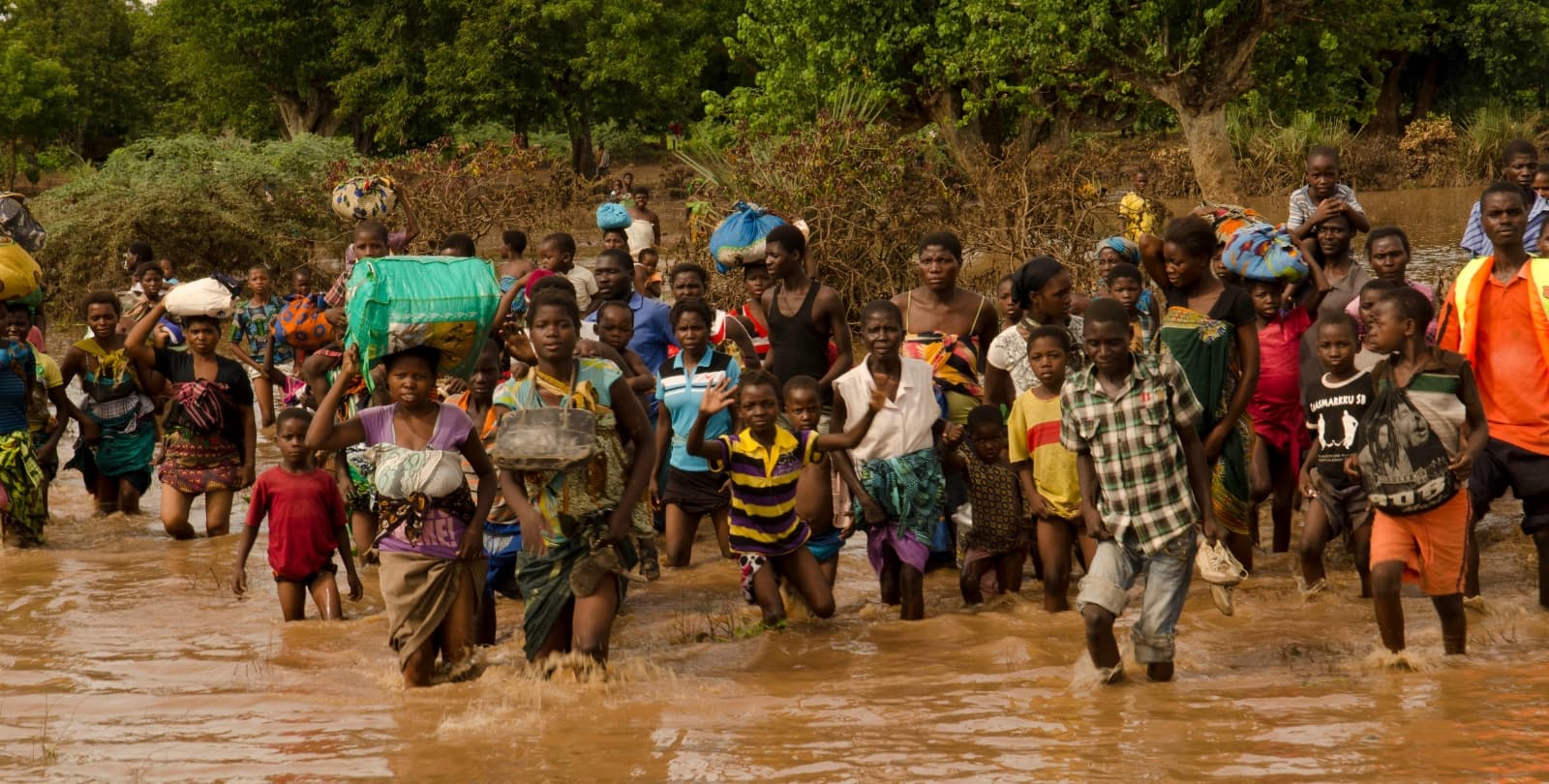
Flood victims in the process of evacuating, Malawi. Those feeling the impacts of climate change are not silent—they are telling their stories. The problem is that many of us have never learned to listen. Image: Arjan van de Merwe/UNDP, CC BY-NC-ND 2.0, via Flickr, https://creativecommons.org/licenses/by-nc-nd/2.0/deed.en
Christianity is not primarily a project of transferring information from one mind to another. It is a tradition concerned with forming people who love God, love their neighbor, tell the truth, practice hope, and remain faithful in circumstances they cannot control.
If climate change is at least partly a formational problem, then perhaps the Christian tradition already contains resources we have not fully appreciated.
Practices That Form Faithful People
The church has always known that some realities are too large to be addressed through information alone. That’s why our tradition has developed practices that shape not only what we think, but also who we become.
Lament teaches us to tell the truth about the world without rushing toward easy optimism. Confession instructs us to acknowledge not only our individual choices, but also the systems and patterns in which we are entangled. Repentance gives those truths direction by turning us toward a different way of living. Gathering reminds us that no one bears these burdens alone. Prayer keeps our attention fixed on God, as well as those neighbors whose lives are intertwined with our own.
None of these practices “solve” climate change. That is not their purpose.
What they do is form people who can remain truthful without collapsing into despair and hopeful without becoming naïve. They equip us to be active without imagining ourselves to be the heroes of the story. And they cultivate the virtues needed to remain alert to a problem with a timescale that extends well beyond our own lives.
Why I’m Attending COP31
So, why am I returning to COP for another year?
When I board the plane for Turkey, I won’t be carrying a belief that this year’s conference will produce the one agreement that changes everything. I certainly hope meaningful progress will be made, but that is no longer the primary reason for my attendance.
I return because each conference reminds me that climate change is a question of discipleship.

Christian Climate Observers | Stories from COP29 & Around the World
Stories help to connect us to our neighbors and reframe how Christians can think about their role in the climate crisis and how to respond.
It asks what kind of communities we are becoming, whether we are willing to let distant suffering become personal, and whether our faith can sustain hope when solutions arrive more slowly than we would like.
The science matters, as do the policies and the negotiations. But if those are all we notice, we will miss the deeper invitation.
These past couple of years, the most important thing I have brought home from COP is the realization that more information is not the answer to addressing climate change.
The answer is to become the kind of people who can faithfully bear that information, allow it to reshape us, and respond together in love.
About the author

Colin Hoogerwerf
Related resources
If you enjoyed this article, we recommend you check out the following resources:
Language of God

Language of God