What Deep-Sea Exploration Reveals About God’s Creation
Dr. Dawn Wright became just the 27th person to descend to Challenger Deep. There, the Innerview Effect profoundly changed how she engages with creation.
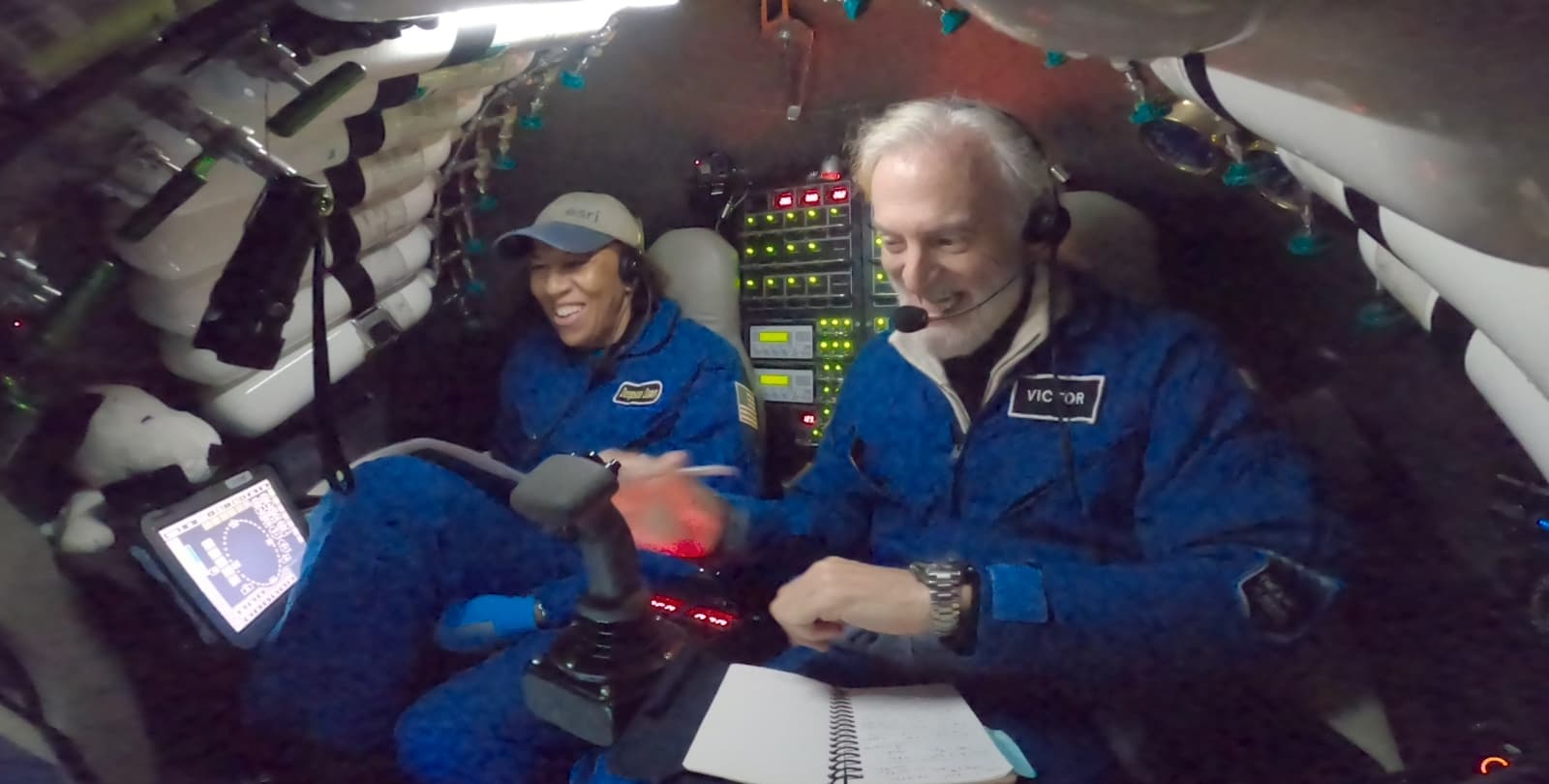
Dr. Dawn Wright and CDR Victor Vescovo descend into Challenger Deep. Image: Vlvescovo, CC BY-SA 4.0 <https://creativecommons.org/licenses/by-sa/4.0>, via Wikimedia Commons
Astronauts often talk about the Overview Effect, or how their perspective on life and the Earth—and, for some, the existence of God—changes when they go into space.
The feelings evoked by deep-sea exploration are sometimes compared to those described by astronauts, and for good reason. Both experiences are incredibly humbling. Astronauts and deep-sea explorers alike feel insignificant in their immense, alien environments, and yet also significant in belonging to this unique, life-filled planet.
But the Innerview Effect? That’s something a little different.
Experiencing the Innerview Effect
Rather than being up in space with a broad, synoptic view, deep-sea explorers experience the Earth from just one small point on the planet itself.
Astronauts on the Moon witness the entire orb of the Earth; those in orbit see its vast expanse. It’s different being in a small submersible at one point in a very deep, dark place.
Yet all the same, creation remains just as beautiful and jaw-dropping.

Dawn Wright | A Divine Abyss
As a scientist, Dawn Wright has been studying and helping to map the depths of the ocean, but being there in person uncovered a new dimension and deepened her connection with the mysterious underwater world.
As a geologist experiencing the Innerview Effect, I have been thrilled to witness evidence of major plate tectonic activity in the depths. I have gazed upon the vast fields of boulders in a region of tremendous collision between the Pacific plate and the Philippine Sea plate. And I’ve seen the anemones, sea cucumbers, amphipods, and the myriad tiny creatures that thrive in complete darkness and under 16,000 pounds per square inch of pressure.
All of this has repeatedly and vividly brought to life part of my favorite Psalm, 107:
“Those who go down to the sea in ships, who do business on great waters; They see the works of the Lord, and the wonders in the deep… Whoever is wise will observe these things; And they will understand the loving kindness of the Lord.” (Psalm 107:23-24, 43).
What I Learned in Challenger Deep
In July 2022, I became part of a special little, deep, dark community. Alongside my colleague Victor Vescovo, I dove nearly seven miles down to Challenger Deep, the deepest point on Earth.
And that’s where it struck me: we are all a part of the totality of life on this planet.
In the darkness, the miracle of life is made all the clearer, as is the fact that in order for this life to thrive, we must recognize that we are all—somehow—interconnected. Indeed, we are all part of God’s creation.
What the Deep Sea Reveals About Climate Change
Experiencing the Innerview Effect helped me recognize Earth’s duality.
Even while in the freezing cold of Challenger Deep, I was vividly reminded of how the ocean as a whole is heating up. That heat is circulated down—even through these deepest places—from the surface and all the way back up again.
This is why all of the ocean’s waters matter. When it comes to climate change, they are buying us time. Climate change’s negative impacts would be hitting us much faster and more severely if it weren’t for the ocean absorbing some 90% of the additional heat trapped by greenhouse gas emissions.
The ocean is keeping things at bay for as long as it can, but we are fast approaching its tipping point.
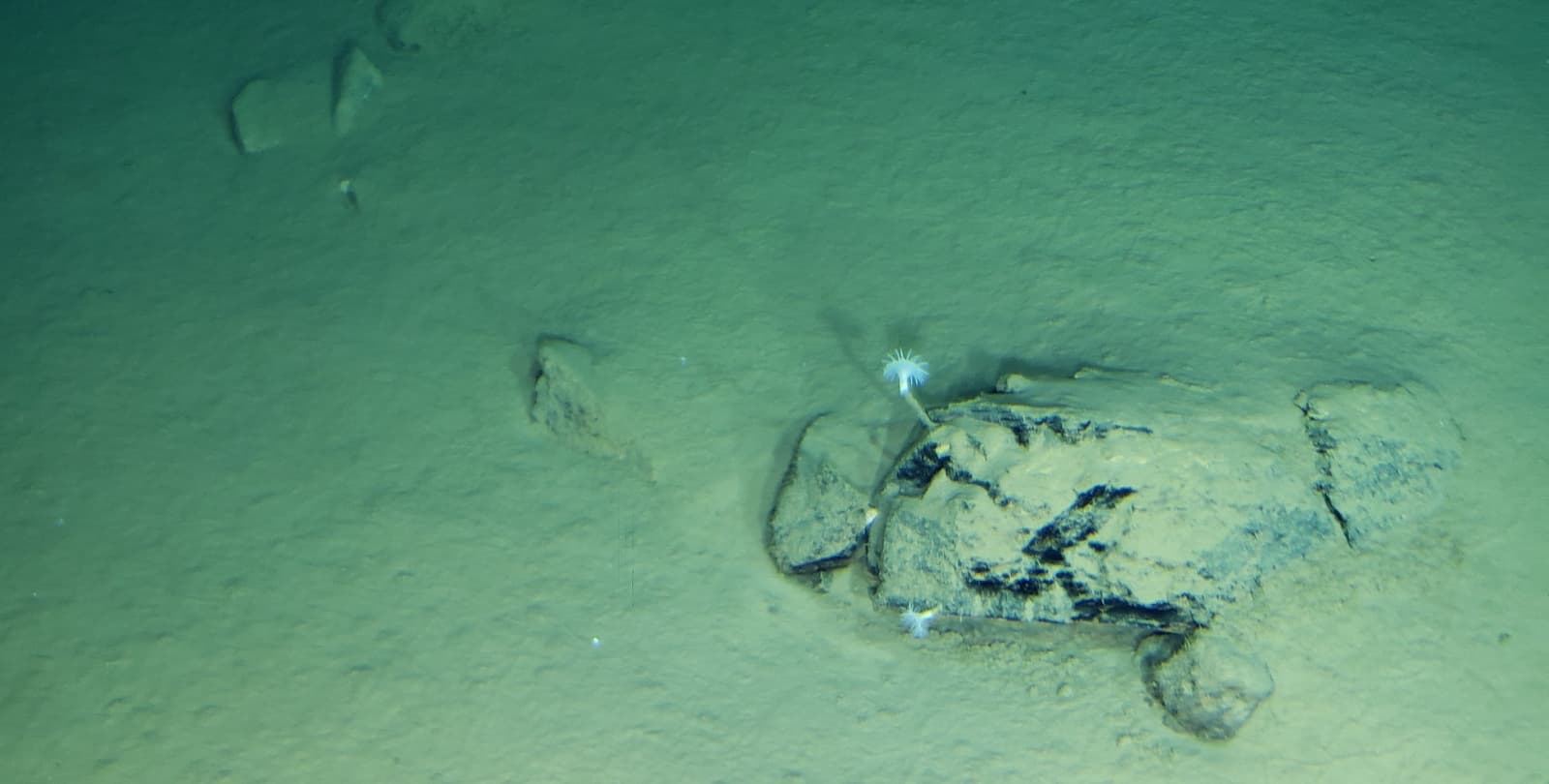
A deepsea tubed anemone, as seen from the window of the DSV Limiting Factor during Dr. Wright’s dive. Image: Vlvescovo, CC0, via Wikimedia Commons
Caring for Communities We Cannot See
We must continue to recognize the importance of the special little, deep, dark communities in the great depths of the ocean.
In Dr. Seuss’s Horton Hears a Who!, Horton the elephant discovers an entire world in existence upon a tiny speck of dust—a world full of creatures and habitats and ecosystems.
In acting to protect that world, he is quickly made a pariah in his own. He is branded “insane” by his disbelieving peers. But at the moment it counts the most, Horton convinces others of life beyond that which we can see.
We are at that same pivotal point in our own narrative. In this moment, we all need to be Horton, and we need others to “hear a Who.”
All of it matters. Everything we can do to reverse or mitigate the effects of climate change, as well as the hatred and the incessant destruction in our societies, needs to be done.
I truly believe that learning to harness the Innerview is among the most important things we can do right now.
Editor’s Note: With permission, this piece has been adapted from an article originally published in Oceanographic Magazine’s Special Issue 48, “The Innerview.”
About the author

Dawn Wright
Related resources
If you enjoyed this article, we recommend you check out the following resources:
Language of God

Downloads