Why Did People in the Bible Live So Long?
The long lifespans recorded in Genesis likely reflect how ancient peoples used genealogies rhetorically, not how long people actually lived.
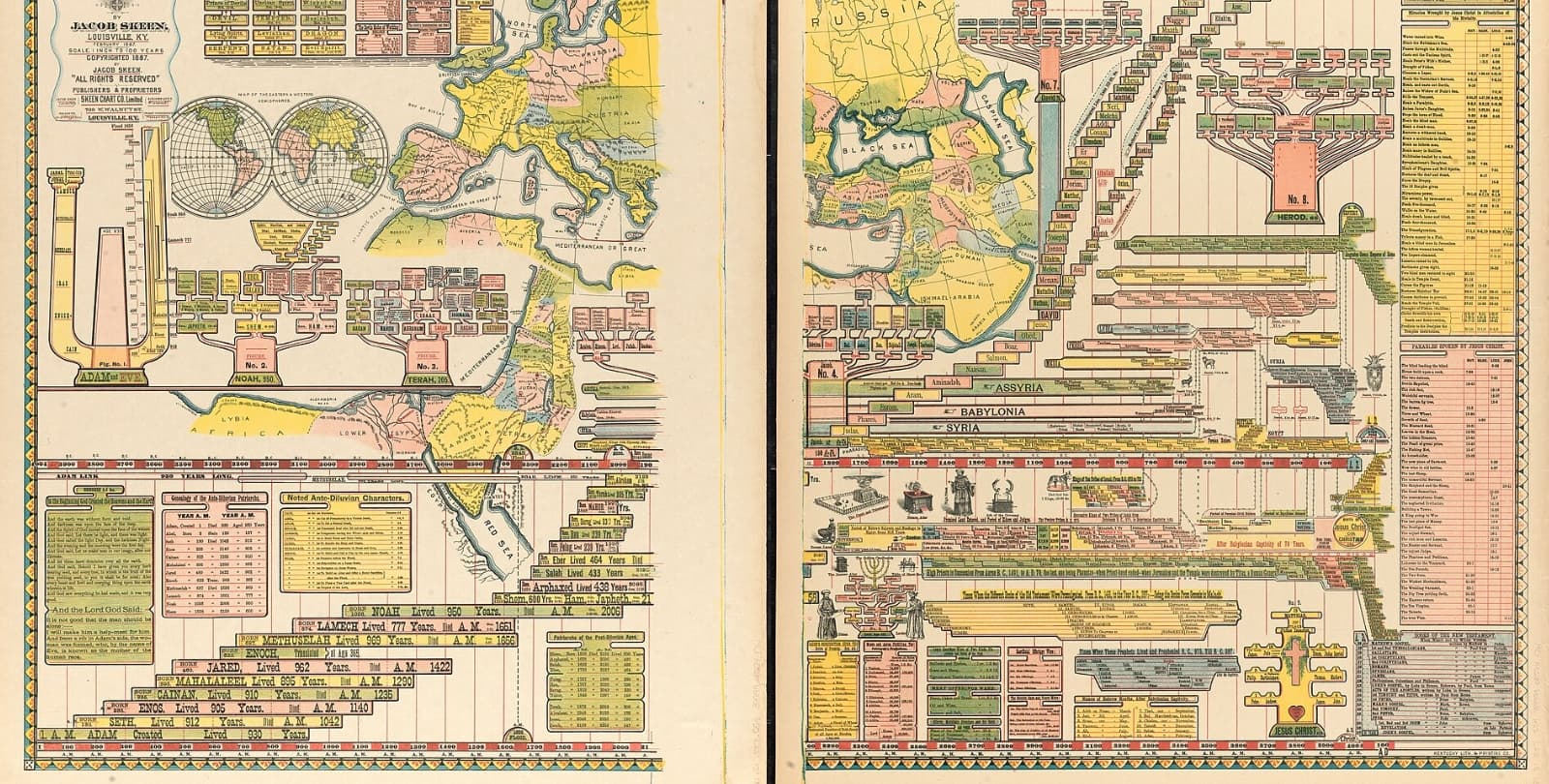
Portion of an 1887 poster by Jacob Skeen titled “Genealogical, Chronological, and Geographical Chart Embracing Biblical and Profane History of Ancient Times From Adam to Christ.” Jacob Skeen et al, Public domain, via Wikimedia Commons
When we read the book of Genesis, we encounter many statements that surprise us. One area that astounds many modern readers is the ages of individuals described.
In a story as well-known and straightforward as that of Abraham, we discover that he is said to have lived 175 years (Genesis 25:7). Isaac (180 years old, Genesis 35:28) and Jacob (147 years old, Genesis 47:28) follow suit.1 Even Joseph (110 years old, Genesis 50:26) and Moses (120 years old, Deuteronomy 34:7) seem exceptional.
All of these pale in comparison, however, to the genealogy found in Genesis 5:5-32:
- Adam lived 930 years;
- Seth lived 912 years;
- Enosh lived 905 years;
- Kenan lived 910 years;
- Mahalalel lived 895 years;
- Jared lived 962 years;
- Enoch lived 365 years;
- Methuselah lived 969 years;
- Lamech lived 777 years
If that were not shocking enough, when we look carefully, we see that several of these people are said to have been over 100 years old when they fathered the next in line.2
These amazing lifespans invite several possible explanations.
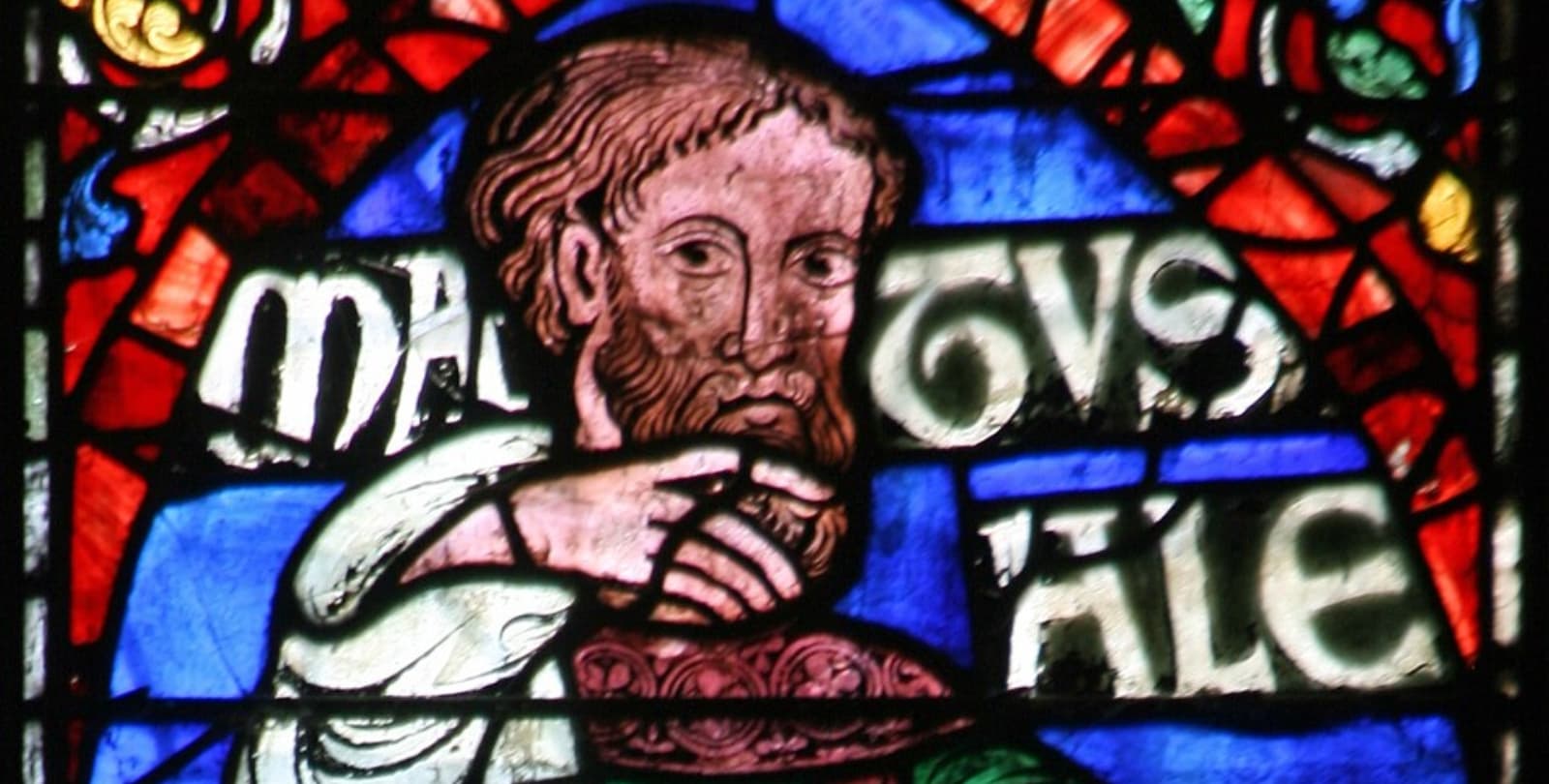
Stained glass rendering of Methuselah in the Canterbury Cathedral, Kent. Methuselah has the longest lifespan described in Genesis, at 969 years. Robert Scarth, CC BY-SA 2.0 <https://creativecommons.org/licenses/by-sa/2.0>, via Wikimedia Commons
Potential Explanations for Long Biblical Lifespans
The Lifespans are Accurate
The lifespans reflect actual, extraordinarily long lives.
This seems surprising due to our current understanding of human aging. However, some feel this could be a result of mortality taking hold gradually, based on the idea that people in the beginning were created immortal.
The Lifespans are Fanciful
The account is fanciful and not to be believed. This is not a ready option for those of us who hold the Bible in high esteem.
The Lifespans Use a Different Number System
The lifespans were tallied using a different number system, or they count months rather than years. Such explanations do not align with the data.3
The Lifespans are Rhetorical
Rather than being actual counts, the lifespans reflect a rhetorical approach to the data.

Richard Middleton | Interpreting Biblical Genealogies
Richard Middleton, shares with us some of the historical context that helps us to see the genealogies as another part of the story of God’s creation.
Analyzing the Bible’s Long Lifespans
To determine which of these explanations is appropriate, we should consider how genealogies were used both in the Bible and across the ancient Near East.
Does the Bible Explain Why People Lived So Long?
No, the Bible offers no direct explanations for why people live so long. Our only recourse is to try to consider carefully what viable options exist.
Our most promising course of action, then, is to investigate genealogical traditions as they were understood and used in the ancient world. That way, we may be able to better understand the long lifespans recorded in Genesis 5.
In doing so, we need to be mindful of the fact that we are studying ancient history. We cannot assume that genealogies had the same purpose then as they do now, or that the same conventions were used.4
What Can We Learn From the Ancient Near East?
First, it must be acknowledged that even though a few royal and priestly genealogies exist in ancient Near Eastern documents, nothing equivalent to Genesis 5 in form or structure is extant.5
Most importantly, we have no genealogies that include lifespans (let alone long lifespans).
But that doesn’t mean there’s nothing to be learned from studying the ancient Near East. The documents we do have reveal that genealogies in the ancient world, as expressions of continuity and kinship relations, were often used for purposes of power and prestige.
From these many documents we can observe ancient peoples did not think about genealogies the way we do. Characteristics that suggest this include:
- Long lives in a primeval period that gradually reduce over time, like in Genesis6
- Fluidity in the order of ancestors7
- Omitting some generations to fit a pattern, a practice called telescoping
- The rhetorical use of numbers (for example, an inclination toward certain types of numbers that were considered meaningful, such as 3, 7, 10, and 12)
Let’s consider these four areas more closely:
Long Lives in a Primeval Period That Gradually Reduce Over Time
The earliest documents with long ages, such as the Sumerian King List (reigns ranging from 18,600 years to 43,200 years) portray the primeval period as an ideal time.
Studies indicate that in such cases, the long ages are intended to make a point about the utopian nature of the primeval past, contrasted to the nature of the present. As such, we need not imagine that people actually lived that long.
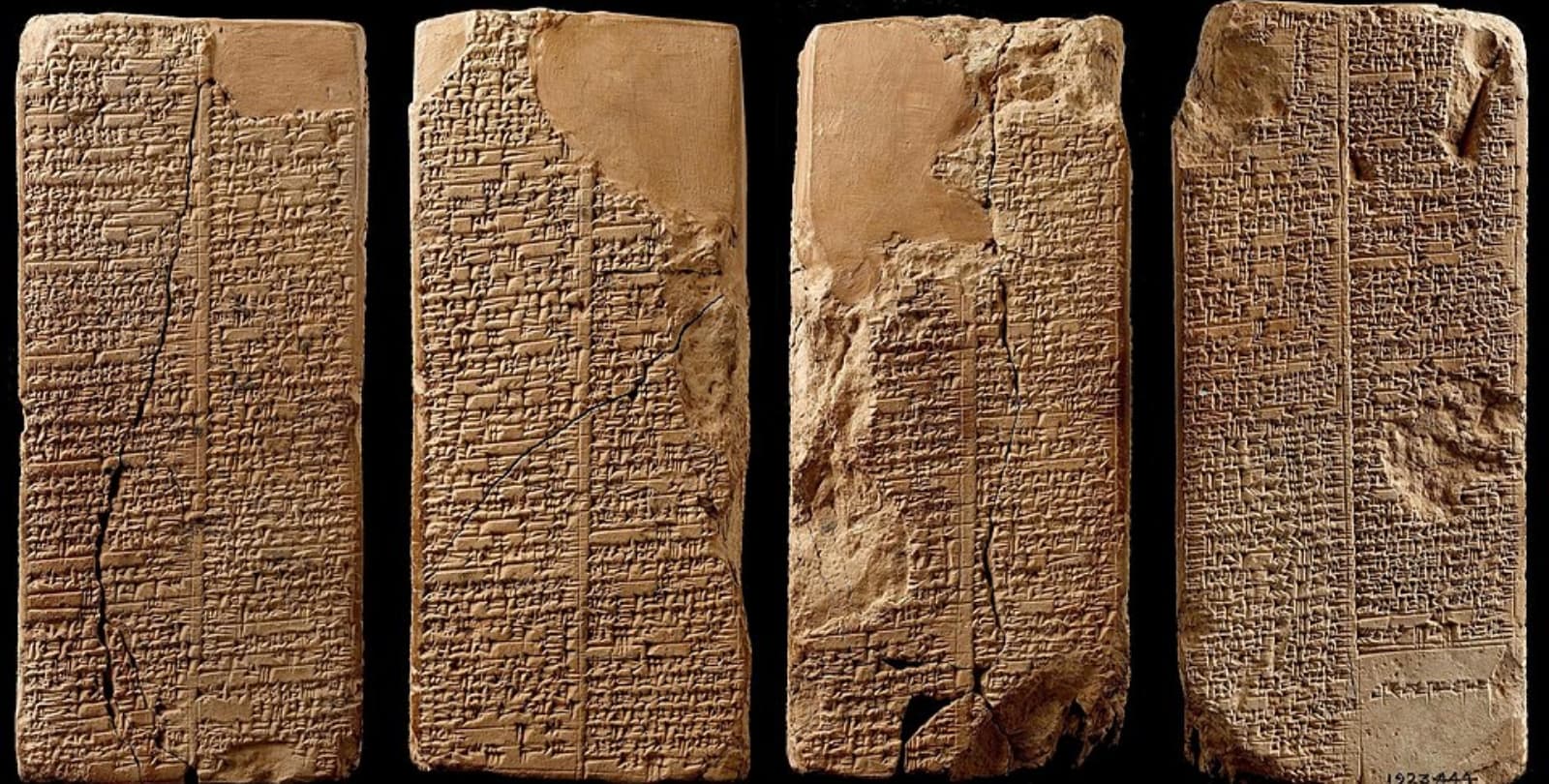
The Sumerian King List is inscribed on the Weld-Blundell Prism, which was created around 1800 BC and discovered more than 3,700 years later, in 1922. Photograph: Unknown, Public domain, via Wikimedia Commons.
Fluidity in the Order of Ancestors
We can observe the fluidity of ancient genealogies when we investigate information connected to Sin-leqi-unninni.
In a late Assyrian catalogue of the presumed authors of famous works (generally deemed spurious), Sin-leqi-unninni, a lamentation priest, is identified as the author of the Gilgamesh Epic.
Sin-leqi-unninni most likely lived during the Kassite period, the second half of the second millennium BCE.8 By the Seleucid era (roughly 850 years later), Sin-leqi-unninni had been relocated to the mid-third-millenium BCE and was counted among the primeval scholars by the lamentation priests operating in Hellenistic Uruk. These priests regarded him as their ancestor.
Such elevation of an ancestor to the position of the first scholar after the Flood illustrates how these priests used genealogies to legitimize their status in Uruk’s priestly hierarchy.9
The case of Sin-leqi-unninni demonstrates how genealogical information can be reshuffled and used for rhetorical purposes. Such fluidity is ideological; these genealogies were preserved more to communicate ranking than sequential chronology.
This fluidity can be seen in several other kinds of ancient genealogical material. For instance, we can infer how the ancients perceived genealogies from how they continually reorganize the genealogies of the gods. Since these are occasionally rearranged and grouped to serve a particular function, it is logical to assume that human genealogies could be treated similarly.
Another example can be found in the genealogy of Ammisaduqa, a descendant of Hammurabi in the first dynasty of Babylon. This genealogy evidences shuffling of the sequence of kings, as well as the garbling of some names when compared with the Assyrian king list.10
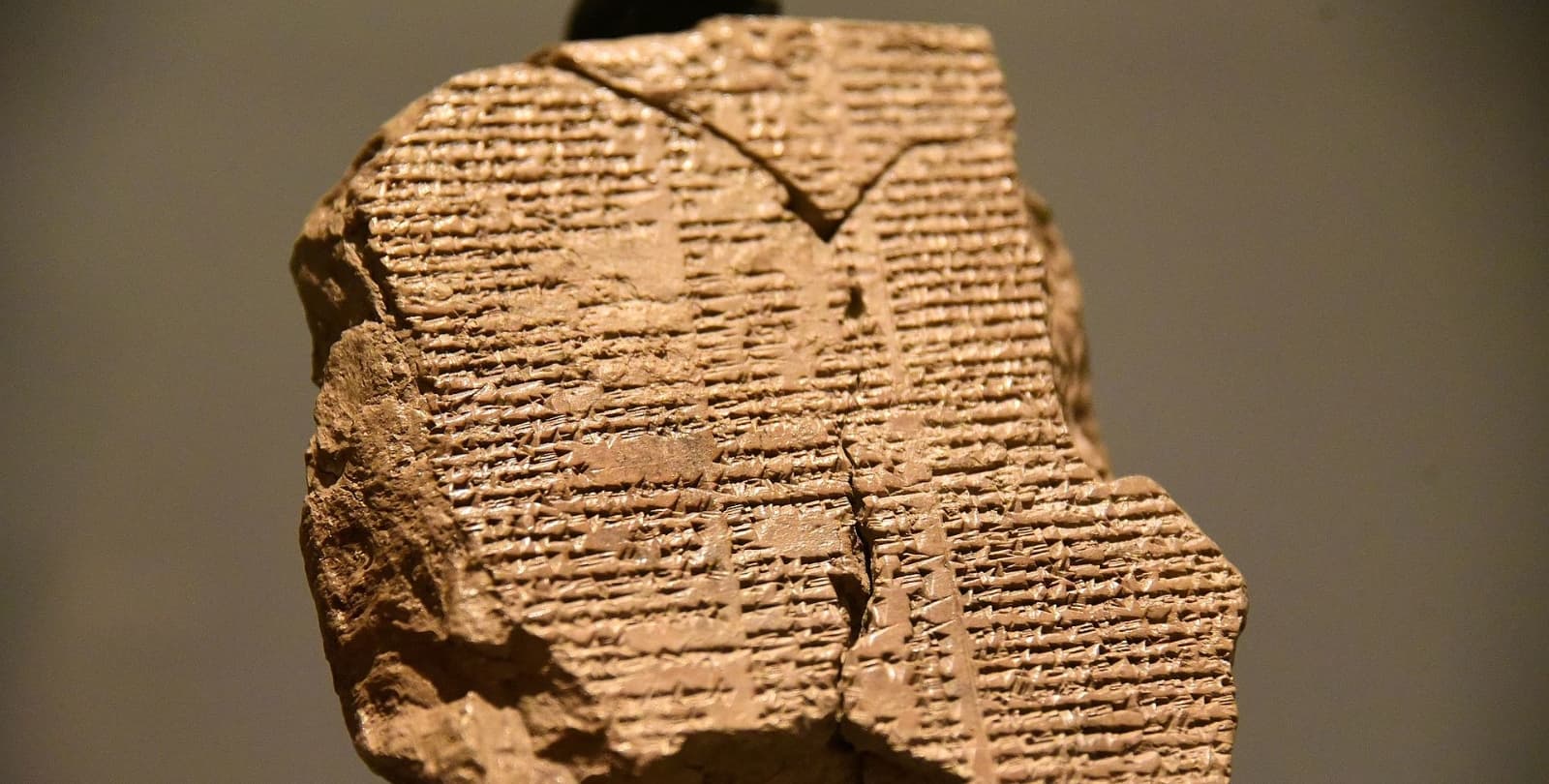
Tablet V of the Epic of Gilgamesh. Osama Shukir Muhammed Amin FRCP(Glasg), CC BY-SA 4.0 <https://creativecommons.org/licenses/by-sa/4.0>, via Wikimedia Commons
Omitting Some Generations
Another form of fluidity is evident in telescoping within genealogies.
We have no reason to think that the purpose of genealogies was to represent every generation, as our modern family trees attempt to do. When comparison of several documents is possible, we generally find that genealogies were selective.
From his study of Greek genealogies from the classical world, classicist Robert L. Fowler observes,
“Memory in these circumstances is very selective. Whole branches of the genealogy disappear forever as families move, suffer disgrace, or lose status; childless stumps are seldom tolerated; unimpressive individuals are consigned to oblivion; impressive ones get transferred to a more convincing line of ancestors. Royal pedigrees are particularly vulnerable to erasure when the monarchy ceases to exist.”11
We observe the skipping of generations when we compare different presentations of biblical genealogies. For instance, consider the lineage of Moses (third generation from Levi in Exodus 6:16-20) against that of his contemporary, Joshua (ninth, or possibly tenth, generation from Joseph in 1 Chronicles 7:22-27).12

How Should We Interpret Biblical Genealogies?
In this four-part series, biblical scholar J. Richard Middleton answers the often-asked question, "How should we interpret biblical genealogies?"
Rhetorical Use of Numbers
One final lesson we learn from studying ancient genealogies is that they are sometimes formatted to suit a literary purpose.
We observe this in the Bible, particularly in the genealogies between Adam and Noah, and Noah and Abraham. Each is set up to contain 10 members, with the last having three sons.
How Should We Interpret Long Biblical Lifespans?
Numbers Can Communicate Rhetorically
Daniel Lowery has suggested that one interpretative adjustment we need to make is to think about numbers in the genealogies not on the basis of what they mean (their numerical value), but how they mean (their rhetorical use). That is, that they are used to communicate ideas figuratively.13
This is evident when we consider that many of the characteristics we have recognized in ancient Near Eastern texts are also noticeable in the Bible.
The factors we have seen in those texts that could explain the rhetorical significance of the long lives in Genesis include:
- A long lifespan may be intended to extend honor to the individual
- Remote ancestors are given greater honor
- Not every generation needs to be represented14
Scholars have added other suggestions, including mathematical patterning15 or the use of multipliers16 to enhance the rhetorical force of the numbers.

Long Life Spans in Genesis: Literal or Symbolic?
A closer look at the different uses of numbers in ancient Near Eastern literature can shed light on our understanding of the life spans of the Hebrew patriarchs.
Genesis’ Long Lifespans are Probably Not Literal Ages
Given the evidence above, we can consider it unlikely that the ages given in the genealogies of Genesis reflect the actual life spans of individuals.
We therefore do not have to find an explanation for why they lived so long—they didn’t.17
What Does This Indicate About the Trustworthiness of the Bible?
The Bible’s trustworthiness is based on the claims it is making.
The nature of those claims, in turn, must be determined from the literary intentions and conventions of the ancient authors who wrote them. We cannot simply assume that they thought and wrote with the same purposes as we do.
If they were not claiming the long ages as actual, but were using the numbers rhetorically, then the Bible’s trustworthiness is not dependent on people having lived for hundreds of years.
This lesson can be applied broadly. When we recognize the rhetorical conventions of the numbers presented in these genealogies, we can conclude they also offer us no information for calculating the date of the Flood or the age of the Earth. We cannot simply “do the math.”
About the author

John Walton
Related resources
If you enjoyed this article, we recommend you check out the following resources:

Article (Advanced)
Article (Advanced)
Article (Advanced)
Article (Advanced)

Language of God

Article (Advanced)