Who Wrote Genesis?
We do not know for certain who wrote Genesis, John Walton writes. More important than determining the book’s author is understanding its message about God.
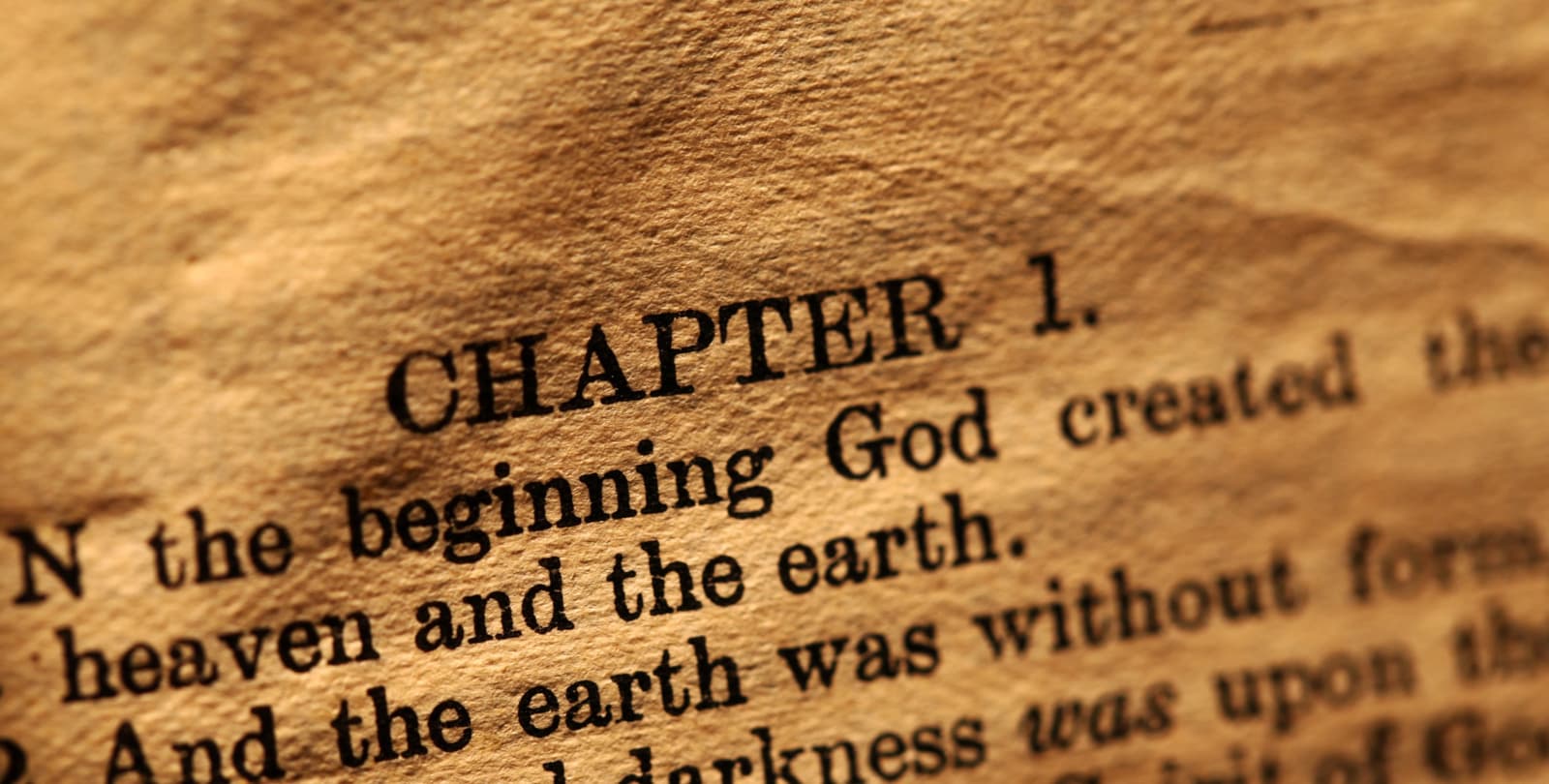
Image used under license from Shutterstock.com.
The bookshelf in my office is lined with a series aptly titled Great Books.
This collection brings together history’s most influential titles. Their spines are adorned with the names of prominent authors, from Plato and Aristotle to Melville and Tolstoy.
For centuries now, the authors of prominent books have been revered. We enshrine them in our libraries, on our shelves, and in series like Great Books.
Perhaps no book in history has been discussed and debated more than the first book of the Bible, Genesis. And yet, if you review a list of the titles that make up the Great Books series, you’ll notice that it is not included.
To do so, the editors would have had to answer a deceptively simple question: “Who wrote Genesis?”
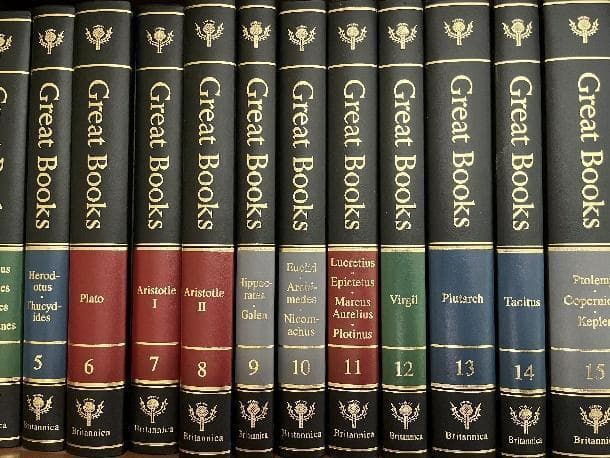
The “Great Books” series. Photo courtesy of the author.
The Different Views About Who Wrote Genesis
The Traditional View: Moses Wrote Genesis
The oldest view is that Genesis was written by the prophet Moses, who led the Israelites out of Egyptian slavery.
However, this idea is only first hinted at in Jewish literature in the Hellenistic period. Later references to the “Five Books of Moses” (which include Genesis, along with Exodus, Leviticus, Numbers, and Deuteronomy) are found in the Talmud, written down in the third to fifth centuries CE. The idea of Mosaic authorship can therefore be considered a relatively late development.
What about New Testament references to Moses? Jesus occasionally refers to the “Law of Moses,” and in Luke 24:44 he is likely referring to what we call the Pentateuch.
However, this doesn’t mean Jesus intended to identify Moses as the author of Genesis. Rather, Moses is the authority figure to whom the material in Exodus through Deuteronomy was credited (Genesis had come to be included in that collection). Jesus’ statement therefore does not necessarily pertain to authorship as we think about it today.1
Neither the Old Testament nor the New Testament explicitly identifies Moses as the author of Genesis, but many today retain this idea.
The Documentary Hypothesis
The documentary hypothesis was the dominant idea about the authorship of Genesis in the 19th and 20th centuries.
Popularized by German biblical scholar Julius Wellhausen, this hypothesis claimed that the Pentateuch was compiled from four major sources (namely the Jahwist, Elohist, Deuteronomist, and Priestly sources), each the product of different groups from different times.
Support for this specific theory has waned. Though some still hold to a form of it, no consensus currently exists concerning how many sources were involved, when they originated, and what groups might have been responsible.
Modern Scholarly Views
Current scholarly assessments reflect how little we know about the authorship—and, more specifically, the composition—of Genesis.
Theories today often consider Genesis to be the result of individuals editing together a variety of earlier sources, rather than the work of any one person. But the consensus stops with that general assessment.
Modern scholars debate whether the supposed sources are literary accounts, or whether oral traditions may have played a more significant role. Even in modern scholarship, no consensus exists regarding who wrote Genesis.
If we lack evidence for the traditional position that the book of Genesis was written by Moses, and modern scholars are deeply divided about its composition, where does that leave us?
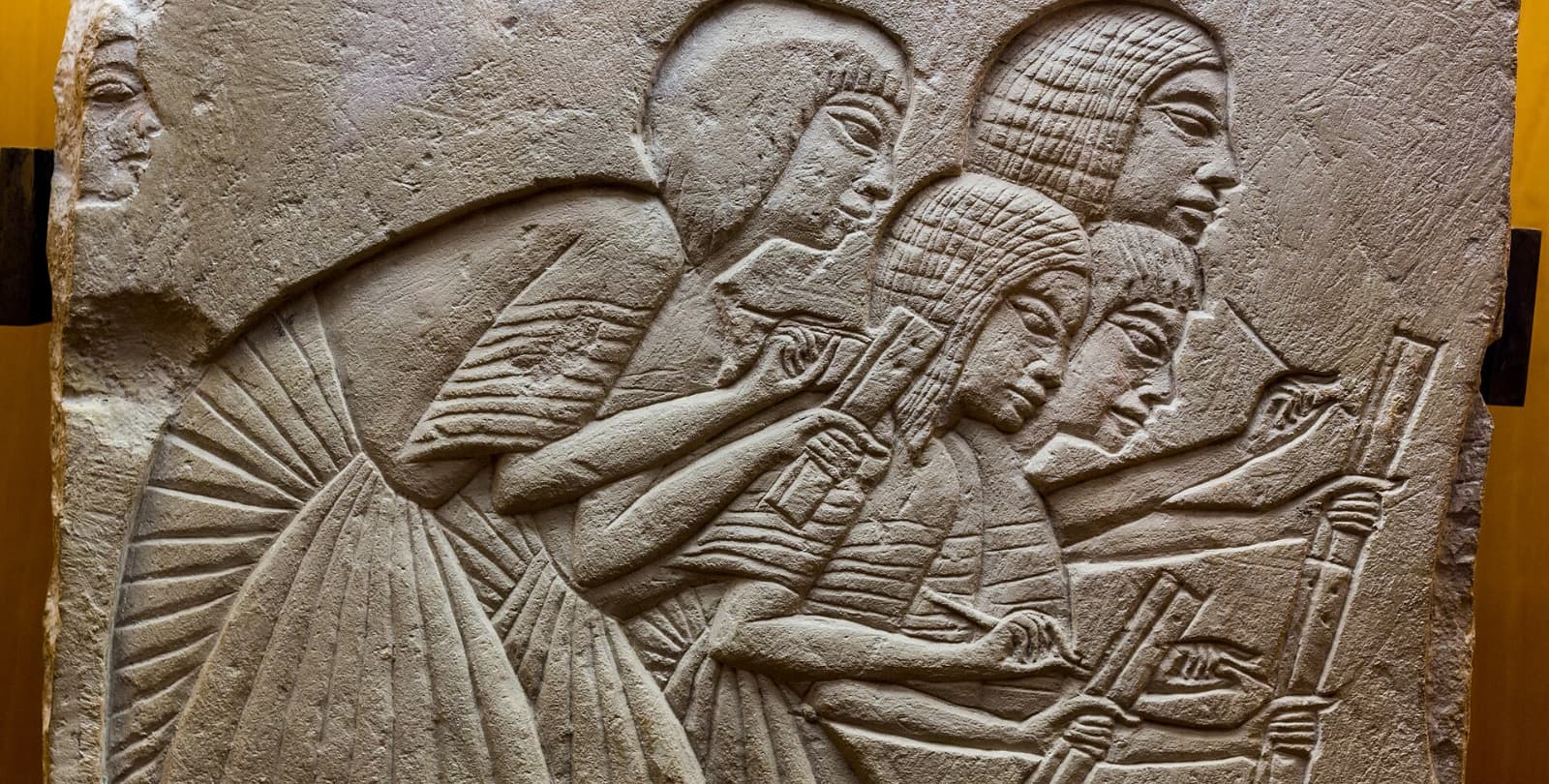
Tomb relief depicting four scribes at work, created during the Amarna period (ca. 1350-1333 BC). Image: ArchaiOptix, CC BY-SA 4.0 <https://creativecommons.org/licenses/by-sa/4.0>, via Wikimedia Commons
Are We Asking the Right Questions?
When we ask, “who wrote Genesis,” we are making an assumption that is understandable from our modern vantage point.
Authorship is considered an important aspect of a book in our culture. We hold in high esteem the rights of an author as one who has produced intellectual property, and we often validate the significance of a book based on the credentials and reputation of the author.
What we can fail to recognize, however, is that in the ancient world of the Israelites, Babylonians, and Egyptians, there were no books—and no authors—as we know them.2
Remember that these were hearing-dominant cultures. Reading and writing were largely unnecessary for daily life; most of the ideas in circulation were initiated and transmitted orally.
Literary production involved scribes more than it did identified authors. Documents (rather than books) were preserved in archives, but oral tradition carried more weight. The function and content of a text testified to its authority more than its authorship.
The Greeks even expressed the idea that to commit a tradition to writing was to kill it—it only remained vital when it retained the dynamic of orality.3
The existence of a long oral history is the likely scenario for Genesis. In such a situation, a book written by an author is not the starting point. Instead, a book, compiled from a variety of oral traditions and eventually some archived documents, comes at the end of a long process.
How Was Genesis Written and Compiled?
Based on the information above, we can now see that asking about the authorship of Genesis is a question of modern interest. It cannot be answered, since authorship was not traceable in the oral traditions that characterized the ancient world.
Furthermore, the eventual composition of the written product that we call “Genesis” would have taken place at a much later date than the origins of the traditions it contains. The data that we have are insufficient to pinpoint when that compilation took place, or who was responsible for it.
Nonetheless, the long history of how the book has been perceived and received in Jewish and Christian circles is more than adequate to validate the esteem that it holds in the canon of Scripture.

John Walton | More Than History
Discussing interpretation with biblical scholar John Walton and exploring the answers his work offers.
Does It Matter Who Wrote Genesis?
If we do not know with certainty who wrote the book of Genesis, a few questions follow: Does this matter? Does it change our view of Genesis as inspired Scripture? And does it impact our reading of the text?
On the question of inspiration, we can turn to 2 Timothy 3:16, which tells us that “all Scripture is God-breathed and is useful for teaching, rebuking, correcting and training in righteousness…”.
Knowing the identity of Genesis’s human author is not what imbues the text with authority. Based on the testimony of Jesus and of Paul4, we consider it to have its source in God. This divine inspiration is the source of its authority.
Genesis’s Authorship and the Role of God
But this raises another question: If books in the ancient world were the final result of a complicated process rather than the work of a single author, how might inspiration—that is, the text being “God-breathed”—have worked?
To answer this, we need to realize that God can work through editors and compilers just as he can through authors. In fact, some of the biblical books (such as 1 and 2 Chronicles) are explicit about being edited works.
The idea of inspiration is that we affirm the final written product has its source in God. This can be true regardless of how simple or complex the process might have been to create it.
If Genesis is, as many believe, a book that compiles a variety of oral traditions and documents into a literary product that has been given coherence and purpose, God is still regarded as overseeing that process. That product, with its message and purpose, is what we accept as the Word of God.
How We Should Read Genesis
When we consider Genesis’s content, the book’s message is more important than its authorship and composition.
The book of Genesis is the product of the ancient world. It has its setting in the culture of that ancient world. As such, it is understandable that much of its content reflects the conceptual world of that time.5 People in that world thought far differently than we do today.
Although we need to understand this cultural context to read Genesis well, the text is not demanding that we revert to a pre-modern conceptualization of the world.
Instead, we are to focus on the message of the book, which must be understood in light of the affirmations it makes. It primarily pertains to the ways in which God has been working out his plans and purposes, beginning in creation and eventually working through a covenant relationship with Abraham.

Abraham receives three visitors. Image: Rama, CC BY-SA 3.0 FR <https://creativecommons.org/licenses/by-sa/3.0/fr/deed.en>, via Wikimedia Commons
Our best question is therefore not who wrote Genesis, but what the final compiler (whoever it was and whenever it took place) wants their immediate audience to understand.
The books of the Old Testament are written by insiders, to insiders (e.g. Israelites writing to Israelites). The challenge to us as outsiders is to be attentive enough as readers to discern the questions they were asking and the answers they were giving.
Who Wrote Genesis?
We do not know with certainty who wrote the book of Genesis.
What we do know is that between the Old and New Testaments, Jewish leadership adopted the book as canonical. Most importantly, the testimonies of Jesus and Paul give us confidence that Genesis has its source in God.
Regardless of whatever process brought it to completion, whoever the parties involved were, and whenever it took its final shape, we include it among the books of Scripture that we cherish as the Word of God.
About the author

John Walton
Related resources
If you enjoyed this article, we recommend you check out the following resources:

Common Question

Language of God


Common Question

Language of God
John Walton | More Than History