Magnifica Humanitas: Reflecting on Pope Leo’s AI Encyclical
Humanity is magnificent not because we can calculate faster than AI, but because we are made for communion with God, one another, and the rest of creation.
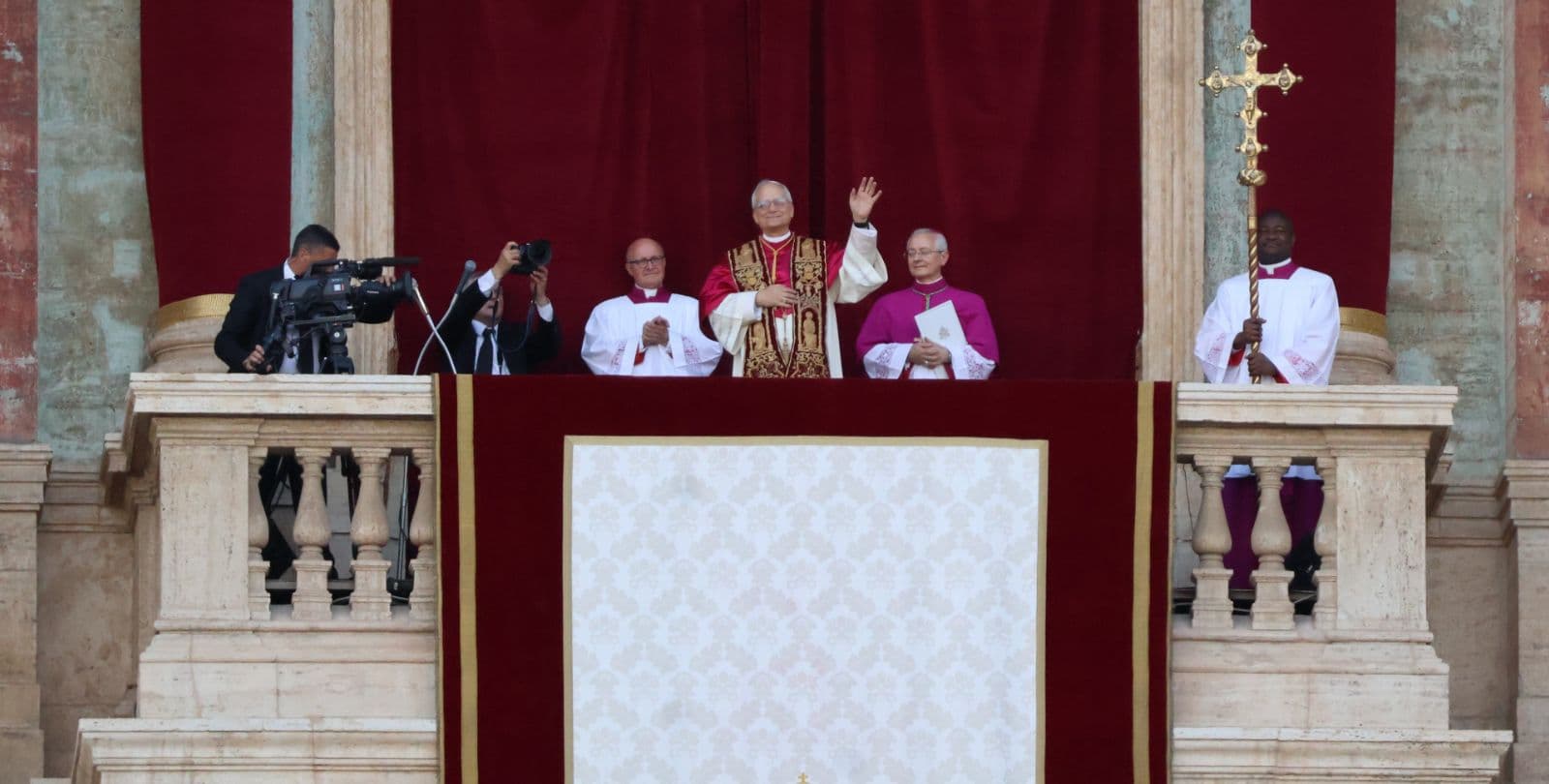
Edgar Beltrán / The Pillar, CC BY-SA 4.0 <https://creativecommons.org/licenses/by-sa/4.0>, via Wikimedia Commons
This week, Pope Leo XIV gave us Magnifica Humanitas, an encyclical on artificial intelligence (AI) and the dignity of humanity.
Given the cultural moment in which it was released, its topic, and its length (more than 42,000 words!), I suspect much of the commentary on it has relied on AI summaries!
I assure you, I read the whole thing the last couple of days and have a few initial reflections.
Considering the Encyclical’s Main Metaphor
The Tower of Babel and the Walls of Jerusalem
The encyclical’s primary metaphor comes from construction projects in the Hebrew Scriptures. It asks: Are we building the Tower of Babel, or are we rebuilding Jerusalem’s walls in the time of Nehemiah?
Babel was humanity’s attempt to make a name for itself through technological prowess. It was impressive and efficient. It must have been coordinated, but I suspect it lacked real community (what the church calls fellowship or even communion) among those involved.
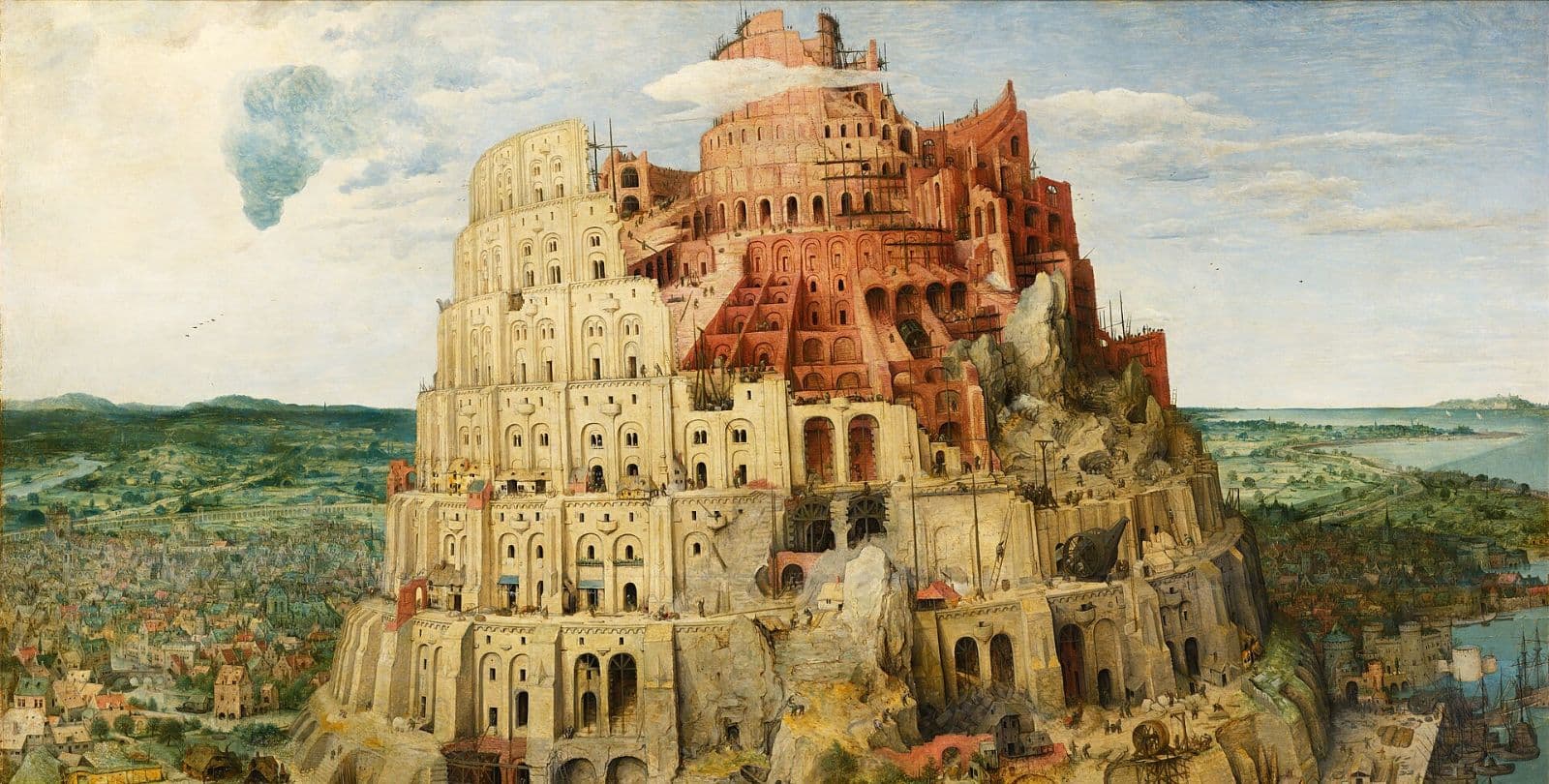
16th century painting titled “The Tower of Babel.” Pieter Brueghel the Elder, Public domain, via Wikimedia Commons
Nehemiah’s wall project, on the other hand, had shared responsibility and attention to the vulnerable life of a community.
Given where Leo ends the encyclical, with Mary’s Magnificat, there is another contrast he might have drawn: the workers on the Tower of Babel don’t seem to sing (unless it was something like the opening song of Les Misérables: “Look down!”). Their overlords, no doubt, sang all the way to the bank.
But the people Nehemiah gathered, I suspect, sang more like Hobbits working together — not because the work was easy, but because it was shared.
What Kind of Sub-Creators Will AI Make Us?
Reference to Tolkien is appropriate here, and not only because he gets a shout-out in the encyclical.
Leo quotes him for one purpose, but I think Tolkien gives us another way into the cultural conversation about AI. He described human creativity as “sub-creation.”
We do not create from nothing, as God did. We participate in God’s world by forming, naming, cultivating, and imagining. And we pay homage to the Creator by creating well, with our work ordered toward love.
AI is the latest and most powerful expression of that creaturely creativity. The question is what kind of sub-creators we will become through it.
Will our AI project look more like Babel or Nehemiah’s wall? Will it be ordered toward love, or will it become another cultural idol?
The Nature of AI
Technology is Not Neutral
I was gratified to see Pope Leo develop on an idea I recently wrote about for BioLogos (not saying he plagiarized me or that his LLM was trained on my text!): that technology is not neutral.
We often talk as if technologies are just tools, and the only moral question is whether we use them for good or bad purposes.
Leo will have none of that. He writes that moral discernment must examine “how that system is designed and what vision of the human person and society is embedded in the data and models that guide it” (§104).
Technology is Not Neutral. Here’s How It’s Forming Us
Artificial intelligence is shaping who we are and who we’ll become. As it trains our habits and attention, what does it mean for spiritual formation?
That is exactly right. Technologies do not simply sit there waiting for us to use them. They are like liturgies: they form us; they invite certain habits, reward certain behaviors, and make some futures easier to imagine than others.
Smartphones and their apps have radically changed us in that regard within just a couple of decades. What will AI do?
“Moral Judgment Cannot Be Reduced to Calculation”
AI systems trained on massive datasets, optimized for engagement, profit, prediction, or control, already contain assumptions about what humans are and what we are for. This becomes especially chilling in Pope Leo’s discussion of war.
AI can make conflict faster, more impersonal, and easier to initiate. It can shift defense into threat prediction, reduce victims to data, and accustom us to the idea that violence is inevitable and merely needs to be optimized.
But Leo asserts, “Moral judgment cannot be reduced to calculation” (§198).
That sentence should be written over every defense contract involving AI.
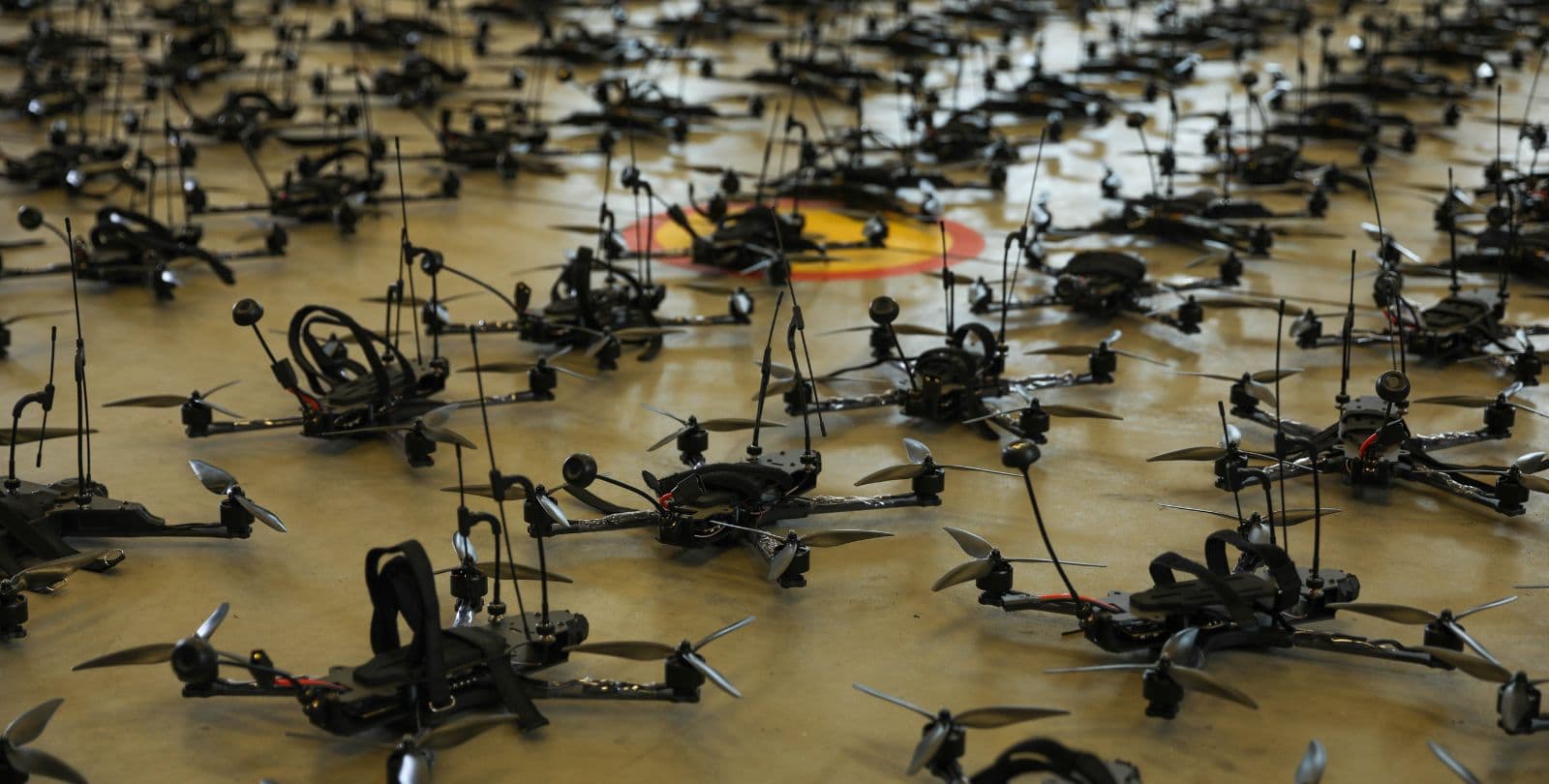
Unmanned aerial drones. U.S. Army photo by Staff Sgt. Dylan Bailey, Public domain, via Wikimedia Commons
Our technologies can shield us from the faces of the people affected by our decisions. And when we no longer see faces, it becomes easier to kill. Peter Wehner recently criticized the Secretary of Defense for being unable to approach matters of life and death with reverence or humility.
That moral unseriousness is not caused by AI, but AI can amplify it. It can make lethal decisions feel clean and data-driven. It rewrites the songs of war in a happier key. It can help us imagine violence without the human bodies whose life has been extracted.
Christians must refuse that imagination.
The Heart of the Encyclical: Human Dignity, Love, and Formation
AI and Human Dignity
The heart of Magnifica Humanitas is human dignity. That may sound predictable for a papal document, but Leo gives it real depth.
The danger now is not that machines can do some things better than we can. That has been true for a long time. John Henry may have died with his hammer in his hand trying to outdrive a steam drill, but most of us no longer feel a spiritual crisis because machines are better at driving railroad spikes. Computers calculate faster than we do. They beat us at chess. LLMs can write better than most of us (or soon will).
So what? Human dignity was never grounded in being the best calculator, the strongest back, or even the cleverest producer of words. If our worth depends on outperforming machines, we have already lost.
Our dignity lies in being creatures called into communion with God, with one another, and with the rest of creation. It lies in our capacity for responsibility, repentance, care, truthfulness, and love.
Human dignity was never grounded in being the best calculator, the strongest back, or even the cleverest producer of words… Our dignity lies in being creatures called into communion with God, with one another, and with the rest of creation.
That is why one of Leo’s most moving passages is not about intelligence at all.
He writes that the quality of a civilization is measured not by its power, but by the care it offers: reading stories to a child; keeping company with an elderly person; making a home welcoming (§114).
These are not inefficient tasks waiting to be automated. They are practices through which we become human.
Maybe one day AI will read stories with flawless pacing and perfect voices. Maybe it will keep an elderly person company with inexhaustible patience. Maybe it will recommend the ideal arrangement of furniture, lighting, and music to make a home feel welcoming. Fine.
But we still need to read to children. We still need to sit with the elderly. We still need to make places hospitable for others with our own hands and attention. If we outsource care itself, we lose something — maybe not for the person on the receiving end (though I’m not convinced of this yet), but certainly for the person who would have given care.
AI and Human Love
I’ve just turned in the manuscript for a book I’ve been writing, titled The Spiritual Journey of Homo Sapiens.
One of the questions running through that project is what it means for human beings to become the kinds of creatures that are capable of moral responsibility and spiritual maturity.
We are not just brains that compute. We are embodied, social, meaning-making animals. We became human through seeing, walking, thinking, talking, feeling, choosing, and loving (at least those are the seven capacities I’ve addressed in the book).
Love, in the human context, is not merely affection for those close to us. That much we share, in some form, with many other creatures.
Human love becomes something more when it is taken up into cultural practices, moral reflection, and spiritual formation. It involves the capacity to ask whether I’m loving the things I ought to love, whether the people outside my immediate circle count, whether the stranger on the road to Jericho is in fact my neighbor (spoiler alert: Jesus named caring for that stranger as the archetype of neighbor love!).
There’s a new challenge, though, in the modern world because technology has radically expanded our awareness of potential neighbors.

Image used under license from Shutterstock.com
For most of human history, our moral world was bounded by the people we could physically encounter. Suffering on the other side of the planet was largely invisible to us.
Now it arrives on our devices each day before breakfast. We know about exploited workers mining rare earth minerals, families displaced by climate disasters, children harmed by algorithmic feeds, and civilians living in the paths of autonomous weapons systems. Our technologies have connected us to one another in ways our ancestors could scarcely imagine.
But moral awareness does not automatically produce moral responsibility. Knowing more about the world does not guarantee that we will care more deeply about it. Information does not itself teach us what to love. For that we need practices, communities, stories, and maybe songs that train our moral attention.
AI and Human Progress
The age of AI forces this question with urgency: Are we becoming the kind of people who can handle the power we now possess?
If AI becomes another mechanism for the few to further consolidate wealth, power, information, and control at the expense of the many, then it will not represent human progress in any Christian sense worth defending. A civilization does not become more magnificent because a small number of people can build astonishing machines while everyone else becomes raw material for training data, consumer manipulation, workplace surveillance, military automation, or economic displacement.
Pope Leo admits this cannot be addressed only by individual virtue, important as that is.
He calls us to recover attention, cultivate truthfulness, resist dehumanizing language, refuse the outsourcing of care, and stay close to the vulnerable. So yes, let us read to the child, visit the elderly, and welcome the stranger. These are not small things. They are how we keep our humanity from being quietly trained out of us.
But in a technological civilization, love of neighbor also has to scale. Leo speaks of “translating charity into structures of justice, giving institutional form to fraternity” (§186).
That might be the most important line in the encyclical.
We often know how to imagine love at the scale of a person: the Samaritan stopping on the road, the parent reading at bedtime, the friend bringing a casserole, the nurse sitting beside the bed.
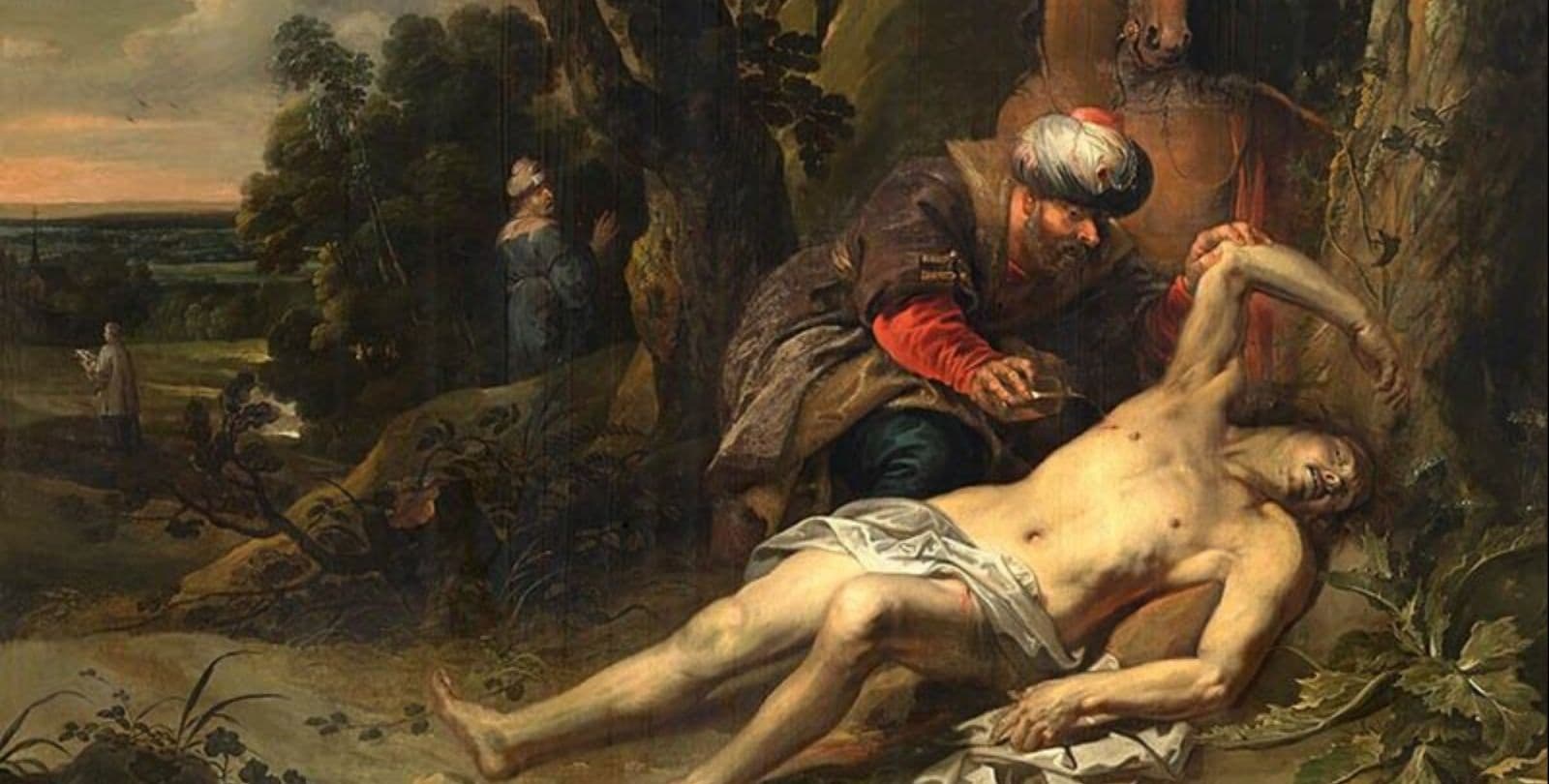
17th century painting titled “The Good Samaritan.” Balthasar van Cortbemde, Public domain, via Wikimedia Commons
But in our brave new world, many of the people affected by our choices will never lie directly in our path. We will not meet most of those whose stories clutter our newsfeeds.
That is why institutions matter.
One of the most distinctive human achievements is that we build durable structures that carry neighbor-love farther than any one person can: schools, hospitals, churches, nonprofits, unions, technology companies, and yes, even governments.
These institutions are never neutral machinery. They embody someone’s answer to basic moral questions: Whose suffering counts? Who gets access? Who bears the risk? Who profits? Who is protected? Who can appeal when the system gets it wrong?
That is why AI governance cannot be left to the people who stand to profit most from the technology. Local communities, workers, educators, parents, churches, scientists, ethicists, and vulnerable populations must have a meaningful voice (what Leo calls “subsidiarity”).
Otherwise, “alignment of AI with values” will simply mean aligning the technology with the values of those few who own the servers.
How Do We Move Forward?
Here the encyclical will feel frustratingly light on tactics to some people. It does not give us a ten-point plan for regulating OpenAI or Anthropic (or whatever new company will have emerged by the time this article is published).
I wondered at some moments whether the encyclical was more like a coach’s pep talk before the game (“Come on, humanity, you just have to want it more!”) than the strategic practices and disciplines that actually prepare the team for the game.
But that criticism is only partly fair. Leo does call for transparency, accountability, equitable access, protections for workers, public oversight, and international regulation. More importantly, he brings us back to the Catholic Church’s Social Doctrine, which reminds us of the tune that should be hummed while we make decisions: the dignity of the human person, the common good, solidarity, subsidiarity, social justice, and the universal destination of goods.
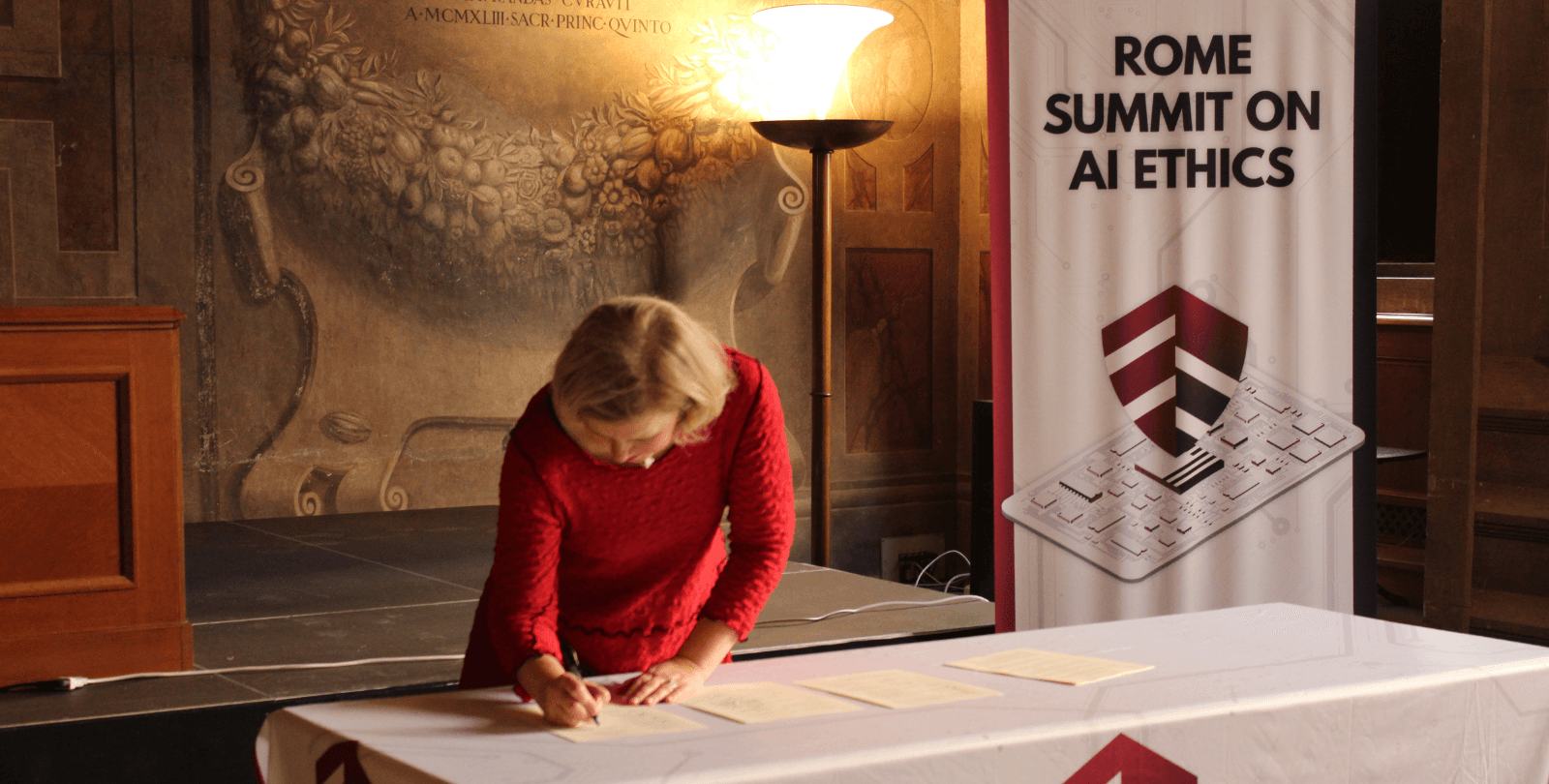
BioLogos Signs Interfaith Statement Calling for Ethical AI
BioLogos President Kristine Torjesen joined faith leaders in Rome to sign a groundbreaking statement calling for AI that respects human dignity.
Those guiding principles do not answer every policy question, but they tell us who must not be forgotten when policy is made, and they call us to participate in the process.
The questions to ask about our creations should not be simply:
- Can we build it?
- Can we profit from it?
- Can we use it for ministry?
But rather:
- Does this help us become more human?
- Does it serve the common good?
- Does it protect the vulnerable?
- Does it deepen our capacity for truth, freedom, and love?
Humanity is magnificent, not because we can calculate faster than machines, or because we can build systems that mimic speech, reason, or creativity.
Humanity is magnificent because we are made for communion with God, one another, and the rest of creation. We are magnificent in our vulnerability, our care, our freedom, our limits, our capacity for repentance, and our longing for more than efficiency.
The Magnificat and Our Role in the Age of AI
At the end, Pope Leo turns to Mary’s song of praise from Luke 1 (traditionally called “the Magnificat”).
That is fitting. Mary’s song is not a hymn to domination, speed, or technical mastery. It is a song of mercy, embodied hope, the reversal of power, and God’s faithfulness to the lowly.
If we are sub-creators as Tolkien says, then we should not only ask what we are building, but what songs we sing while we build. Babel will always have good engineers. What it lacks is Mary’s magnificent soundtrack that refuses to confuse power with greatness.
Nehemiah’s project gives us a better image for the age of AI: people each taking responsibility for a section of the wall and building a common life where the vulnerable are protected. That is the song Mary sings.
And if Christians have anything to offer in this moment, it begins with learning to sing that song loudly enough for our technologists and politicians to hear.
About the author

Jim Stump
Related resources
If you enjoyed this article, we recommend you check out the following resources:



Language of God
Joanna Ng | Data, Truth, & AI