Tish Harrison Warren | A Grammar for Weariness
What if the dry, weary seasons of life aren’t empty at all, but quietly shaping something deeper beneath the surface?
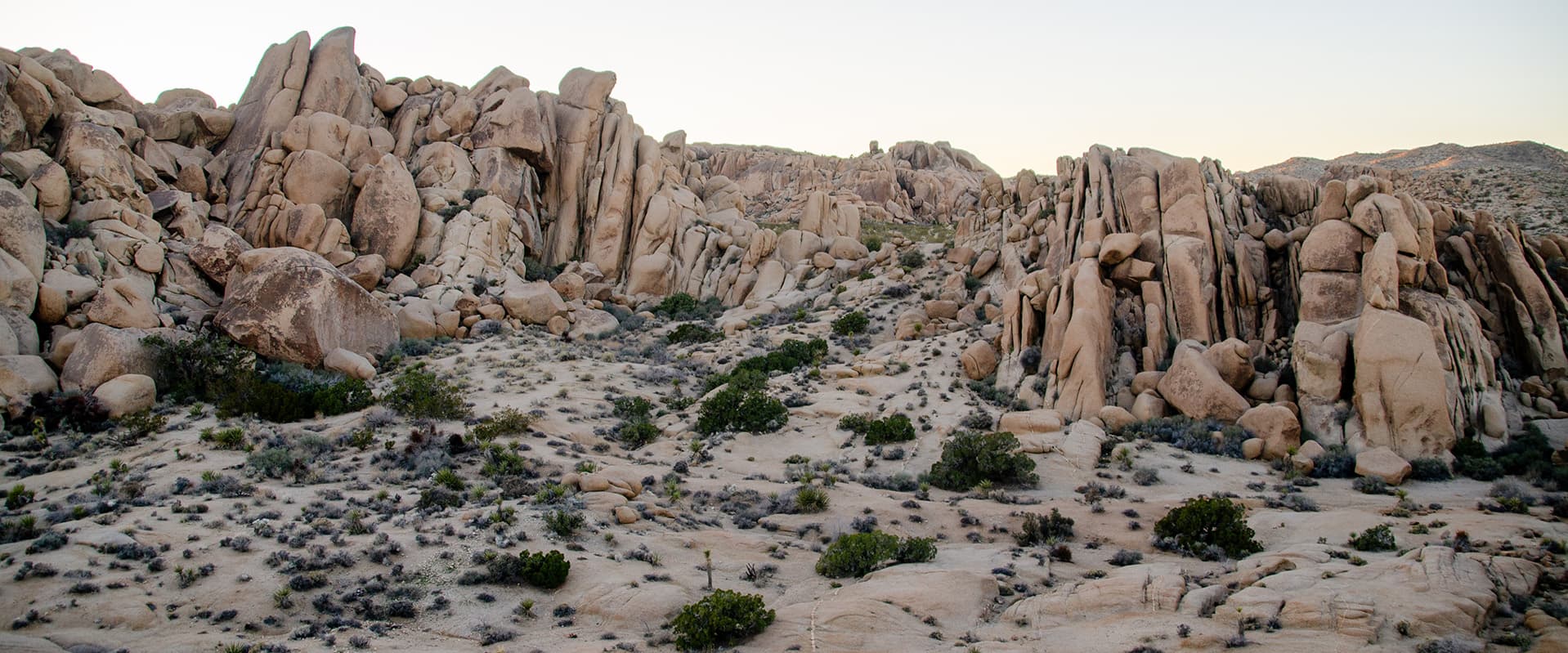
Photo by Colin Hoogerwerf
Description
In a world that often feels relentlessly exhausting, weariness can seem like something to fix, escape, or push through. But what if it’s also a place where something deeper is happening?
In this episode, Anglican priest and writer Tish Harrison Warren helps us explore the spiritual reality of “dry seasons”—times that aren’t marked by crisis or tragedy, but by a quiet sense of fatigue, distance, or disorientation. Drawing on the wisdom of the desert fathers and mothers, Tish reflects on how Christians across history have understood these experiences not as failures of faith, but as essential parts of it.
The conversation explores how ancient practices like stability, repetition, and embodied prayer can quietly shape a life over time, even when nothing seems to be happening. And it offers a different vision of growth—one that doesn’t depend on constant energy or clarity, but unfolds slowly, often beneath the surface. Through the lens of her own experience, Tish reflects on how these dry seasons can become places of meaning, where growth isn’t just possible, but necessary.
If you’ve ever felt stuck in the “long middle,” weary of being weary, or unsure what God is doing in a dry season, this conversation offers a language—and a hope—for the journey.
Theme song and credits music by Breakmaster Cylinder. Other music in this episode by Vesper Tapes, courtesy of Shutterstock, Inc.
- Originally aired on May 14, 2026
- WithJim Stump
Transcript
Warren:
Grace is not something that zaps us. Grace is something that grabs hold of us and transforms each part of our life and our formation? ‘How does Grace form us?’ I think is a really important question.
My name is Tish Harrison Warren, and I’m an Anglican priest. And I’m a writer. So that’s what keeps me busy, besides the fact that I have three children, so I’m also a mom.
Stump:
Welcome to Language of God. I’m Jim Stump.
Weariness is not a new phenomenon for humans, but sometimes it sure seems like our modern world is pushing weariness to the limits. You can feel it in the air. And then there is the constant attempt to escape from weariness—maybe with 3 simple steps and a special new superfood—which doesn’t seem to make us feel any less weary.
Tish Harrison Warren, as a priest and influential Christian voice, isn’t immune from this feeling. But somewhere along the way, instead of the latest, greatest fad to combat weariness, she stumbled on the desert mothers and fathers, those early Christians who spent their days wandering—often alone—through literal deserts, and finding spiritual growth in those dry places, and she found something there that felt like an oasis.
Tish’s exploration of this old wisdom and the need to write her way through a season of weariness led to her new book, What Grows in Weary Lands. She’ll be the first to say, that this book isn’t a surefire way to beat your weariness and come out the other side refreshed and ready to take on the world… but it is an invitation into a language and bodily practice that might allow us to walk through weary seasons knowing that life and growth happen even there.
Let’s get to the conversation.
Interview Part One
Stump:
Well, Tish Harrison Warren, thanks for joining us again.
Warren:
Yeah, it’s great to be here.
Stump:
So last time you were here, it was 2022, and we had you record a little introduction of yourself like we do for all our guests and like you just did for us again. And back at that time you said many of the same things. “I’m an Anglican priest, and an author, and a columnist for Christianity Today and write for The New York Times, and I’m a mom of three.” And you finished that list by saying, “And I’m very tired.”
Warren:
That’s funny.
Stump:
And I couldn’t help with thinking of that when I read the first page of your new book, where you described going on a retreat because you felt profoundly weary, soul weary, body weary, weary of being weary. So, this sounds like a good setup for writing a book called What Grows in Weary Lands. So, catch us up a little bit with what has happened in your world since 2022 and how that led to the writing of this new book.
Warren:
Yeah. Well, I was profoundly tired. That was a moment of great honesty last time. So since then, in 2022, I stepped away from the times and my husband and I accidentally, this is a very long story, ended up planting a church. So we accidentally planted a church. And yeah, so in some ways things haven’t changed in that I’m still a writer, still an Anglican priest, I’m still a mom. However, I would say this book begins in me being in a state of real spiritual dryness, weariness, tiredness, as I mentioned in my last introduction.
And I am not here to say, “And now I’ve got it all figured out. I have come with infinite energy and every day is better than the day before, and here are the five steps to get there.” I don’t think I’m totally out of the desert. However, I think the process of writing this book has, God willing, deepened me and shifted things in me in profound ways. And then, so yeah, I mean, major changes in my life have been since then my kids are all in school now and we have a new church, which is two years old. So, that had not started in 2022.
Stump:
So, let’s get into the book here. You found a succor in this lovely word, right? Succor in the Desert Fathers and Mothers during a time of dryness. That seems appropriate, right? How did you come to find them? And why did it feel like they could speak to a 21st century lifestyle of the sort you’re describing there that seems very far removed from St. Anthony and his cohorts?
Warren:
So I think that the concept of burnout or languishing or weariness, all of these words, I’m using multiple words to describe a general experience of weariness or when life feels hard and heavy. I want to make a distinction that I’m not necessarily talking about grief or tragedy. That’s a real experience, but often what is confusing or what was confusing to me about spiritual dryness is there wasn’t externally an overwhelming grief or a tragedy. Of course, there were things that were broken and hurt that hurt in my life, but things were okay. My kids were healthy. I had been through some pretty significant church hurt, but not traumatic. There was no abuse or trauma, at least in any kind of physical way. And so, there wasn’t anything that was overtly horrific.
I think we have a category for suffering and there’s a lot of good Christian resources on that, and my last book was about suffering and theodicy. This is the time that doesn’t feel like the valley of the shadow of death, but it’s also not a time of abundance and fruitfulness. It’s a time that feels like it’s like the windswept plateau. It’s like the long middle, and that I did not have a spiritual category for it. I didn’t know what to do with it spiritually. God felt distant. I think that I had faced a lot of disillusionment. I think there was a lot shifting in our culture that was disorienting. And all around me, people were talking about burnout and languishing. Of course, part of this was like COVID and people going through those years in COVID, but it was also on the other side, people coming out of that and feeling just profoundly disoriented.
And so, this was being talked about, Ezra Klein was having lots of guests on about burnout, burnout books were hitting bestseller lists, and it had moved from, I think at one time I really understood burnout and the way we used it as a culture or even weariness as a primarily an occupational psychology word, like something that HR people use and corporate executives. And suddenly, people were talking about burnout who were stay-at-home moms or who were regular workers, artists, people were talking about political burnout and marital burnout, there was something about parenting burnout in The New York Times. So, but people were trying to explain this general sense of languishing and weariness.
And the responses to that were helpful. I am not saying that none of them were helpful. They were, but it felt to me, as someone who was very much in it, that it wasn’t scratching the itch I had. It wasn’t speaking to the holistic person enough. And so it would be like, get more sleep, better work-life balance, take a vacation or sabbatical, all helpful tips but I was doing these things and I still felt like God was distant. It still felt like this period where everything felt harder than I thought it would be. Marriage, parenting, work, creative work, the church, politics, being a neighbor, being a daughter, all of these just felt heavy.
And so, I really bumped into the Desert Fathers and Mothers somewhat accidentally, is I feel like I was looking around for… I was having an experience that I didn’t know the name for, and that I couldn’t find a lot of resources for. And I certainly couldn’t find a lot of Christian resources for, besides… There was a lot of Christian resources about Sabbath keeping, but I had kept a Sabbath and I was still in this place of burnout and weariness.
And so I was looking around and I, just out of, I don’t know, just looking for something to read one day, I picked up this book on the Desert Fathers and Mothers who I had studied before, I’d read some before. I knew about them from seminary and theological education I had had before, but I just was so taken in by them because, I mean, you’re exactly right. This people who… these are the earliest Christian monks, they’re from 1,700 years ago, mostly around Egypt and Syria. But reading their sayings, there was so much that felt strangely contemporary. They were using words like, “Antony was seized by boredom and irritation.” And I just thought, boredom and irritation, I mean, that is such a good description of our culture right now. We’re all either bored or irritated, angry, or some combination of both. Or Syncletica talks about restlessness of the soul. They talk about weariness over and over again. They talk about exhaustion over and over again. They talk about spiritual dryness, a sense of God’s distance. They talk about spiritual torpor or languishing.
And they’re talking about this stuff all the time and it just felt shocking to me that these people who were so outside of my time and culture had this deeply human struggle that I felt like I was experiencing. And so it reframed some of burnout for me, not just as a modern phenomenon, but as a human phenomenon. And not just that, but as something that actually God meets us in, and the church has written about a ton, and I just didn’t know that this was a category in Christian spirituality. And so, that in and of itself was intriguing to me.
I had not read much in the Christian tradition about fortitude or resilience. There’s certainly a ton there, I’m saying I had not read that. And so finding all of this about weariness and fortitude, it was this discovery to me that was exciting. And particularly, I don’t feel like there’s a lot of modern books on fortitude, but the Desert Fathers and Mothers talk about it all at the freaking time. So that was intriguing to me. Now, I do certainly think modernity contributes to burnout widespread, a culture of burnout, a culture of exhaustion. So there are nuances to this that are different, but I was just shocked at how really contemporary these voices felt, being that they were wildly, I mean, from almost two millennia ago, in a wildly different culture.
Stump:
I want to probe some of the substance of that here in a second, but first ask you a meta level question about language and how just even finding some words for these things help to open us up to aspects of reality or maybe even sometimes close us off from aspects of reality. But you wrote in the book here that, “The ways Christians had discussed this very human struggled offered a kind of grammar to understand my own life.” So, I want to think about that a little bit and maybe in particular, another one of the words that you haven’t said yet that you wrote about that resonated with you, which was aridity. How does aridity open up a way of thinking of, or a way of understanding, a way of interpreting your life that you hadn’t had before?
Warren:
Yeah. Discovering the word aridity, the term itself was incredibly helpful to me. Part of the disorientation of this season is that I felt like I couldn’t find where I was on a map. I didn’t have language for it. And I’m a writer, I’m a person that loves language and has language for lots of my experiences. And so even in the literature, in burnout literature, what you find is people are piling up words trying to get at something, but burnout doesn’t quite say it, or weariness doesn’t quite say it, or disorientation doesn’t quite say it, fog doesn’t quite say it. It’s these things together, it’s not one thing, it’s many things, it’s a phenomenon. And there’s different sorts of co-experiences I think with that.
It’s different than depression or despair. Of course, despair is something the Christian tradition also writes about, but this is different. It’s not the place of necessarily deep despair or depression, but it’s also not flourishing. It’s this sort of twilight between those, it’s this sort of amorphous place where you’re not quite flourishing, but you’re not exactly depressed either. And maybe life looks, you’re getting through, you’re putting one foot in front of another, but there’s a staleness to life. So I am even in that description using tons of words.
Aridity is a word that the Desert Fathers and Mothers came to from the word arid, like dryness, which is, they lived in the desert. So as they faced this experience of God’s distance, emotional turmoil within themselves, irritation and boredom, weariness, they looked around at the physical world they were in, and they named this kind of spiritual reality, this internal landscape after their external landscape for the arid world, aridity. And the church uses this sort of language throughout. John of the Cross centuries later actually uses the word aridity in the Catholic tradition, the word aridity is talked about a lot. This was not a word that I heard in evangelical churches growing up. I am not saying there is no church, sea to shining sea, that is evangelical, that talks about this, but it is not one that I had known.
And then you find similar ideas in other traditions, like desertion in the reformed tradition or the drooping spirits, which I just love the very descriptive language that that was. Of course, desolation is a really common word in the Christian tradition. So, and then darkness, dark night of soul. It was just curious to me that in Protestant, reformed traditions, in Catholic traditions, in Eastern traditions, which often use aridity as an idea, that this concept is there in all of them, like in each Christian tradition, but we don’t talk about it much. And at least I have not heard it talked about much in modern America. And when we do, when the church does, it tends to borrow psychological language from the culture, because the culture actually I think is talking about this more often and doing a better job talking about it sometimes than the churches. Where in our own tradition we have, I mean, basically whatever your tradition is, there in, if you are a Christian, that this experience has been described. And I found this language super, super helpful.
Even the language and image of the desert itself, I mean, Thomas Merton pulling from the Desert Fathers and Mothers ends up talking so much about the desert. And a lot of Eastern theologians end up talking about the desert, and they’re talking about it as a spiritual reality. Merton talks about how the Desert Fathers and Mothers talked about the desert, the actual physical desert, as a place that was unuseful or useless to man, was wasted land because you couldn’t farm on it, you couldn’t build a city or civilization on it. And precisely because of that, it was useful to God.
And so, he said in the same way metaphorically, these periods of our life that don’t feel fruitful, where we may struggle with failure or disappointment or disorientation, disillusionment, these things that feel neither… They feel insignificant. I talk in the book of, it’s what would be montaged if you made a movie of your life, feel useless to man. And so they are in the same way metaphorically useful to God, but they would talk about the spiritual desert. I’ve heard somewhat the idea of a spiritual desert in evangelicalism, but I think that we just don’t talk about it very often.
And so, it was incredibly helpful to have the term aridity and to have some of these other concepts of, I get in the book about acedia because it helped orient my own experience in ways that were profoundly Christian, that I didn’t have to rely just on psychological, cultural speak, and that were traditioned, which I loved.
Stump:
Yeah. Let me push just even a little bit deeper here on language. So not just the words that you found that helped orient you, but now words that you’ve written in a book. And I think this takes this to an even larger scale. I’ve been working a bit myself on language and how we narrate our lives to ourselves often and re-narrate and have often when we have new words, how we narrate our lives a little bit differently. And the intention is not always like a perfectly accurate replication or moment-by-moment, blow-by-blow account, but making sense of what we’ve felt. It’s often at a different register. And the reason I’m asking this is I’ve been involved in a lot of conversations about AI lately, of course, right? And people looking to see how it can be used to improve your productivity, outsourcing your writing to it or something. And my first response has always been, “I write to try to figure out what I think about something.” And there’s something about coming up with words and writing an article and writing a book that makes these half formed ideas, sometimes contradictory ideas in my head, settle into a place in a way that makes sense. And you can’t outsource that any more than you could hire somebody to go to the gym and work out for you, right? So when you write a book like this, is that something at an even bigger scale than just learning what aridity is? Does it provide more than just a grammar? It provides this whole syntax and a vocabulary of a language through which you reinterpret your experience, narrate your life to yourself? Is that part of what comes out of writing like this for you?
Warren:
Oh, 100%. I think writing for me and in general, I actually think that for all people, is a profoundly spiritual practice. And I mean, I joke that part of the reason I’m a writer is I have perhaps somewhat of a disease where I can’t figure out what I believe until I write 80,000 words about it and edit it down to 40 or 50 over the course of two years. And then I go, okay, I know what I believe now.
Stump:
Yeah, totally.
Warren:
So when I am experiencing something and wrestling, my first impulse to find a lifeline in that is to write it out.
And the original manuscript of this book is terrible, that listeners, it has been highly edited, so please buy it, it’s not terrible now. But it was, because so much of it was like a journal entry. It was so much of me figuring out, what is this thing? What am I experiencing? What is this weariness? What? Why? What is this? How do you describe spiritual weariness? How do you describe it in a way that’s not just whining or whinging or being ungrateful for the life you have, but it is honest and truthful also? And I think in spiritual writing, particularly in evangelicalism, we can be so prescriptive, we can be so committed to putting our best foot forward or making everything seem like we have it figured out. What I really think the most beautiful writing is people wrestling with God on a page.
That said, I don’t just write when I am experiencing something. I do think there’s a kind of confessional writing. It’s a little bit self-indulgent in that sense. I mean, I have a journal for that and my journal’s terrible. I’m not one of those people that have gorgeous journals that should be published after death. I write when I am wrestling with something that I look around and notice that the church is wrestling with too and the culture is wrestling with too. So for me to write a book, which I think this is a little different than the essays I write, but for me to write a book, it has to be something that I must learn, that I need, but that interacts with what I think the world is wrestling with and needs.
And then the third is that I have to have some kind of structure. It can’t just be ideas for me. If I just had ideas, I’d put it in a podcast or something. There’s something about the written word itself and the structure of a book that I think is unique to that art form. And so, it’s when those three things come together, the structure of a book, the culture’s need and my own wrestling, that I start to think, oh, I want to write on this, or I have to, it feels like I have to write on this. I mean, I felt like I had to write this book if I was ever going to write another book. I had to figure this out, because God felt so distant and I didn’t know how to keep going. I didn’t know how to keep going as a writer and I didn’t know how to keep going as a Christian in the middle of that. And so this was my, okay, how do I keep going, kind of book.
[musical interlude]
Interview Part Two
Stump:
Let’s get to some of the substance of the book here then. And the first piece of advice from the Desert Fathers and Mothers is to stay in your cell. Let’s talk about practices in this regard, things that we should be doing over and over that contribute to a healthy and thriving spiritual life. And so the evangelical world that I grew up in, like you grew up in, thought that any activities besides like a daily quiet time and church attendance might be attempts to earn our salvation and were looked at with a little bit of suspicion. And that strikes me now as a very thin understanding of salvation and of human nature. And it was Dallas Willard that introduced the spiritual disciplines to me and then through them, the Desert Fathers and Mothers, but this sort of thing still isn’t entirely mainstream for lots of Christians today. So, if disciplines aren’t earning my salvation, what are they? What’s this advice to stay in your cell and do these things over and over and over?
Warren:
So the cell for people who are listening who may not know, that a monk cell is simply the place that they live that was there. The hut often or cave that Desert Fathers and Mothers live in later on, of course, when we have monasteries that have buildings, it would be the place of prayer and work for the monk. So to some extent, this was a call to continue in prayer, to continue in silence and solitude, I guess, which would be a much more robust understanding of quiet times. But it was so much more holistic than that, because these mothers and fathers worked. They worked with their hands, they made things, they weaved baskets, and they understood that as part of their spiritual practice. They understood it actually as essential as prayer or as at least as formative as prayer. And so, it wasn’t just the place people “had a quiet time.” It was the place you lived your life.
It also involved the vows you had taken, the commitments you had made. It was a rhythm of work and rest. It also involved a geographic place, a community, a people. All of that was encompassed in the notion of staying in your cell. It was a call to stay put with the people you were with and the place you were in, but also in prayer, in the recitation of the Psalms, which is a chief way that the Desert Mothers and Fathers prayed or meditated on scripture, practices of silence.
So I’ve talked about quiet times before. I’m not against quiet times, in the sense that I think it’s good to be quiet, I think it’s good to pray, I think it’s good to read scripture. That said, the way that that can be articulated or narrated in evangelical circles as you do this devotion, you check it off and then you go live your life. And of course, what we learn or think should affect our life, but that it is almost kind of a… we regard this as the spiritual activity in our day, and then the rest of life, be it sitting in traffic or going to work or caring for your kids or your neighbors or your mother or your spouse or whatever, that that is somehow the rest of the … Less spiritual, somehow.
And I want to push against that, that there’s an ancient saying, “Bidden or unbidden, God is present.” And I think that the point of a quiet time is not to check it off our list and go about our day, but it’s to open ourselves up to the continuing presence of God in our every moment. And so, if we are more open to that by maybe prayer throughout the day or contemplative prayer that may not look exactly like a quiet time or even like a walk in the woods, I think that those are important ways to connect, to open ourselves up to the continuing, the spiritual reality that undergirds every moment of our life.
So the question about earning is so interesting to me, because in some ways I think that’s my whole project. I think this, what is the relationship between practices and grace, is an overwhelming fascination of my life. And it’s partly because I grew up in a church that I didn’t know much about grace. Christianity was very much like keeping your quiet time and not having sex before you’re married. Also, don’t get drunk, and that was pretty much it. And grace was something we sung about, but I had no idea what it meant.
And so, my encounter with grace in college through a lot of failure on my part was this radical transformation in my life. I mean, it felt like the world went from black and white to technicolor. I’m still not over it, I think it completely changed the way I understand the gospel. But I was also in a place that was, it sounds similar to you, Jim, that was pretty skeptical of any kind of practice of, “Oh, don’t rely on that for your salvation or don’t…” And so what I found was then I was having friends, and this sounds like I’m making this up, but literally Tweeting about God’s grace while cheating on their wives. And so, it entered me into this long question of, how does grace form us?
Willard, who you talked about, would say, he would sometimes ask his class, this is according to a friend of mine who was friends with Willard, “Who needs more grace, the drunk on the sidewalk who beat his wife and whatever, or who’s using more grace, or a saint?” And the class would often say the messed up one, that they’re relying on grace and the saint is good, so they need less grace. Right? And Willard would say, “The saints burn grace like a 747 jet at takeoff.” I don’t actually know much about jets. I should… so, but like a giant jet on takeoff, meaning that it is actually grace that produces beauty in our life and produces this that when we practice our faith, that is a product of grace, not an avoidance of grace. So yeah, I think I’m wrestling with… I think I still today am currently wrestling with some of the things you are touching on, and I’d love your thoughts on it.
I will say this though, is that we’re all formed by our practices, that’s unavoidable. And we are not just formed by quiet times. We are profoundly formed by the media we take in, the way that we relate to our neighbors, our work, our habits of bitterness or anger, and of course, our habits of time and our habits of money and the way we use our bodies and the way we interact with the aesthetic world and the material world. And so, grace is not something that zaps us. Grace is something that grabs hold of us and transforms each part of our life and our formation. How does grace form us, I think is a really important question.
Stump:
Yeah. I think there’s another aspect of that that again, some of my hangover from things I absorbed growing up, I don’t think they were necessarily explicitly taught this way, but absorbed. In that the fact that we’re embodied creatures and these habits you were just talking about is something that was not emphasized and maybe completely disregarded, because we were supposed to be spiritual beings, right? Not these physical things. And that’s another thing the Desert Fathers and Mothers knew intimately that their bodies, their physical environments affect them. And so, somehow these practices of activities that I do over and over that become habits that ultimately end up forming my character, which I would define as the settled pattern of the way I react to things, but that’s embedded in my body, in my body.
And we’re BioLogos, so I’m supposed to talk about something science-y here and won’t ask you to rehearse the details of neuroscience in the brain, but will at least, I think, recognize that the way our brains work, the way habits are formed is how that grace gets embodied in us, how the kinds of things we’re able to do over and over.
Warren:
That’s right.
Stump:
Just yesterday, when I was preparing for some of this, I came across an article in The Washington Post just yesterday about friction maxing. Have you ever heard of this? Ways to add some inconvenience to your day that’s actually good for your brain when you have to learn something new and not just Google every time you have a question about something. And they even said things like cooking a new recipe instead of ordering out, things that you don’t just take the path of least resistance. But it struck me as though some of what you’re describing in here of these disciplines, these habits, these practices that maybe in the moment are not the easiest thing for me to do, but certainly contribute to life going a little better, to life going a little easier.
Is there any kind of resonance there for you with that and the embodied nature of us, as opposed to us just being purely spiritual beings floating around on clouds? But that somehow connects to the Desert Fathers and Mothers and practices of staying in my cell and doing these physical activities over and over again as ways of contributing to my spiritual flourishing.
Warren:
Yeah. Well, this is a huge part of my writing is embodiment as an important, essential part of the spiritual life that we do tend to think… We have talked too much in the West for too long about faith as a cognitive reality, and I think it is such an embodied reality.
And because we are on BioLogos and you brought up brain chemistry, I am not a neurologist, I’m a theologian, but there is all this interesting work done on Alzheimer’s patients that can’t remember… My mom has Alzheimer’s, but can’t necessarily remember their name, but if they for instance, were a ballerina, they can do a dance that they’re remembered. Or people with memory injuries that may not be able to tell you directions, but if they have walked the same route every day for 30 years, they will walk that route. I mean, I have story after story of this, people who remember the way to cross themselves, but not how to pray, that sort of thing.
I mean, Lauren Winner tells a beautiful story in her book, Mudhouse Sabbath, about her husband at the time, his grandfather had profound dementia and Alzheimer’s and could not remember his grandchildren’s names. And in church, she was sitting by him, and without a hitch, when it was time to say the Lord’s Prayer and everyone started saying it, he just said all the words of the Lord’s Prayer. It somehow had gotten beneath all of that because it was repetitive, because it was habitual. It was almost like the reason that we can remember songs more than data, is because it had gotten into that lyrical kind of repetitive rhythmic part of his brain. And so, he couldn’t tell you his grandchild’s name, but he could tell you the Lord’s Prayer. And so, it is because these habits are what form our minds, that make these connections and that reshape us.
I mean, what’s interesting, and I love this about the Desert Fathers and Mothers, they of course predate any kind of modern neuroscience by millennia, but they have this wisdom that just has proven itself over time that we could now explain scientifically. And they really saw prayer as an embodied activity. They would face east, they would raise their hands, they would kneel sometimes, they would most often stand up. And then they also saw the physical activity of, for instance, especially repetitive task, things like basket weaving, chopping wood. They would see that as key time for prayer because they were engaging their bodies in it.
In many ways, the Desert Fathers and Mothers get a reputation for being anti-body, and some of that is earned. But we have to understand while they were profoundly skeptical of indulgence in the body, they lived more embodied lives than any American lives today. If they did not… They walked in the desert, they got water from a well or a stream. They lived in their bodies and they prayed in their bodies. They understood prayer as a profoundly embodied activity. And they also meditated. They memorized. These were not people that could go get a copy of the NIV. So they had large swaths of scripture memorized, and that was because they had repeated and repeated and repeated, particularly the Psalms.
And so, I write about this in the book. I write about staying in our cell. I think when we don’t feel the Christian life, evangelicals have, it depends on your subculture, either such a focus on working oneself into a particular emotional experience that we call discipleship or we call faith, or a cognitive experience. It depends on if you’re low church, high church, reformed, whatever you are. And emotions matter in the Christian life, doctrine and cognition matter. But when we go back into these sort of ancient forms of faith, what comes to the surface is not necessarily a spiritual experience, but an embodied one. And that our bodies drive our emotions, often, they drive our cognition. And so you really, really see that in the Desert Fathers and Mothers, particularly in their practices of prayer.
Stump:
Yeah. Let’s talk a little more about faith in that regard, because I like what you write here too, about faith and doubt and belief. And to get just a little bit wonky for a second, I’m sympathetic to this philosophical position that questions whether we have direct control over our beliefs, like, can I just decide to start believing something right now? And I’m not so sure that we can do that. And this, I think, pushes into this embodied sense of faith even that you were just talking about, because what I do have control over is what I do with my body, the circumstances I choose to put myself into. And often, it’s those circumstances that end up making the cognitive state more natural or more unnatural, right? I can force myself to commit to various kinds of activities, forms of life, and that’s often when I find myself believing.
So on the flip side of that, it’s not surprising if somebody who never goes to church or never prays or never is involved in a community of faith, that they have a hard time believing in God. But on the other side, there are these practices that I can commit to, which might help to bring it about that belief is more natural for me. That’s what I was thinking of when I was reading your account of faith as a craft. So, can you unpack that a little bit more and what you understand by having faith as a craft that is practiced and developed over time, as opposed to simply this cognitive state that I flip a switch and think that that’s all I have to do to start having faith.
Warren:
Yeah. So, I use this analogy of faith as a craft throughout the book. It’s been really helpful for me. My, I guess, caveat is I don’t think it’s a perfect analogy, but largely because of grace. I don’t want it to seem like faith is something that some people are good at and some people are bad at, like visual art or something. I think in some sense, we’re all bad at it and the Lord is merciful in the midst of that.
But I think what I like about it is that we do tend to think about faith so much as a assent to a certain doctrine, which leaves us not only having like terrible discipleship, like capable in America with a huge amount of people identify check a box that they’re Christians, but that has very little impact on their day-to-day existence or life or politics or money or time or a love of neighbor. So, not only does it overly circumscribe faith to just an ascent, but I think it leaves out such large swaths of our life untouched by the gospel.
I’m drawn to the metaphor as faith as a craft, partly because I’m a writer. And this book is, of the books I’ve written, I think it’s the most writer-ly, in the sense that I talk about being a writer the most. And it’s not a faith and art book, but it has hints of that in the sense that I talk about craft. Because when I was in such a place of burnout, I couldn’t get myself to a certain place in faith. It’s like what you were saying. I couldn’t just decide, hey, believe today, but God feels distant. Believe he’s not. And I could recite that as a mantra, but that was not helpful to me. That didn’t actually impact my life. But I could continue in the practice of faith. And that made sense to me, not just as a Christian, but as a writer, because there are so many times that you don’t “feel” the craft. You don’t have flow. You don’t have this euphoric experience of writing. You learn to be a writer by the practice.
And so, when the Desert Fathers and Mothers, and actually a lot of folks throughout the tradition, particularly monastics, talk about faith, they talk about it as a sort of craft. They may not use that language, but they talk about it as an apprenticeship or as a craft, because it is so based in practice over time. And there is just this built-in assumption that there will be times when that feels fervent and that feels full of being “on fire” for God. And there will be times where it doesn’t feel fervent and it feels irritating and boring, and going back to what we were saying. And there’s this sort of, an assumption of that in the historic church. In a way there’s really, I don’t think, we don’t… That is not how faith is presented in modern evangelicalism. And so, learning this as a writer has been incredibly helpful for me as a Christian.
And I mean, going back to embodiment, Eugene Peterson talks in, Long Obedience in the Same Direction, about the Psalms saying, “Lift up your heart to the Lord.” And then it immediately says, “Lift up your hands to the Lord.” And he talks about how that’s there because you can’t really change your heart. You can’t really make your heart love God, but you can lift your hands, unless… I mean, for most able-bodied people, we have control of lifting our hands.
And he says the way that we tend to think about faith is that we first feel love or passion or on fire for Jesus, and out of that feeling or cognition, we worship, we lift up our hands. He said actually, the historic church, it’s the exact opposite. That we lift up our hands, and our hands are what guide our heart. That it is our day-to-day kind of quiet practices of faith that over time shape, passion, commitment, wisdom, virtue, as opposed to the other way around. That it is our day-to-day craft of faith that is breathed out into, at moments, spontaneous worship. As opposed to cognitive or an emotional experience that then affects our practices, it actually goes the other way. And that’s what we see in the historic church, particularly in monasticism.
Stump:
One more aspect of that that I think fits very nicely with what you’re talking about here is an emphasis on community as opposed to just individualism when it comes to my faith. And I worry that our American arch individualism has not served us well in understanding the role of community in developing and sustaining faith.
And my own church has quite a spectrum of belief and non-belief within it, but we have this saying that, “When you can’t believe, we’re here to believe for you,” that there’s a way of community sustaining the belief of us as individuals. Does that even make sense for our understanding of how faith works? That perhaps we need to shift to seeing the community as the primary unit of belief, as opposed to, this is what I myself believe. And if I find other like-minded people, we’ll join together and say the same things. But somehow of the community coming first, the people of God coming first, the body, and we’re members of the body, right? But it’s the body that’s the unit of faith formation.
Warren:
Yeah, yeah. I think that that, in some sense, that does not make sense. You asked if that makes sense to talk. It doesn’t make sense because that is typically not how Americans have been formed. We think of ourselves entirely as individuals, but I think that is not a true view. I think the way that we’re formed in individualism is not true. It’s not real. It doesn’t comport with reality. So, it does make sense in the fact that I think that is how faith is sustained over time. I do not mean to negate that one’s own personal beliefs, of course, do matter, but if… I really believe to sustain faith over time, this cannot be an individual exercise. I just think life is long and life is hard, and faith and doubt in each of us waxes and wanes in really dynamic ways. And so, the way this is sustained is in community.
And even the fact that we think that what we believe is individually determined is such a modern misconception. I think the reason we find certain things plausible or implausible is because of the community that we are in.
Stump:
For sure.
Warren:
It’s because of the tribe we’re in, the families we’re in, what we’re exposed to in society. That’s what shapes and forms what seems true and untrue to us. And so, I think this is profoundly determined by community. I think belief is only sustained by community. And this is why, among many, many other reasons, that Jesus did not just want to save a bunch of individuals, but that there was a church that he create, he made, he built the church, the body, and all of these sort of metaphors in scripture of the body, the family, the vine, the temple. All of those metaphors are not for individual people, but for-
Stump:
They’re collectives, yeah.
Warren:
Yeah, they’re collective metaphors. Right, because I think the basic unit of formation is not the individual, it’s a community. And so yeah, I think that’s really beautiful, that saying of your church. I think it’s good and true, but profoundly counter cultural, but in the best kind of way, profoundly counter cultural. I think it’s counter cultural because it’s true.
Stump:
We’re getting to the end of an hour here. What grows in weary lands? Why don’t you end by telling us the story of the train trip you took from LA back home that goes through arid lands, the aridity we’re talking about, but that turned out it wasn’t just desolate and there are things growing in arid and weary lands that you saw.
Warren:
Yeah. I love that you asked this. I didn’t know you were going to ask this, but I love it because, well, first of all, it gives me a chance to talk about how much I love trains. I really, really love rails, taking trains.
And so, I flew out to an event in LA where I spoke at a university there and then I had a flight back, and last minute I realized that there was a direct train from LA to Austin. It took, I don’t know, 40 hours or something like that. But I had had a lifelong dream of taking a train through the desert, because I love the American West. I’m really drawn to even just the geography of the American West, and I love trains, as I said. Wish we had more trains in the United States, please support your local Amtrak in every way you can. But so I realized, oh, I could put these together. So I canceled my flight, and my kind husband took my kids for a couple of extra days. He actually thought I should do this, he thought this was a great idea. And I took a train back, was in the desert on a train for a long, long time, over a day.
And yeah, I write in the book, the book is about sort of… I’ll back up and say the reason I write about this is the book is about these desert places in our life spiritually, and how all this really important growth happens in them. In fact, when you look at the tradition, you can’t reach spiritual maturity without these times. So in that sense, this sense of God’s distance is not something that you’re doing wrong or the result of sin. It is an essential part of growth, spiritual growth. It’s a feature, not a bug, as we would say now.
And so, I end up using this part of my journal that I wrote on the train. I journal a lot on the… When I take these train trips, I’m really quiet. I journal and I look out the window and I read and I sleep. And what I thought when I imagined it, was it would just be this wind swept sand, not much else, and some towns on the way.
Stump:
A train across Mars, like a train across the moon.
Warren:
Yes, exactly. But there was all of this surprising life, and I journaled about it. I mean, I literally took a record of different cactuses I saw and yucca trees and Joshua trees and succulents out there. And then everything, you’d see like a cow or a fox or random stuff wandering around. And so, I write about in the book the different adaptations that plants have to make to sustain life in the desert. And there’s these really interesting ways that plants grow differently and that they deepen their roots in some cases, that they go into dormancy in some. Different plants adapt in different ways, but there’s actually tons of plants that grow in the desert, and there are tons of plants that only grow in the desert, you could not find them elsewhere. And it became a metaphor to me of the ways I want to deepen in this time of languishing, burnout, spiritual desert in my own life, the ways that our spiritual life changes and adapts to live in a difficult world, in ways that are absolutely necessary.
And the thing was, the desert was beautiful. There is so much beauty there that you would miss if you only valued the lush, if you only valued tropical rainforest or Appalachia. We need those biomes. We need times of lusciousness. We need times of abundance in our life, but we also need to learn the growth that only comes when things are dry and when things feel desolate. And specifically because… and my book is all about the way that different Christians have talked about these seasons throughout time, but they all say they do things in us that are absolutely necessary, but they can only happen in those desert places.
Stump:
Yeah. Well, thanks for sharing your weariness with us in this book, What Grows in Weary Lands. I’ve already recommended it to people. It’s not even available yet, but by the time this comes out, it’ll be available and I recommend everybody buying a copy and buying another copy to give to somebody else. It’s meeting a moment, for sure, in the lives of many of us in these days. So, thanks for the book and for sharing your experience and thanks so much for talking to us today.
Warren:
Yeah, thank you so much. I hope the book opens up many conversations about weariness and helps people to start talking about what they’re feeling with other people. I hope it starts conversations, I do hope that. So thank you for this conversation, Jim.
Stump:
Very good.
Credits
Language of God is produced by BioLogos. BioLogos is supported by individual donors and listeners like you. If you’d like to help keep this conversation going on the podcast and elsewhere you can find ways to contribute at biologos.org. You’ll find lots of other great resources on science and faith there as well.
Language of God is produced and mixed by Colin Hoogerwerf. That’s me. Our theme song is by Breakmaster Cylinder. BioLogos offices are located in Grand Rapids, Michigan in the Grand River watershed. Thanks for listening.
Featured guest
