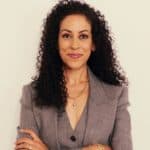
Jessica Malaty Rivera | Making Sense from the Noise
Jessica Malaty Rivera reflects on science communication and how faith and public health intersect in a world shaped by uncertainty.
Image used under license from Shutterstock.com
Description
In this episode, infectious disease epidemiologist and science communicator Jessica Malaty Rivera reflects on what it means to help people make sense of science in the midst of uncertainty. Drawing on her experience during the COVID-19 pandemic, she explores the gap between data and decision-making, and why clear, empathetic communication is essential for public health.
Jessica shares how her work has focused not just on understanding disease, but on translating complex information into something people can actually use. From social media to national data efforts, she considers what builds trust—and what breaks it—when the stakes are high and the science is still evolving.
The conversation also turns to her faith, and how her background in the church shaped her understanding of community, responsibility, and care for others. Together, they explore the tension between individual choice and the common good, and what it might look like to approach both science and faith with humility in a world that resists nuance.
Theme song and credits music by Breakmaster Cylinder. Other music in this episode by Ricky Bombino, courtesy of Shutterstock, Inc.
- Originally aired on April 16, 2026
- WithJim Stump
Transcript
Rivera:
Humans are fallible. Data is fallible because all data is handmade. It’s human made. It doesn’t just exist in the natural world. I invited people into that journey of look nothing about this is perfect, and public health is not about eliminating risk. We live in a world in which there will be risk in everything. I’m just here to help you understand the difference between something that is a hazard versus a risk, or something that is absolute or really minuscule.
I’m Jessica Malaty Rivera. I’m an infectious disease epidemiologist and science communicator.
Stump:
Welcome to Language of God. I’m Jim Stump.
Back in 2020, we spent a lot of time on this podcast talking about the pandemic—about vaccines, public health, and the science unfolding in real time. And I’ll admit, there was a sense of relief when we could turn our attention back to other questions—like bringing mammoths back from extinction or the consciousness of an octopus.
This isn’t another COVID episode. But it is a conversation shaped by what the pandemic revealed—and what it changed.
Because COVID didn’t just expose the vulnerabilities in our public health systems. It also reshaped the landscape we’re living in now: a world where trust in institutions has fractured, where people are often left to make complex health decisions on their own, and where social media has become one of the primary ways those decisions are informed.
Jessica Malaty Rivera has been working in that space for a long time as both a scientist and a communicator, and she’s motivated by her faith to do this work, and in how she goes about doing it. As an infectious disease epidemiologist, she was studying emerging diseases long before most of us were thinking about pandemics at all. And when early reports of COVID began to surface, she recognized right away that this was something to take seriously.
Since then, she’s become a leading voice in helping people make sense of complicated, evolving information—translating data into something people can actually use, and encouraging decisions that take into account not just our own health, but the health of those around us.
Because in the end, public health is about more than individual choices. It’s about the kind of community we want to be—and how we care for one another.
Let’s get to the conversation.
Interview Part One
Stump:
Jessica Malaty Rivera, welcome to the podcast.
Rivera:
Thanks for having me.
Stump:
So we’re going to get talking about vaccines and public health and science communication, but first we like to know something about our guests. You and I have crossed paths a couple of times briefly, and I know some about your professional work, but not much about you personally. Can you give us a little autobiography? Where’d you grow up, and what was your family like, and what were you like as a kid?
Rivera:
Yeah. I am a first-generation American. My parents are immigrants from Egypt. I grew up in Southern California, in Los Angeles to be exact. I was a very precocious, curious kid. My parents didn’t know I could speak English until one day I just started translating conversations that were not meant to be translated to a neighbor, and so I was just-
Stump:
Because Arabic was the language—
Rivera:
My first language, yeah. From a very young age, I was just a nerdy, studious kind of kid. I always had books in my hands. Growing up in an immigrant home, it meant, well, if you’re the studious type, then you should be a doctor, and so I was on that path from a very young age because I loved science and math and very much thought I would be a clinician. I went to the University of Southern California where I was a pre-med, studied public health as my major and natural science as my minor, and very, I guess maybe not quickly, but by the time I was getting ready for the MCAT, realized I am very sensitive, sensitive to people’s pain and sensitive to people’s suffering. The idea of being in the frontline in that sense did not make a lot of sense that you just might-
Stump:
You’re not going to be an ER doctor then.
Rivera:
No, no. Even if the grades were correct, the heart was not. To my parents’ dismay, I decided to pursue an unpaid internship across the country in public health and human rights, because it was a public health and human rights class that really opened up the world of medicine to me. Exploring the idea of why people get sick and origins of diseases and outbreaks, preventing diseases and outbreaks was much more interesting to me than the treatment of them, at least just for me. I moved to Washington DC, eventually ended up at Georgetown University where I, because of my language skills, was recruited to be part of this really cool project called Project Argus that was named after the Greek god who had many eyes and saw many things. We were essentially disease detectives. We were trying to identify the earliest indicators and warnings of emerging biological threats, so diseases in animals, diseases in humans, and what could be the next pandemic.
I was translating, literally translating, open source media from different languages, Arabic and Spanish into English, but I was also translating the complex science and epidemiology of it into lay language for a mostly lay audience. So you can imagine, I guess, 2019, the first signals of COVID-19 came up, my phone was blowing up because people were like, “Weren’t you talking about pandemics 20 years ago when you were in grad school at Georgetown?” and I very much was. If I was a betting woman, I probably would’ve bet that it would’ve been bird flu that took us out, or at least was the next big one. But it was also not surprising that it ended up being a second coronavirus pandemic. Yeah, I eventually ended up at the COVID Tracking Project, which was a mostly volunteer organization housed at The Atlantic magazine where I led the science communication effort there. Again, doing a lot of the sense making, translating, and helping people understand how to make informed choices for themselves and their communities.
I feel like I never had formal training in the discipline of science communication as it is described as science communication, but I became a science communicator in the training that I had while at Georgetown and in all the work that I did in between that and COVID. It was where I felt like my mind really just lit up. The idea of helping people understand really complex topics, making science make sense to people, was a thrill, and it was the lane I leaned most heavily into. I spent many years in a lab. I did my time with a pipette in studying diseases, realized I’m too extroverted for that. So I’m both too sensitive and too extroverted to be a clinician and a lab scientist, and ended up being a communicator, and it’s where I’ve been for the last 20 years, and I love it so much.
Stump:
Well, I want to dig a little deeper into some of those things you just mentioned there, but let’s rewind the clock and go back again. Because this is BioLogos, can you tell us a little bit about your faith and where that came from and how it continues to manifest itself today?
Rivera:
Yeah. I grew up in a Christian home. My parents are Christian from Egypt.
Stump:
Coptic?
Rivera:
Interestingly, they are kind of an amalgam of denominations. I have Coptic, Catholic, and Protestant all in my family history, so I kind of have touched it all. I was actually baptized Coptic because, when my parents immigrated here, the first Christian community that they had was Coptic. It would’ve been very taboo to have not baptized me in that community. Even though my parents weren’t practicing Coptic, there was kind of a mix on both sides. And then eventually ended up in a non-denominational Arabic-speaking church that was a really beautiful collection of Christian Arabs from all over the world. Our pastor was from Palestine. We had people from Lebanon, Syria, Jordan, Iraq, everywhere. I was in that church for most of my childhood up until about high school when I went to a different non-denominational church. But I would say that my upbringing was mostly non-denominational, but I also went to Catholic school for most of my life. It was wildly confusing, but on the Christian—
Stump:
Any interesting sort of intersection with the science that you were doing, either helpfully or harmfully, as a kid growing up as a Christian and a polyglot and lots of cultures interacting? How did the science culture and the Christian culture interact in your life?
Rivera:
All of the above, both affirming and confusing. I was in very conservative and traditional contexts where literal interpretations of scripture were often taught, that creation was a seven-day historical event, that the Earth is young, that evolution was contrary to a biblical interpretation, but then eventually learned that there was room for flexibility there, especially with a scientific understanding. I was always a question-asker, did not take things at face value. It was very much like, “Well, show me the evidence,” and argued a lot with religion teachers and with science teachers to make it all make sense because I am, again, by nature, a sensemaker. And it wasn’t until I was much older that I found a community of folks who identified as followers of Jesus but also believers in natural science, that those two things did not have to be in conflict with each other.
I think it was when I was actually in Washington DC. It was a group of folks who were like, “We’re Christians, but we’re scientists, but we’re not Christian scientists. Let’s have a book club.” We read through the language of God. That’s how I got introduced—
Stump:
There you go. All right.
Rivera:
—to Francis Collins. Yep.
Stump:
Nice. Wow, cool. So then, keep your professional story going there. I want to hear a little bit about the pre-COVID days and the work you were doing, the places you went, how it sort of formed and shaped you as an epidemiologist and perhaps as a science communicator.
Rivera:
Yeah. One of our main goals at Project Argus was to become a signal distributor for the world. A lot of times, people, during COVID, were saying, “I wish we had a forecasting weather channel for diseases,” and I was often saying, “We did. It was wonderful,” and it was very well funded until it was not. That’s kind of the tragedy of public health. It’s often invisible work because you’re not seeing people dying in mass when it’s working—
Stump:
When it’s working.
Rivera:
—because we’re vaccinating, because we have really robust systems of disease surveillance, and this was very much a disease surveillance initiative. In fact, our team was probably the earliest to identify some of the signals of the 2009 H1N1 pandemic when our Spanish-speaking team, myself included, saw signs of ventilator shortages and pigs getting called on farms and the farmers at those pig farms getting sick. Those were all pieces of a puzzle that we put out and said, “This is something brewing over here,” and it ended up being the swine flu epidemic, pandemic. I loved the work, and I only stopped doing it because, again, it lost its funding, which is very, very sad.
Since then, I ended up being in-house in a bunch of places. I worked at a vaccine biotech company that worked on tuberculosis research. I worked in big public health or public relations firms that helped biotechs and pharmaceutical companies make sense of their clinical milestones and their readouts, everything from social media posts to a leave-behind at a doctor’s office. It was me making the really, really complicated less complicated for a variety of audiences, and realized that the work of science is extremely incomplete without that part of the work. Unfortunately, science communication was kind of just dismissed or assumed that it would just exist or that what we were doing, which was creating really highly academic pieces of materials or content for high-impact journals, was science communication, and you’re like, “What good does it do if it’s just sitting in these very snooty, sometimes paywalled journals?”
Mind you, I’m not trying to dismiss that. There’s still value in that. But if we’re talking about innovation that is intended to be tools for people to adopt, I often go back to Walt Orenstein’s very famous words of like, “Vaccines don’t save lives, vaccinations do,” and I’ve added to that and I’ve said, “Well, the difference between a vaccine and a vaccination is a message, a message that’s trusted, a message from a trusted messenger.” I feel like that’s my last mile. That’s where I exist, of turning those interventions into decisions, so it’s not just sitting in a vial in an icebox.
Stump:
Interesting. Okay. Where were you and what were you doing when you first heard about the COVID disease?
Rivera:
I remember it vividly. I have three young kids. I had my second at the time, and it was actually a pretty traumatizing time at the time. My son had actually just been released from the hospital from a RSV infection, and he was discharged on December 30th of 2019. I think it was December 31st when we got the ProMED alert, which ProMed again is for very insider infectious disease epidemiology folks, an alert system that uses open source media to identify some things that could be signals, and it was an undifferentiated pneumonia-like disease identified in Wuhan, China. I saw that, immediately felt like a signal to my old colleagues at Georgetown. There was a bunch of group texts going around being like, “Did you see this? Do you think this is anything to be watching?” Of course, we all were on high alert.
But I’ll tell you that my son’s recent hospitalization, and thank God he survived and was fine—this was pre-RSV vaccine—that trauma of seeing my son needing supplemental oxygen very much informed how I existed with the pandemic. I had a very, very low-risk tolerance for COVID because I had seen my son needing oxygen. So I thought, “I am not going to risk, especially with so many unknowns, this happening again.” I was very much an early adopter of masking, an early adopter of social distancing and practicing as many mitigation efforts as we can using the Swiss cheese model of, “It’s not about eliminating risk, it’s about reducing risk.” We kind of hunkered down.
Stump:
Why is that a Swiss cheese model? You need to unpack that metaphor for me.
Rivera:
Oh. You’ve not seen the picture? There’s this picture, it’s often used in public health, where you have layers of Swiss cheese. Swiss cheese has a bunch of holes in them. The holes are not standard. They’re not exactly in the same place. As you layer them, yes, certain—
Stump:
Less gets through them.
Rivera:
Exactly. You make a pass-through, but then it may just hit a layer of Swiss cheese that doesn’t have a hole exactly where it is.
Stump:
Gotcha, gotcha.
Rivera:
It’s just a good visual. I think it’s great for kids to understand, too, how you can reduce your risk through layers. I remember where we were. We were in San Francisco, and I told my husband, I said, “We’re going to have to be home for quite a while because this is probably going to be a big deal,” and it was February—
Stump:
You said that in like… Oh, okay, so, now, we’re into February 2020.
Rivera:
In February, when things were starting to pick up, I think we were in San Francisco. We still are in San Francisco. Things were starting to get a little bit weird. People were buying… I was not one of the early hoarders of the stuff, but you were starting to see people couldn’t find masks, people couldn’t find hand sanitizer, people were freaking out. My husband and I had gone on a trip. On the flight back, I said, “We’re not going to be traveling for a very long time.” Two weeks later when the pandemic was declared, we were home for a very, very long time after that.
Stump:
Yeah. Wow. So then tell us sort of the origin story of the COVID Tracking Project, how you got involved with that, and how it became the big thing and important thing that it did.
Rivera:
Yeah. I was involved in a couple grassroots research projects here and there, and I saw this message or this post on Twitter from Alexis Madrigal, who was one of the co-founders of the COVID Tracking Project. He was a journalist at The Atlantic at the time, and it was him and another colleague there who were trying to make sense of testing data, which was just not publicly available in any sort of clear or standard way. It was kind of a call for volunteers to join this very scrappy volunteer initiative, and I—
Stump:
What month was that, by the way?
Rivera:
March of 2020, very early on.
Stump:
March now.
Rivera:
Yeah. I DMed him and, a couple hours later, I was in the Slack. It felt like almost moments after that I was helping ideate this different team, this new team, that could be the science communication team because we knew that so much of what we had to do was public. We were publishing data every single day, but there needed to be even more. There needed to be more kind of long-form sensemaking and explanation. We needed to collaborate very closely with the data visualization team to make sure that we were saying what the data are saying, what the data are not saying.
I often refer to that time as the most meaningful work of my career. It probably will always be that because it was, at its peak, about 800 volunteers who were just doing the job of the CDC when the CDC was not really fully capable of doing it, a tragedy that it had to exist truly because I very much at the time believed that the CDC was a premier public health agency in the world, but they were still very much stuck with bureaucracy and archaic systems that couldn’t have handled the type of human labor that it required.
Because of our Constitution, federalism has made public health a state issue. Because of that, it was a team of people who handled state-level data. We had 50 state data sets, 6 territorial data sets, and we every single day were collecting it manually and making sure that it was double and triple-checked and publishing it to the world for free.
Stump:
What was your daily routine during this time? What were the tasks that you were specifically doing as part of that project?
Rivera:
It was so many things. It was working with the editorial team on preparing the weekly explanations of it all. It was publishing the data, actually writing the tweets, the tweet threads. It was bringing that data over to Instagram because, at the time, I had already kind of created this pretty big Instagram following. I thought, “Oh, a lot of people are wanting to see this on Instagram,” so we ported that all over to more Instagram-coded type of content. A lot of it was doing trainings on how to do this. We built a really beautiful relationship with newsrooms all over the country from The New York Times to a tiny little chronicle at a small city that were asking us questions like, “How do we stay true to this without adding to the noise?” A lot of it was us saying things like, “Caveat, caveat, caveat. Disclaimer, disclaimer, disclaimer.”
When you see a spike in data on a Monday after a long weekend, does it mean that everybody got COVID? No, it means that the epidemiologist was having a barbecue with their family too, and that is an artificial spike because they had a day off and then it was all imported on Tuesday. It was a lot of just helping people understand it all. Again, I loved every second of it.
Stump:
Okay. I want to go down two sorts of paths from some of what you just said there. The first one, talk more about your Instagram channel. You said you had already by this time had a big Instagram channel. How did that develop? And then what was the impact of this COVID work on that too?
Rivera:
I had a private Instagram up until mid-February of 2020. It was just pictures of my children and my family on vacations. It was like 800 followers, friends from Facebook essentially. At the beginning of COVID, when my phone was getting inundated with lots of common questions of like, “Weren’t you talking about this 20 years ago? Should I be buying vitamin D capsules? Should I be washing my groceries?” I just thought, “You know what? I’m going to start doing an FAQ series to just get off my phone and not have to text each person individually and copy-paste what I just told Susie and Mary,” and it exploded. I couldn’t have expected that to have exploded. It did, but I felt like I was meeting a very specific moment. A few celebrities saw my page and really started sharing it, and it just sent me really to a different dimension of popularity on social media, which was very foreign.
Honestly, as much as it’s been really wonderful and has been fruitful in many ways, it also came at a very, very high cost. As you can imagine, speaking about things that people are very, very divided on meant I got a lot of harassment, a lot of abuse, a lot of negative attention.
Stump:
The second thread of that that I’d like to pull out here and talk about some more is the science communication bit, particularly through social media. Science that sort of thrives on complexity and nuance are not exactly what social media thrives on. What have been the lessons you’ve learned along the way here about communicating science, particularly through this medium?
Rivera:
So many lessons. At the time, Instagram stories were limited to 15 seconds or less, and I got really good at answering questions in 15 seconds or less. Not that every question could be answered in 15 seconds or less, but the ones that could, I did because I wanted what I was saying to be easy to understand, memorable, and repeatable. So that if folks were coming across my content and they were seeing a frequently asked question answered, they could easily say, “You know what? I just heard,” with a citation always, “that this means that or that doesn’t mean this.” It’s interesting because I saw the engagement with my content skyrocket after I started doing front-facing video content, which was deeply mortifying, because at first I was just doing a lot of graphics and text-based content.
But when people saw my face and saw that I had three children in the background and saw that I was a woman of color, saw that I was also frustrated that we were at home still, it made me human to folks. It made people be like, “Oh, a scientist can look like her, and she can be nice and friendly and young-ish and also a mom.” I found that people were starting to engage with me as their personal epidemiologist. People were saying, “Oh, we were referred to you by your first name at the dinner table. Jessica told me… ” It was so endearing. It was not creepy at all. I didn’t feel parasocial in an intrusive kind of way. In fact, 100% of any interaction I had with folks who recognized me were always positive. I oftentimes was moved to tears because of people’s gratitude for this type of work, but social media was where… it was kind of the belly of the beast too.
It was where so much of the misinformation and the rumors and the circulating narratives that were very harmful were originating and proliferating, and so I thought, “Well, I’ve got to go to the belly of the beast to try to counteract that work.” Even if I am going to be swimming upstream against this fire hose of mis and disinformation, at least I know that there’s some people that it’s reaching. I will say too, there was a time when the platforms and the algorithms were in our favor. There was a time in which they were okay with content moderation that allowed us to report false information about health. That doesn’t exist anymore, and so it is much more of the Wild West. But social media is a primary news source for many people and primary health news source for many people, and so I thought, “Well, if people are going there, I need to be there too.”
Stump:
Talk a little bit more here then about the relationship between data, facts, and figures, and information and people changing their minds about things. Because just the story you tell there, it wasn’t your facts and figures and data that at least were the initial. It was seeing your face and seeing your kids. How do you sort of process that about information? People on the internet who have crazy ideas, do they just need more information? Or, how do you work on that?
Rivera:
I love this question because I talked about this as I was doing my science communication. I kept telling folks, “I’m not here to out-data you. I’m not here to dunk on the other person.” Sometimes I was because they were saying something that was super harmful. It needed to be directly countered. But a lot of times I thought like, “This is me giving you tools and your toolkit to make an informed choice for you and your family,” and I did that by leading with example. When the COVID vaccine was available to children, I documented the vaccination experience for all three of my kids.
I did this very interesting—I thought interesting and people really loved it—kind of 48-hour journey with my kids where I interviewed them. I asked them how they felt. I documented their reactogenicity or their side effects from the 2-hour interval to the 12-hour interval to the 48-hour interval. I showed people, I said, “Look, if I am trying to translate the data to you from these clinical trials, I’m putting my…” I’m not really sure what the metaphor is here because there was no money involved. I was never paid by any of these companies despite being accused of being a shill the whole time. I was just going to say, “Well, I’m taking this because I believe in it, and I’m going to show you how I will lead with the example. Do as I do, not as I say in this sense,” because I wanted people to see me as a trusted messenger and somebody who was actually adopting what I was recommending, but that I believed in the recommendations.
It’s interesting because that’s when folks would say things like, “Oh, you said it in a way that actually made sense,” and sometimes it was the slightest modification. Sometimes it was the personalization of it, sometimes it was humor, sometimes it was emotion, sometimes it was a visual that really clicked. Science communication is not a one-size-fits-all. I very much recognize that me and how I look and the identities that I embody are not for everybody, but for many people it was the right type of messenger, and so I leaned into that. I talked a lot about being a mom. I talked a lot about being a scientist. I talked a lot about where I lived and my risk tolerance. I talked a lot about my son’s experience in the hospital and why my risk tolerance was so low and why we were going to continue masking indoors for a very long time on planes, on public transit, how we had things like… I call it a risk budget. We were saving up to see my parents who were older. And I would document all of that.
It’s a different kind of social media science communication. It was very much the documentarian in a way where I was showing people how I was existing during this public health emergency, and I think it built a lot of trust.
[musical interlude]
Interview Part Two
Stump:
Let me ask one more question about this, and please hear that I’m not doing this in an accusatory kind of way. I’m doing it as trying to probe this a little bit further because I find it really fascinating and important. But is there any worry, in leaning into anecdotes and the personalization of this, that we’re just feeding the system further that we are, in some ways, trying to counteract? Because somebody else could come up with an anecdote from another side that we would put too much trust in. And that, at some level, your work as an epidemiologist is about the data, right? It’s, “Here’s overlarge data sets. Here’s what we see, here’s what we find, here’s what the risks are.” In leaning into the social media aspect, is there a tension there at all to say, “I’m giving the people what they want instead of what they need”? I don’t know.
Rivera:
It’s a very fair question, and I would often say the plural of anecdote is not data, but we also know that anecdotes are incredibly compelling, and so I would include both. I would say, “Look, this is my decision, and this is the data I am basing my decision on.” I was heavy on the citations. I was heavy on the, “The reason why I’m doing this, the reason why I believe this, the reason why I trust this is because of one, two, three, four, five,” and I was linking constantly because I didn’t want people to say, “Trust me and my opinion.” I was saying, “I’ve made this decision based on this data that I’ve trusted, this data that I’ve poured over.”
Anytime Pfizer and Moderna were having these big readouts of the clinical trial, they published these several hundred-page papers. I read every single word, and I would go through them with a fine tooth comb. I would talk about the adverse events. I would talk about the efficacy data. I would talk about the safety data. I would even explain the difference between efficacy and effectiveness, like, “What can you expect when this is out in the real world? It’s not going to be this silver bullet that’s going to say, ‘You get this vaccine, and you can just run wild, and everything’s going to be fine.'” I was very comfortable with talking about uncertainty, which I think again helped create more trust that I wasn’t trying to say, “Trust the science. Trust the experts,” because humans are fallible. Data is fallible because all data is handmade. It’s human-made. It doesn’t just exist in the natural world.
I invited people into that journey of, “Look, nothing about this is perfect. Public health is not about eliminating risk. We live in a world in which there will be risk in everything. The risks that are unexpected, risks that are expected, I’m just here to help you understand the difference between something that is a hazard versus a risk or something that is absolute or really minuscule.” I think having that ability to balance the nuance of data and anecdote, I think, was a good combination for my audience.
Stump:
Nice. Francis Collins has been pretty open and vulnerable in talking about COVID communication from the NIH even during these times and saying that they didn’t do well enough in educating the public about how science works and the provisional conclusions and needing further data that could change these. Are we making progress on that front in terms of communicating science like this in ways that a bigger portion of the general public sees the conclusions as provisional and dependent on, “That could be reversed when the next study comes back”? Or, how do you see your audience reacting on that?
Rivera:
It depends on who the we is in the question and what year we’re in the we, to be honest. Are we doing a better job? I would say independent science communicators are. Are we, the US government, in 2026 doing a better job? I would say absolutely not, and I’ll say, “Look, even at our most evidence-based years,” which… It’s hard to even know when those years really were because there was a lot of politicization of the entire pandemic in both administrations at the peak of the pandemic, and I have said that many, many times. This is not a political issue in its entirety. There were just decisions that were made that were deeply unscientific in both administrations and ones that were very scientific.
I think one of the biggest scarlet letters of the whole experience was you spend billions of dollars on the R&D to create this tool, and you spend nothing on a comms plan to turn that tool into something that people adopt. You kind of adopt this “if you build it, they will come” philosophy, and that’s just never worked, especially with something that is new in an emergency. I would argue that pandemics are the most disruptive thing that can happen to human populations more so than wars and conflict because those are oftentimes localized, but a pandemic affects anybody who’s living on this planet. And so if you’re talking about something that needs to be a ubiquitous tool to get past this emergency, why aren’t we spending the money on turning those vaccines into vaccinations, turning these policies into easy decisions to adopt so it didn’t feel like oppressive mandates and tyrannical authoritarianism, which are all the accusations that we kept hearing throughout the entire pandemic?
I do think that there is a deep sense of fatigue over even what public health means because it was just turned into this fourth branch of the government, which was just intended to control and limit and sequester and isolate people. What now I’m seeing is, to be honest, Jim, it feels like a bit of a revenge tour. They want a martyr to fall for this, to take the fall for what was a really rough time. Again, I’ll be the first to say, pandemics are rough. I think that my tolerance, my frustration tolerance for it, may be a little bit higher given my background and my kind of expectation of pandemics, knowing that we are not beyond them. I think they will continue to happen, especially as we experience things like climate change at this rapidly accelerating speed, but it doesn’t mean that the population doesn’t require empathy because we just did not meet people where they were.
We failed to communicate with empathy. We failed to communicate with nuance. We allowed politics to enter the chat many times when we made statements that were incongruent with the data because it satisfied corporate pressure to shorten isolation and quarantine protocols. I remember very vividly, I think it was Biden, he tweeted in 2021, “If you get the vaccine, you can take your mask off,” and we were all like, “What? When did we say that? We’ve never said that.” Those types of moments are deeply, deeply harmful for public trust. We’ve done a number of focus group studies, and there’s a ton of data that show, when an expert changes their mind or a policy changes, that is a fracture.
And it’s not to say that it can’t change, it does change. The science was constantly evolving because it was an emerging situation, the virus itself was evolving, but we just weren’t comfortable enough with talking about things like uncertainty or inviting people into the process of, “These things are going to change as we move along.” And I think because we didn’t give people the kind of respect and dignity that they deserved in the messaging that we were giving, it just caused much more division in our communities.
Stump:
Play that forward here now then in some of these current situations we find ourselves in that may or may not be part of the revenge tour you mentioned, but things like childhood immunization schedules. How has what happened during COVID and the messaging and communication during COVID affected these decisions and how they’re being received now?
Rivera:
It’s deeply affected it. Even before this administration came in, we saw signals from governors in some states saying that, because of COVID vaccine regulations, they were going to now question the entire pediatric vaccine schedule because it had this knee-jerk reaction to the concept of a mandate or a requirement. I’m a linguist in the sense I’m a words person. I actually really struggled when people were very much mischaracterizing what even happened during COVID, and part of that is a little bit of revisionist history and the trauma of reflection. But people were talking about lockdowns and shutdowns, I’m like, “Nobody had a lockdown here.” Yeah, there were closures and there were limitations, but you want to see a lockdown? Look at what happened in Europe. Look at what happened in so many Asian countries. We did not do that, not at a federal level certainly.
Granted, it was very unstandardized based on where you lived in certain states and certain jurisdictions. But I think part of it just caused this, “Okay. Well, if public health wants to tell us who can go back to work and tell us who can be out in public and what they can and can’t do, then we’re just going to throw the baby out with the bathwater here and question the whole thing.” We saw direct intentions from a couple governors from southern and eastern states that they had every intention of making the vaccine schedule optional. And then here we are in 2026 where that is happening. It is perceived as an a la carte menu now because they are now trying to say that we don’t need all these things because if you don’t see it… It’s kind of like the object permanence thing. I’m a mom of three young kids, and it’s like out of sight, out of mind. We’re like, “Well, there’s a reason why these things are out of sight. It’s because we’ve been doing these things, these interventions, these vaccines that have prevented it from being in sight.”
I often say it feels like amnesia is going to kill us one day because it’s the amnesia of kids being disabled by polio or kids dying in mass of measles, mumps, and rubella that make people think that these interventions don’t really matter. Now, with a highly politicized CDC and HHS and even an advisory committee that’s since now been suspended, the conversations that are happening and the communication that is being shared is so wildly antagonistic to scientific consensus, honestly, for the sake of being antagonistic in many ways. It’s not based in evidence.
Stump:
What are some of the public health implications, ramifications of things like making this immunization schedule optional, which, at just the personal level, it sounds like, “Well, every family should get to do what they think is right,” but at the bigger epidemiological level where you’re looking at large data sets and probabilities across multiple populations and the interconnectedness of those states you mentioned with the rest of the states and people? What are the implications here? What are you worried about if this continues in the direction that it is?
Rivera:
There are some pretty terrible implications, and there have been some infectious disease modelers who have actually done some of these projections to see what it would mean for morbidity and mortality outcomes and even financial outcomes because infectious disease outbreaks are expensive, deeply expensive, from a mitigation and control standpoint to a response and infrastructure capability standpoint. Not to mention the fact that it’s stuff that is going to have a much… It’s going to have a delayed consequence. People are not going to be dying in mass tomorrow because they’re not getting the hepatitis B vaccine at birth today, right? Hepatitis B is a perfect example of a disease that, if prevented from the beginning, from the earliest intervention at birth, you reduce your chance of having chronic liver disease, which is an untreatable condition that can lead to cirrhosis and cancer by 90%. I honestly dread what’s going to be showing up in the data 20 years from now when people who could have been prevented from having an infection that is untreatable from the beginning are now being diagnosed with an untreatable condition 10, 20, maybe 30 years later.
This will be the legacy of this administration, not during this administration. It will be in the future. I think that’s where people lose sight of the invisibility of public health, right? Because it doesn’t show up in front of you, you think it’s not worth investing in. Think about a parallel to this. It’s like, “Do you build a fire station in the middle of a fire?” No, you build a fire infrastructure with fire hydrants at every corner and fire trucks that are constantly being well-kept and maintained so that, when those fires happen, you have a system that can respond. Public health doesn’t seem to have that same type of urgent value, and I think part of it too is because the social contract has been broken with people.
There’s a lot of talk about herd immunity. “You should do this for the community. You should do this for the sake of others, especially the immunocompromised, the young, the elderly.” A lot of times, people today are saying, “Well, what’s the herd ever done for me?” I kind of want to remind folks, “Well, the herd has done a lot of things because public health is all around us.” The reason why foodborne illnesses are not as wide as they could be is because we have regulations for restaurants and food distributors to clean their food a certain way, cook their food a certain way. Traffic incidences are lower because of things like speed bumps and speeding limits and seatbelt rules.
These are all social contracts that we’ve agreed to to reduce harm collectively and to care for each other because, as much as people don’t want to admit it, we are not designed to live as individuals in isolation. We are designed to live in community, and that’s where I think a lot of retraining needs to happen to remind folks that this is not about rules and regulations and limiting people’s freedom. It’s actually increasing your freedom by doing these things to make sure that we can live with the least amount of disruptions and harm.
Stump:
I have a stereotype in my mind about resistance to public health messaging disproportionately coming from communities of faith. I’m curious if the data bears that out and if that stereotype is accurate. And if so, I wonder why, what the connection is there.
Rivera:
The data do support that. It’s not an assumption. I can send you tons of data on this where you saw COVID outcomes that were disproportionately worse in red states, in jurisdictions that were predominantly Christian, even at the local church level. And I’ll tell you, Jim, the church that I grew up in was a perfect example of that. There was an unfortunate trend within that church that believed that the vaccine was the mark of the beast. I learned this after the fact, and unfortunately the pastor of that church passed away unvaccinated. A young-ish healthy man died needlessly because of a false belief that this was some spiritual war and that those who were believers would be spared because it was something that felt other-dimensional and not actually based on the biological world.
I will say, it’s hard to not get emotional about this, it was very heartbreaking and destabilizing to me as a person of faith to see the church fail to meet this moment because it felt like what a great opportunity for folks who were believers, who were compelled to love their neighbors more than themselves, as themselves even, that they would just forfeit that opportunity because of things like independence and freedom and individual choice, completely missing the kind of Christ-like opportunity to do this for the sake of others. I expected naively that Christians would be the first to line up for vaccines because it meant taking care of each other. I was subjected to a lot of harassment and I would, without exaggeration, say almost 100% of my harassment came from Christians. It was so, so heartbreaking.
I felt deeply rejected by people who I used to be in community with, called horrific names, everything from a heretic to a Jezebel, to somebody who’s veered from orthodoxy because I was encouraging folks to follow public health and follow science, and I was being told that, “Jesus never told us to do this. It’s not in the Bible.” There’s so many things that are not in the Bible that we should do. What are you talking about? It’s easier to laugh about it now because it was so absurd. But when it was in the moment, Jim, it was so… It really fractured my faith, to be honest.
Stump:
Does your faith recover from such a thing, and does it play a role in what you do now or why you do it?
Rivera:
It does. Not perfectly recovered, but it does inform a lot of what I do because I do think that it was very formative in my worldview and why I am inclined to be in public health. Public health is, at its core, about community. It’s about justice. It’s about loving each other. It’s about caring for each other. Those are all values that I learned in the church. Those are all values that I believe Jesus taught. I sometimes have to separate the Church, capital C, even lowercase C, from the teachings of Jesus because I, in the last, at least six years, maybe even the last 10 years, have just seen a massive incongruency in those two. I have to keep reminding myself that like, “Jesus would’ve been about this. He would’ve been about the public health. He would’ve been about harm reduction. He would’ve been about understanding the bigger picture.”
Stump:
We have an audience at BioLogos and for this podcast who are largely Christians and supportive of science and who genuinely want to help make a difference in the world. What are a couple of things that we could do that would make your work easier?
Rivera:
God, that’s such a big question. BioLogos and Francis in particular have been a balm to a weary soul for me, to be in community with folks who get it, who understand, who can live in the space of understanding the complexity of all these things and not abandoning either of them. I wish there were more people who would talk about that, who would understand that they don’t have to be in conflict with each other. You can be a person of faith, however that faith can look, can be pretty diverse and ecumenical. It’s not one way. I think that’s a really difficult thing because certainty felt like a very important value in my faith upbringing. Being a scientist, I’m very comfortable with uncertainty. That’s the whole point of the research that I do because I’ve got a lot of questions, a lot of uncertainty, and I’m trying to get more answers.
I think if people talked about that, especially from a faith perspective, that like, “It’s not about certainty.” Faith kind of suspends that for many folks. If more people could talk with genuine humility about that and say, “I can exist in these worlds without having to be binary and black and white about these things,” I think people would be less likely to judge on both sides and more likely to adopt perhaps the teachings of Jesus or perhaps the teachings of science and say that these things are not the opposite of each other.
Stump:
Well, thanks, Jessica, so much for the work that you have done and the passion with which you have done it and the clearness, the clarity, with which you have done it. I want to thank you on behalf of a… Now, that lump came to my throat here, too. Thank you on behalf of a Christian community for what you have done. It’s been super important and very inspiring to many other people. Many of whom you’ll never meet personally, but that you’ve had a really big impact on, and we appreciate that. And thank you for talking to us here today about all of this. We’re excited.
Rivera:
Thank you, Jim.
Credits
Language of God is produced by BioLogos. BioLogos is supported by individual donors and listeners like you. If you’d like to help keep this conversation going on the podcast and elsewhere you can find ways to contribute at biologos.org. You’ll find lots of other great resources on science and faith there as well.
Language of God is produced and mixed by Colin Hoogerwerf. That’s me. Our theme song is by Breakmaster Cylinder. BioLogos offices are located in Grand Rapids, Michigan in the Grand River watershed. Thanks for listening.
Featured guest