Cool Creatures | Bats
When millions of bats emerge from a Texas cave, we discover how understanding their lives can transform fear into wonder and care.
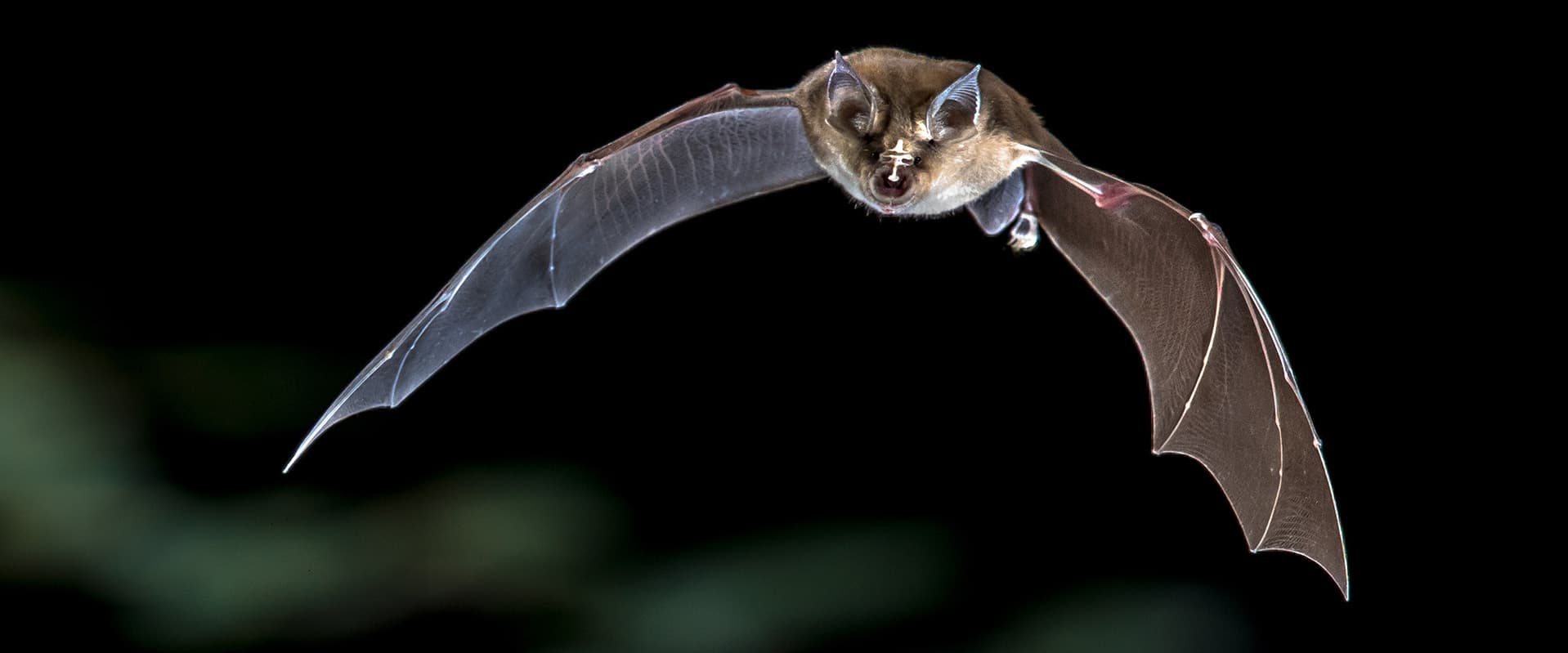
Image used under license from Shutterstock.com
Description
Bats are among the most feared creatures we rarely stop to know. In this episode, Jim and Colin travel to Bracken Cave in Texas, where millions of bats spiral into the evening sky, to discover the extraordinary lives of these misunderstood mammals. Bat experts Merlin Tuttle, Katy Hinman, and Fran Hutchins introduce us to the wonders of flight and echolocation, the gifts bats bring to ecosystems, and the challenges of protecting them. Joined by author Tish Harrison Warren and her family, we explore how knowing our nonhuman neighbors can turn fear into wonder—and how loving God’s creation begins with noticing the particular creatures around us.
Theme song and credits music by Breakmaster Cylinder. Other music in this episode by Evan MacDonald, Sea of Stars, Vesper Tapes, Nick Petrov, & Animated Music, courtesy of Shutterstock, Inc.
- Originally aired on October 29, 2026
- WithJim StumpandColin Hoogerwerf
Transcript
Field recording:
[sounds of car doors]
Well, welcome, hope you didn’t need to wash your car. It’s a rental. Well, welcome. I’m Fran. I’m Jim. Jim, nice meeting you guys. Thanks for coming,
Stump:
Welcome to Language of God. I’m Jim Stump.
Hoogerwerf:
And I’m Colin Hoogerwerf
Hutchins:
So this is what all the hubbub is about.
Stump:
A few weeks ago we found ourselves in San Antonio Texas where we met Fran—
Hutchins:
Fran Hutchins, Director of Bracken Cave Preserve.
Stump:
After meeting at a gated entrance we drove down a winding road through the scrub and after we parked Fran led us over to an overlook.
Hoogerwerf:
There were some benches up at the edge of, essentially a big hole in the ground. And down at the bottom was the entrance to a cave.
Stump:
Oh wow, so you just sit up here?
Hutchins:
Yeah we just sit right up here and they—
Stump:
And they come up and go back over that way then?
Hutchins:
Right. So they’ll come out, and we call it a batnado vortex. So they’ll fill this bowl with a spiraling mass of bats.
[music]
Hoogerwerf:
Today our cool creature is bats.
Gus W:
Did you know bats hang upside down and they are also mammals and they are so cool?
Stump:
This is Gus.
Gus W:
Oh can I talk—say something?
Hoogerwerf:
Yeah do you want to say your name? What’s your name?
Gus W:
I am Gus, and we might tell some stories and have some fun things
Hoogerwerf:
We invited Gus to meet us at Bracken Cave along with sister, dad—and his mom, who is Tish Harrison Warren, an author, previous podcast guest, and a long time resident of Austin Texas—where bats have become something of a city mascot.
Stump:
We’ll hear more from Tish and her family a little later on. But we’re going to take Gus’ suggestion and tell some stories about bats and have some fun things. I’ll start with a story which is my first encounter with bats.
Right after college, my wife and I were living in Sierra Leone, West Africa. We went to teach at a small mission school way up country. And we were living in a kind of compound right outside of the village, right on a hill but it was surrounded by what they called the bush. And maybe just two weeks into living there we are trying to go to sleep, and the jungle is noisy at nighttime, but we heard this loud honking sound that just kept us awake all night long.
The next day we talked to some people about it and they wondered and asked us to listen again and see whether we might hear it. And then that next night we didn’t hear anything. But then the following night, the honking started up again. If my memory is right it sounded something like “huuuhn huuuhn” [fruit bay sounds] and it was really loud and we couldn’t go to sleep with this going on. And so I finally muster all the courage that I can and decide that I am going to go outside and take care of this thing. And so I go out and pick up a handful of stones and just start throwing them into the bush where the honking sound is coming from, hoping that that will scare it away. And it stops. And a second later something swoops down and actually brushes across my face and I scream and freak out and go yelling and running back into the house feeling like any minute there’s going to be some taloned claw that picks me up and carries me away and feeds me to its children.
I tried to reproduce that sound again for the other people that have been there for a while and they say, “yeah that was a fruit bat”. A fruit bat. Ok. Well, I was fairly scared and would like to say that I’ve never gone out into the bush at night again.
Hoogerwerf:
That story might get us closer to, what I think, a lot of people’s experience with bats is, which is something more ominous and eerie.
While you and I and Tish’s family—and especially Gus were pretty excited to see bats at Bracken Cave—
Tish W:
Are you excited to see the bats?
Gus W:
Yeah, I’m really excited.
Hoogerwerf:
—I think it’s fair to say that not everyone would be excited to see bats or even think that bats are cool creatures.
Hutchins:
Yeah, most people never see a bat. I mean humans tend to run inside when it gets dark, and if you just stand out, you know, if I stand out in my driveway and look around at night, I see bats flying around all the time. So most people, they never see a bat, don’t know anything about bats, so people tend to be afraid of things they don’t know anything about.
Hinman:
There’s a lot of fear around bats.
Stump:
Meet Katy
Hinman:
My name is Katy Hinman. I’m the Director of the Dialogue on Science, Ethics, and Religion at the American Association for the Advancement of Science.
Stump:
Katy did her PhD on bats before switching over to the science and religion side of things.
Hinman:
They come out at night, so people don’t encounter them very often. When they do, they’re acting weird, because again you wouldn’t really see them most of the time.
Tuttle:
We naturally fear most what we understand least.
Hoogerwerf:
And this Merlin Tuttle.
Tuttle:
I’m the founder and executive director of Merlin Tuttle’s Bat Conservation
Hoogerwerf:
If you happen to know the name of any single bat biologist it’s almost surely Merlin, whose work and photography with National Geographic has given him a pretty big platform.
Tuttle:
Most people know very little about bats. They see them flying in low light, erratically. They don’t know much about them, and so they fear them.
Stump:
Fear of the unknown, of darkness and of things we don’t understand goes back a long way. Some of the earliest mentions of bats in ancient writing come from Deuteronomy and Leviticus, in passages that place bats amongst the animals that the Jewish people are not to eat. They are listed along with birds, which might seem like a simple classification mistake, but the writers here weren’t trying to do phylogeny—the scientific act of grouping creatures by their relationships to each other—they were setting up categories that would lead the Jewish people to understand their place in creation. It didn’t necessarily mean bats were bad or even feared at that time it’s just that they didn’t fit into the normal categories, so they were placed on these lists of prohibition.
Hoogerwerf:
It seems like some of the best evidence of Western culture turning bats into a devil-like creature comes quite a bit later on, in medieval times, when literature started portraying bats in this way. In Dante’s Inferno, when Dante finally sees Lucifer at the very bottom ring of hell, Lucifer is described as having wings, not with feathers “but as of a bat their fashion was.” Through the renaissance, there are repeated visual examples of demons looking like bats, with black wings and no feathers, as opposed to how the angels were depicted, with white wings and long elegant feathers.
Stump:
We can’t blame literature and art for the bad public perception of bats. These things happened together: this fear and mystery of the strange and unknown contributing to these stories and pictures, which lead to more fear and dislike.
Hoogerwerf:
Right, all the way up to 1897 when Bram Stoker writes Dracula, and the association between bats and evil gets cemented into history in a way that would be pretty hard to disentagle.
Stump:
Speaking of entanglement, that history has led to some modern fears about bats…
Hinman:
You know there’s a lot of fear about them getting tangled in your hair.
Hutchins:
They think they’re going to get in your hair.
Hoogerwerf:
It’s hard to track down where this idea came from but I did find what I think is a pretty humorous experiment, even if it’s not the most rigorous study, it makes the point that this isn’t really something anyone needs to worry about. In 1959, a British Naturalist, the Fifth Earl of Cranbrook, who must have been fed up with this idea, found two young women, one with long straight hair and one with short curly hair, who, apparently, volunteered to have bats put on their heads.
Stump:
[laughs] They weren’t looking for people with my hairline evidently to test this hypothesis.
Hoogerwerf:
Well, the bats did not get stuck or tangled. They crawled around a bit and then flew away. For scientific rigor (I’m sure it wasn’t just for entertainment) he repeated the experiment several times—with the same results. He says at the end of a short write up that he would have liked to record the names of what he calls “two martyrs of science” but that they preferred to be anonymous.
Stump:
Well, getting stuck in hair is not the only myth that goes around.
Tuttle:
Back at the beginning of my career, nearly everybody had been led to believe that most bats were rabid and vicious, that especially attack women and children, all kinds of crazy things.
Stump:
The idea about rabies, like a lot of myths, comes from a partial truth. Bats, like humans, are susceptible to rabies and a rabid bat could pass rabies on to a human. But that’s not any different than lots of wild animals. But bats are actually less likely to pass rabies on than many other animals. When bats get rabies, they get sick and die. It so happens, that because we are creatures of the ground, our encounters with bats often tend to be with bats that are on the ground, and bats on the ground tend to be individuals that are sick and can’t fly…which means we’re much more likely to encounter a bat with rabies that one without, even if only a very small percentage of bats are actively rabid. There are other animals that can carry rabies without getting sick from it and those are much more likely to cause problems for humans…
Hutchins:
More people get rabies from skunks in Texas than any animal.
Stump:
But we don’t want to spend this whole episode just trying to defend bats by saying what isn’t true. Because what is true about bats is pretty amazing. Spending some time with bats reveals a creature with some pretty incredible super powers.
Tuttle:
For those of us that have taken time and trouble to learn about bats, they’re truly one of the most fascinating, highly intelligent groups of animals on the planet.
Kety:
They’re super cool. They’re really cute. You can find them in pretty much any habitat except for the very extreme deserts and extreme Arctic and Antarctic and yeah they’re just great.
Gus W:
Bats are everywhere!
[musical transition]
Hoogerwerf:
So let’s spend a bit of time with bats here. First we’ll walk through some of the fascinating things we know about them. And then, just as the sun is setting over San Antonio, we’ll return to Bracken Cave where 20 million bats will emerge into the night sky.
Stump:
I’ve shown videos of those bats to a lot of people and the pretty standard reaction I see people have is a physical shudder. Maybe some listeners just experienced that themselves. But we’re going to see if, when we pay a different kind of attention to bats, our return to the cave will feel like something different—maybe something more like awe.
Hoogerwerf:
It might be a little surprising to compare bats with whales, but in a lot of ways the stories of the evolution of bats and of whales, run in parallel—and not only just because they happened over a similar period of earth’s history. Bats and whales come from the same mammal lineage after that lineage split from what would become primates and humans, about 100 million years ago. And the lineages of both bats and whales begin to find evolutionary niches in a completely new context, one in the water, the other in the air. These new worlds lead to body changes and changes to the ways they perceive the world, including both whales and bats developing the ability to echolocate.
One of the differences between whales and bats is that while we have huge amounts of fossil evidence from whales showing that whole transition, we have very little from bats.
Stump:
What we know, from some recent major publications and studies that look both at the fossils we do have along with genetic information, is that bats probably originated in Europe after the asteroid that wiped out most of the dinosaurs. And then in a relatively short amount of time they developed the ability to both fly and to echolocate—and they spread across the world so that they are now found in every continent except Antarctica and in an amazing diversity.
Hinman:
They have such a great variety. The flying foxes are called flying foxes because they have these cute little foxy dog faces and these big eyes. And then there’s bats that have these cool big ears and nose leafs and all these ornamentation on their faces and different colors-they’re just beautiful.
Hoogerwerf:
There are more than 1500 species of bats recognized and new species are still being described. There are 44 species in the United States and 32 in Texas alone.
Some bats hibernate and some migrate.
Some are solitary and others live in giant colonies—like the Mexican free tail bats we saw at Bracken cave and also at the Congress Avenue Bridge in downtown Austin.
And bats have an incredibly diverse diet.
Stump:
Another misconception, probably thanks in part to Dracula, is that all bats drink blood.
Tish W:
Do you think bats are scary? Are you scared of them at all?
Gus W:
Not really. But sometimes if they’re like too vampirey.
Tish W:
Too vampirey.
Gus W:
Hi, I am a vampire.
Hoogerwerf:
Well it turns out, Gus shouldn’t be too worried about the bats, though he might need to watch out for garlic. Of those 1500 or more species, only three have become blood feeders.
Of the rest of the 1500, some bats eat fruit, some eat fish…many, like the Mexican Free tail eat insects. A LOT of insects
Tuttle:
Just one little brown bat could eat up to 1000 mosquito-sized insects in an hour.
Stump:
Not just mosquitos.
Hinman:
Economically they do a lot of pest control.
Tuttle:
For example, here in Texas, our bats save farmers an estimated 1.4 billion dollars a year in crop protection. The bats, just from Bracken Cave, that I got protected—it wasn’t just me, there was a lot of people helped me—but those bats eat over 100 tons of insects in a single night. Imagine what the world would be like without any bats.
Hutchins:
Bugs are not just the only thing they eat. So we have nectar bats, which are like the nighttime version of honeybees.
Hoogerwerf:
Katy’s PhD research looked at nectar feeding bats in the Southwest and how the bats and many important plant species are in close relationships with one another.
Hinman:
Agave palmeri is one of the century plants, and closely related to Agave tequiliana, where we get tequila from. And bats are a primary pollinator of many agave species. So if you like margaritas, thank a bat. And also saguaro cactus, which is a keystone species in many desert ecosystems, bats are primary pollinators of the saguaro cactus as well. And through their range they pollinate many economically and ecologically important species. They also eat fruit in some parts of their range, and they can be really important seed dispersers. Unlike birds, bats will often fly across cleared areas. Many times, birds, if there are areas of forest, say that have been cleared, birds will tend to stay to the edges and not fly across the open areas. But bats will, and they poop out seeds and help spread plants that way, and again, as flying animals, they tend to have a much larger range than animals that are crawling around on the ground.
Hoogerwerf:
Let’s talk about two of the characteristics of bats that really shine.
Hinman:
I mean, obviously, like flying is one of those dreams, right? You know, it’s always the choice, if you could pick a superpower, right? So many people choose flying. Like, who wouldn’t want to be able to fly?
Hoogerwerf:
Once again a comparison to whales is interesting and helps put this ability in perspective. Whales over time became extraordinarily adept at swimming and diving to incredible depths. But almost all mammals can swim to some extent. Bats aren’t just better at something we can all do. They can do something no other mammal can do. Of all living things, flight seems only to have evolved on maybe 6 different occasions. Now there’s a lot of speculation over that. It might be more than that. But it’s still incredible. Powered flight is obviously not a simple evolutionary step to make.
Hinman:
Well, so bats don’t have hollow bones like birds, but they’re very lightweight. Evidence points to them evolving from gliding mammals. So think about, like a flying squirrel or whatever, right? They jump from tree to tree as they have these sort of flaps of skin between their wrists and their ankles, and the more they have, the better able they are to maybe glide a little bit and to direct where they’re going. And so you can kind of imagine that, as time went on, ancestors of bats that had more membrane there between their wrists and their ankles, and then the hand bones extended, the finger bones extended, so there could be membrane between the fingers, and as that all extended, they had not only better control as they glided, but could actually start getting powered flight by flapping.
Hoogerwerf:
This kind of upgrade from gliding would have been a big advantage.
Hinman:
As that membrane got bigger, their ability to control their flight got better and better, and then other adaptations like stronger chest muscles and things like that also helped to make flight possible,
Stump:
And not just possible…bats are masters of flight.
Hutchins:
The Mexican free-tailed bat, they can be clocked at 98 miles, 100 miles an hour in powered flight. So these guys will get up and move.
Stump:
In order to be able to fly at such speeds, at night and through dark caves, bats also had to find a way to perceive the world around them.
Hinman:
The idea that bats are blind is completely false. They have just fine eyesight, but because they’re traveling at night, they also have this whole other sense of echolocation.
Hoogerwerf:
Echolocation, like flight, is a pretty rare ability in the animal world.
Hinman:
Just the idea that they have this entire other way of moving around, and by making sounds with their mouth or their nose, and then their brain interpreting those sounds, they can figure out what obstacles are in their way, how far away things are, where prey is, and how fast it’s moving, and what direction, and all of those sorts of things. And it’s just fascinating to imagine what that’s like because you know our senses tend to be more passive. We don’t actively have to put light out of our eyes. That would be pretty cool. But we don’t put light out of our eyes to be able to see. We don’t make sound to be able to hear. And yet, this sense of echolocation-they’ve got a-they’re producing the sound and then interpreting what’s coming back to them.
Stump:
There are actually some humans who have learned to do some form of echolocation and can use mouth clicks to determine something of the world around them to what is actually a pretty incredible degree. But bats have honed this ability to be able to find tiny prey while moving quickly through the air and can even anticipate where the prey will be before it gets there.
Hoogerwerf:
Not all bats echolocate. Many of the fruit bats, like the one that swept over your head, and the flying foxes that live in Africa, Asia, and Australia rely on sight and smell. Of those that do echolocate, just like any sensory system, the ability varies quite a bit from species to species.
Tuttle:
Oh, it varies tremendously. In fact, I noticed that a bat that wasn’t supposed to be able to echolocate was flying into caves on dark nights in Madagascar, and I said to myself, “these bats have got to have some way of navigating.” They couldn’t fly into these dark caves on dark nights if they weren’t somehow navigating. And later it was found that some of these bats make clicking sounds with their wings when they fly, and they’re not emitting sound—most bats either—we have two basic types. We have bats that emit their echolocation sounds through their nostrils, like sneezing, and ones that do it through their voice, like coughing or yelling—and so these bats had yet a third way of doing it, using sounds of their wings and orienting on those the bounce back from those sounds.
Stump:
We often think of echolocation as seeing with sound. This might actually undersell the ability because in some ways, using sound to map an environment gives information that is even richer than we get using light.
Tuttle:
Well, we do know that a bat can see everything but color using sound alone, and they can see things that we can’t see. For example, if we’re approaching a wall, we don’t know if the wall is made out of paper, rock, or what it’s made out of, because it all can look the same. But for a bat, the echoes coming back from that object would tell it right away.
Hoogerwerf:
Sound and light interact differently with objects in the world. If you’ve ever tapped around on the walls of your house looking for a stud behind drywall, you’ve experienced this. The sound of the hollow parts is different from the sound of the more dense areas. Bats are able to experience a whole world like this.
Stump:
Both flight and echolocation require a lot of brain power, to be able to process. And that brain power seems to do more than just allow for maneuverability or the processing of echoes into a spatial map of the environment.
Tuttle:
I am amazed at how quickly bats can learn new things. The only limits for me have been my failure to understand the intelligence of bats. I’m still making new discoveries of bat intelligence in my 80s. I’ve been studying bats for 65 years.
Hoogerwerf:
In these 65 years Merlin has many stories of being surprised by the things bats are able to do. Here’s one story he told us.
Tuttle:
One of my big surprises came in Borneo a few years ago. I had caught a wooly bat that I wanted to photograph because they’d just been discovered to roost in pitcher plants, and pitcher plants are carnivorous. They usually eat whatever enters. And so I was very fascinated by that. But these bats live out in the swamps where it rains a lot in the waist-deep water and dense foliage—not a place where a photographer wants to work. So I’d gone out and caught one, brought it back, and I have a 10-foot square collapsible studio that I can set up and release the bats in there, and create a set that looks like where I caught them in the wild.
And so the first night we had this bat I had and fed it mealworms from my hands, and then my wife and I went to bed. Next morning, we came back, and when we walked into the studio, the bat immediately remembered that I was the one that fed it. It didn’t pay any attention at all to my wife. She hadn’t fed it the night before. It flew up to me and started bumping me in the nose. You can see this on my website. There’s a video of it at MerlinTuttle.org. But the bat would just persistently keep bumping me in the face, and it didn’t take me more than seconds to figure out that it was trying to get my attention to feed it. It wasn’t attacking me. But I went and got a mealworm and held it out, and immediately knew to fly to my hand to get the mealworm. I found it absolutely phenomenally amazing that this little animal that weighed no more than a U.S. nickel learned in one session the difference between me and my wife, and that I could feed it, and somehow figured out that the way to get me to feed it was to bump me in the face, and then when I held out my hand to go to my hand to get the mealworm.
Several years later I was in Taiwan. I’d gone there to train Taiwanese colleagues how to photograph bats catching flying moths. We caught a bat that was the same genus but different species of wooly bat, but also very tiny. And the first night, it absolutely refused to take anything from my hand, so I knew I’d have to turn it loose if I couldn’t get it to eat. But I let some moths loose in my studio with it and went to dinner, and when I came back, the wings were on the floor, so I knew he’d eaten. So I kept him. And the next night, when I went into the studio, the bat remembered that the night before I had tried to feed it mealworms. I had held them up and literally brushed them against his muzzle, and he wouldn’t eat them. But he remembered that, and when I came in, he immediately flew to me and started bumping me in the face, just like the one in Borneo. And when I got a mealworm and held it out in my hand, it knew what to do and went and got it. And it took only about 20 minutes after that before I had it trained to go to a certain place in my studio. And until it went there, I wouldn’t release a moth. And then it would go and wait for me to release the moth. And that enabled me to get one of the most spectacular shots of my career. And I would have thought it was totally hopeless after the way we started out, but that bat was such a smart little thing that it was just amazing.
[musical interlude]
Part Two
Stump:
If we philosophers know anything about bats it comes from a short essay by Thomas Nagel called What’s it like to be a bat?
While the paper doesn’t go into very much detail on bats themselves—it’s a philosophy paper afterall—it does draw on this idea that a bat’s world is vastly different from our own.
Hoogerwerf:
And if our listeners are really hoping to know what it’s like to be bat, Nagel’s conclusion might be a little disappointing, right?
Stump:
Maybe. Because he says we can never fully understand what it’s like to be a bat. And not just a bat. His point is broader than that. He’s really talking about consciousness and he ends up saying that we can’t really know what it’s like to be anything other than ourselves. Language obviously helps to bridge some of that gap with other humans. I know a little bit about what it’s like to be Colin because you can tell me what it’s like. But as you get farther away from an experience that we can assume would be pretty similar to ourselves, it gets harder and harder to be able to have any knowledge of that experience. And Nagel would say that while we can know something about what it’s like to be a bat from studying them and using scientific tools, even that is still not the same as knowing what a bat’s experience of being a bat is like.
Hoogerwerf:
Does that make this whole episode, this whole attempt to try to really understand and know bats kind of pointless?
Stump:
Well, I’m never going to admit that a philosophical perspective is pointless… and this one in particular, I think is interesting, because Nagel’s point, which I tend to agree with, is that there is something that it is like to be a bat. That’s what it means to be conscious for Nagel. That’s different than a rock—there’s nothing that it’s like to be a rock, and maybe not a bacterium, and maybe not even an earthworm. But Nagel chose bats, because they’re mammals, their brain structures and even their skeletons are remarkably similar to ours. And yet being a mammal who flies around at night and catches bugs through echolocation, that puts an incredible distance between their experience and ours. So even though we can’t know exactly, it’s at least significant that there is something it’s like to be a bat.
Hoogerwerf:
Well it turns out, one of things it’s like to be a bat, is to be in a pretty vulnerable spot.
Tuttle:
Today, bats are the most endangered mammals of America.
Hoogerwerf:
The situation in North America is not great. In 2024 a study showed that 53% of the bat species in North America were at risk of extinction in the next 15 years.
Hutchins:
Loss of habitat is worldwide our biggest threat to bats.
Hoogerwerf:
And then you add in disease—
Hutchins:
—and then white nose is really impacting a lot of North American bats that hibernate, that’s an easy 9 species.
Hoogerwerf:
White nose syndrome is a fungal disease that has had a devastating impact on hibernating bats, some species declining more than 90%.
Stump:
And protecting migrating species—like the mexican free tail bats, but many others as well—has its own problems.
Hinman:
One of the big issues with a migratory species, of course, is like you could do all the protections you want in one part of their range, but if they then go out and they’ve got nothing to eat, or you know their roosts are getting destroyed or whatever in another part of their range, then that’s it for them.
Stump:
The widespread dislike of bats surely doesn’t help get bats more protected and Merlin found this to be a big challenge when he started going around trying to get people to care about protecting bats.
Tuttle:
Most people would rather pay to kill a bat than save a bat at that time. So through photography, I was able to make a huge difference.
Hoogerwerf:
Over Merlin’s 65 years of studying bats, quite a lot of progress has been made, and early on, Merlin found that photography was a big part of that.
Tuttle:
I was very knowledgeable about bats, and so National Geographic asked me to write a book chapter on bats. And I did, explaining how bats were misunderstood and wrongly feared.
Hoogerwerf:
And then they showed him the layout of the chapter.
Tuttle:
And all the pictures of my chapter showed snarling bats. People didn’t know how to photograph bats, so they’d catch one and hold it up. And you can imagine, how would you smile for your picture if some giant grabbed you and turned you upside down, held you in front of a camera. So these, all these pictures were snarling bats, and they would blow them up to page size, and they’d really look vicious, like a saber-toothed tiger on the attack.
Stump:
With all his work to study bats and learn about them and write about them in a way that would change people’s minds about them, he knew that these kinds of images wouldn’t help his cause.
Hoogerwerf:
After Merlin made his case, National Geographic ended up sending him out in the field with one of their photographers and Merlin watched and learned and started making his own photos.
Tuttle:
As I took those pictures, I would start using them with public lectures, and I’d get a hell of a good response. People for the first time seeing a smiling winsome look on a bat’s face, and seeing them do things that were very important to the well-being of people. And so it made a real difference. And finally one day a little old lady came up after a talk and said, “Dr. Tuttle, why don’t you found a nonprofit for bats? People like me would be happy to help.” And so that’s how I ended up resigning a full-time research position, one of the finest positions in the world, to go out and found an organization for the most unappreciated, usually feared animals in the world.
Stump:
Over the past decades many important habitats and roosts have been set aside for the goal of protecting bats, and as we protect them we’re also coming to understand even better many of the positive economic benefits that bats bring. And that’s a fine reason to keep protecting them, but it’s not the only reason.
Hinman:
I think the reason that we should protect bats from a Christian point of view is because they are part of God’s creation, because they are part of our natural world, and they have value just like all parts of God’s creation do. I think we sometimes over rely on things like economic value or ecosystem value to make an argument for protection, but God values creation, and we see that right in Genesis. Before there were people to to assign an economic value to things, God said “this is good”, and that should be reason enough for us to find these things worthy of protection.
[music]
Hoogerwerf:
Back at Bracken cave, you and I; and Tish’s family; and a couple dozen other visitors gathered at the benches at the top of the lookout to the cave. We were asked to keep quiet and so, in a hush, we sat as the light started to fade.
[whispering as bats start to emerge]
Then we started to see a bit of movement. A flit across the mouth of the cave.
Stump:
And then all of a sudden, the hole was practically filled with bats.
[sound of bats]
Stump:
The bats make a big spiral as they come out of the cave. This is the batnado that Fran described earlier.
Gus W:
It was like they were making like a whole loop.
Hutchins:
So that group that was in a cave in Mexico, that migrated here together, is roosting together, and they’re also going out to feed together. So just like us, when we’re at Thanksgiving and we’re trying to get everybody in the minivan, and it’s like herding cats, so same way with you got 50,000 in your group, dropping off the ceiling and spiraling and allows everybody to get together. So that’s one of the things we also think the vortex allows for, is that groups to get together.
Hoogerwerf:
And as they get higher, eventually they all funnel into an undulating river in the sky. Here’s Tish’s husband, Jonathan.
Jonathan:
Unlike anything I’ve ever seen, but what impressed me most was the shapes that they make as they fly are like geometric. There’s like this kind of swirling, like the batnado thing, and then they fly off in this one particular direction, and it’s like a river. Just I was like, that’s pretty remarkable.
Hoogerwerf:
And here’s Tish.
Tish W:
My favorite part was the sound.
[bats flying sound]
Tish W:
Because I was expecting it to look really cool and there to be bats everywhere. I didn’t know you hear it. I’ve never been around like a group of flying animals that you could hear so loudly, so that and they sound like the wind.
Stump:
Flannery, Tish’s daughter might have been one of the tougher bat critics in the audience and I’m not sure she was quite ready to change her career aspirations to “bat biologist”, but she might leave thinking at least a bit differently.
Flannery W:
Um, it was great. It was really pretty. It was like nothing I’ve ever seen before.
Stump:
Different than you expected.
Flannery W:
Yeah, definitely. I was expecting like, like five minutes. All of them were flying out, but it goes on for hours, and it’s like in a perfect swirl the whole time.
Tish W:
Flannery, did I convert you into a bat fan? Are you like ready to let bats in your heart, babe?
Flannery W:
Um, I don’t know where that’s gonna help me in my life, but yeah definitely.
Tish W:
Good. Yay! My work here is done.
[more sound or sound fades and music starts]
Stump:
This was a really remarkable experience. Bracken Cave has been called the largest single concentration of mammals anywhere in the world. There are 20 million of these creatures packed into a relatively small space and then they come out and it takes 3 hours for them all to get out. And they fly 60 miles away and eat tons of insects every night. And it’s just remarkable to see and to witness to stand under when this river of bats is flowing over you. Or to stand back and listen to the whole thing.
And I don’t know how many people I’ve shown my little amateur video of this. and yes some people are still kind of freaked out about the whole thing. But there’s also a fairly consistent reaction of wonder to this remarkable event.
Hoogerwerf:
Just a few weeks before we were at Bracken Cave, the writer, poet and naturalist Wendell Berry died. And then, just the day before we were at Bracken Cave, the writer and poet Annie Dillard died. Both writers had devoted much of their lives to observing the life around them and attempting to replace the mystery that leads to fear with mystery that leads to awe and gratitude.
Tish W:
So I’ve been thinking about Annie Dillard and also Wendell Berry.
Hoogerwerf:
There were a couple lines from Annie Dillard that kept coming back to Tish as she watched this spectacle of bats.
Tish W:
So Annie Dillard said,
We are here to abet creation and to witness it, to notice each thing so each thing gets noticed. Together we notice not only each mountain shadow and each stone on the beach, but we notice each other’s beautiful face and complex nature so that creation need not play to an empty house.
Stump:
Somewhere along the way, a lot of us forgot how to do the kind of noticing Annie Dillard was talking about. We started going indoors when the light faded. When we did stay out late enough and looked upward and saw dark shapes moving erratically in the sky, we did not look with curiosity but let the shudder run through us and let bats become creatures unattended to and therefore despised and feared.
Tish W:
Wendell Berry’s good friend famously tells the story about a woman coming up to him and saying, “Wendell, don’t you just love the environment?” And he said to her, “ma’am, the things we really love generally have proper names.” Meaning we don’t just love the environment, we love a particular city or block or park or neighborhood. And so our love of creation has to be really concrete: to love a place, to know its seasons, to know its people, to know its history, but also to know its creation. And I am a seventh generation Texan. I am from Austin. And so these bats—Mexican free-tailed bats—are my non-human neighbors. And I want to know about them. I want to notice them. I want to give attention to them and love them in some sense, like learn to appreciate them, not as like general creatures, but as these very specific and concrete creatures made by God that have unique and interesting things about them that I can know. And I want to introduce them to my kids so that they can know they’re non-human neighbors.
Hoogerwerf:
Paying attention. Knowing. This kind of work is a lot more complicated than the alternative. It’s much easier to just lump bats in with all the other disliked creatures and to reduce them to rabid, dirty, blood suckers.
Knowing them introduces us to all kinds of variety
To some things that might disturb us—
Jonathan W:
Did you say there’s flesh eating beetles in there?
Hoogerwerf:
To yet unanswered questions—
Hinman:
So there’s a lot that we still don’t know because studying bats can be really difficult
Hoogerwerf:
And to the unknown future of a creature that you might come to love—
Tish W:
There’s something about the incarnation that calls us to not deal with abstractions, but to deal with real concrete realities, that we know the whole by knowing a specific particularity, that Jesus came not as a general human, but as a specific person in a place, in a time, in a culture. And I think we have to sort of draw creation care out of a general abstraction of something we think we ought to do or should do and motivate it by love. And love, as Berry says, generally comes with a proper name. So learning to know the species right around us, the trees right around us, the place right around us, I mean, even like the taco trucks right around us, but to know a place and to love a place opens us up to caring for the creation of that place, caring for the creatures, caring for the animals. So I feel like if I want to love animals or creation, I can’t just love animals. I have to love Mexican free-tailed bats. I have to know specific creatures.
Stump:
My own Annie Dillard connection with this story is the same I said back in my episode about visiting The Arctic National Wildlife Refuge, which was her line that out in the natural world, “Beauty and grace are performed whether or not we will or sense them. The least we can do is try to be there.” It’s a tremendous experience, a tremendous privilege to be there and witness the grace that happens every night at Bracken Cave.
Hoogerwerf:
So remember—
Gus W:
Bats are everywhere.
Hoogerwerf:
Bats are everywhere. Which means, wherever we live, we might learn the names of the bats near us, learn about their diets, their migrations or hibernations, their vulnerabilities and the gifts they give to us.
Stump:
And by attending to them, by witnessing creation in this way, we participate in sharing the beauty and goodness of creation. The mystery of the unknown is replaced by the mystery of how wondrous a creation has been given. Thanks be to God.
[sounds of bats flying]
Credits
Language of God is produced by BioLogos. BioLogos is supported by individual donors and listeners like you. If you’d like to help keep this conversation going on the podcast and elsewhere you can find ways to contribute at biologos.org. You’ll find lots of other great resources on science and faith there as well.
Language of God is produced and mixed by Colin Hoogerwerf. That’s me. Our theme song is by Breakmaster Cylinder.
If you’d like to get in touch we are always happy to hear your feedback, questions, or ideas for future episodes and conversations. Email us at podcast@biologos.org.
Thanks for listening.
Featured guests

Tish Harrison Warren

Katy Hinman
Fran Hutchins
Fran Hutchins is the Director of Bracken Cave Preserve in San Antonio, the largest colony of bats in the world.

Merlin Tuttle
Merlin Tuttle is an ecologist, wildlife photographer, and conservationist who has studied bats and championed their preservation for 65 years and continues a full-time schedule.
He is globally known through his scientific discoveries, media appearances, popular articles, and photographs of bats. His work has been featured in expositions from Harvard University to the British Museum and in numerous feature articles that include the Wall Street Journal, The New Yorker and National Geographic.