Charles Foster | The Significance of Edges
Exploring why most meaningful human experiences—across science, faith, and culture—happen not at the center, but at the edges.
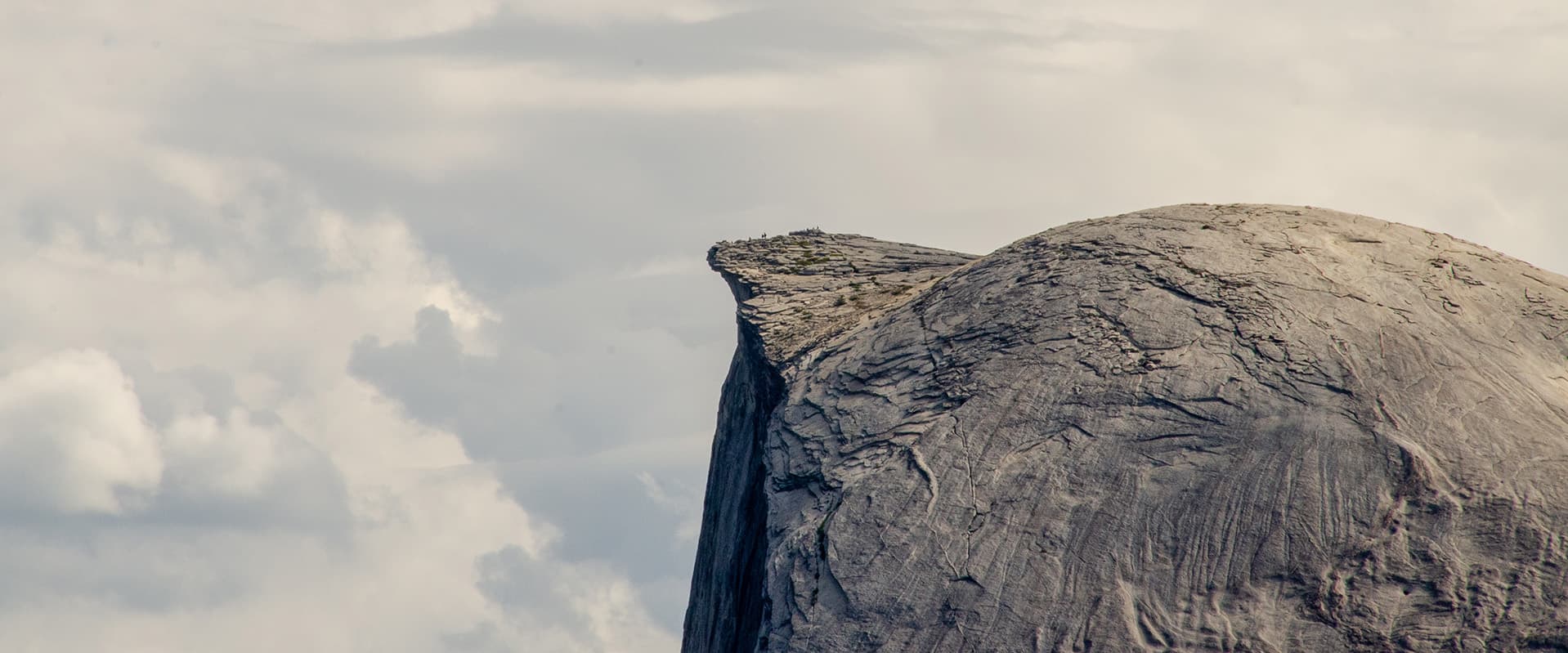
Photo by Colin Hoogerwerf
Description
In this episode of Language of God, Colin Hoogerwerf and Jim Stump sit down in Oxford, England with writer, veterinarian, barrister, and philosopher Charles Foster to explore a provocative idea at the center of his newest book, The Edges of the World: that everything truly significant happens at the edges.
From the margins of geography and culture to the borders of science, religion, and human consciousness, Foster argues that creativity, transformation, and spiritual insight emerge not from comfortable centers of power, but from places of uncertainty, encounter, and risk. Along the way, the conversation ranges widely through questions about why humans are drawn toward certainty and control, whether Christianity has lost its “edgy” character, and how science can become too attached to its own paradigms. The discussion also explores language, embodiment, morality, and whether modern humans have become disconnected from the physical world in ways that earlier humans—and perhaps even nonhuman creatures—were not.
Together, they reflect on Paleolithic hunter-gatherers, evolutionary biology, the Eucharist, modern scientific culture, and the role of language in shaping human consciousness. Foster makes the case that paying deeper attention to our embodied lives—to touch, scent, place, relationship, and the more-than-human world—may help recover something essential about what it means to be human.
Theme song and credits music by Breakmaster Cylinder. Other music in this episode by Full Frontal Audio, courtesy of Shutterstock, Inc.
- Originally aired on May 28, 2026
- WithColin HoogerwerfandJim Stump
Transcript
Foster:
The edge people are what we all are if we see ourselves properly. So if you rip the Armani suit off a Wall Street headhunter, you find an Upper Paleolithic bison Hunter underneath. When the centrist is lying in the hospice bed, his centrism is stripped off him, and when he’s on the edge of life, he knows that at some level, that that’s where he’s always been, that’s what he really is, that’s that the edge is the natural habitat of himself and everyone else.
I’m Charles Foster from the University of Oxford.
Hoogerwerf:
Welcome to Language of God. I’m Colin Hoogerwerf.
Charles Foster isn’t someone easily described in just a sentence, and I suspect he’d find that to be a compliment. He’s a writer of many books covering natural history, philosophy, theology, travel, law, and many other topics. He’s also a barrister and a veterinarian. And he’s a Fellow of the Royal Geographical Society, the Linnean Society and the International Society for Science and Religion. And ultimately, in all his pursuits he’s someone interested in trying to understand what it means to be human.
I interviewed him on the podcast back in 2022 about two of his books that came out around that time: Being a Beast and Being Human, both of which attempt to understand this question of what it means to be human, one very directly, and one by trying to better understand worlds different from our own.
For this interview, Jim and I had the delight of getting to sit down, face to face, in Charles’ home in Oxford, England, where we were passing through for some other events and conversations.
His most recent book is called The Edges of the World: The Margins of Life, Lands, and History. The book explores his realization that came over many years of travel and experience that, as he says, everything significant happens at the edges.
We’ll get more into what he means by that and what this idea of edges means for science and for Christianity and for our understandings of ourselves as humans.
Let’s get to the conversation.
Interview Part One
Hoogerwerf:
Well, Charles Foster, I’d say welcome to the podcast, but it feels a little backwards since we’re here at your house. So maybe I say thank you for having us.
Foster:
Great to see you both.
Hoogerwerf:
Let’s start here in Oxford, and I think we’ll make our way towards Edges and talk about your book The Edges of the World. But Oxford is kind of a center. I wonder if you can just help place us and our listeners here in this place geographically, seasonally maybe?
Foster:
Geographically, we are very near the center of Oxford. Just five minutes walk from the very ancient college of which I’m a fellow. Seasonally, spring has erupted. The first swifts have been seen over London. Hopefully, they’re going to be screaming over Oxford skies in a day or two.
Hoogerwerf:
What about this place as a historical place or what it means for the world or the country? What is Oxford?
Foster:
Oxford is an old university. Not the oldest in Europe. Founded by refugees from Paris, probably. But it has become a center of, at its best moments, enlightenment, skepticism, and in its worst moments, a center for enlightenment, desiccation and fearfulness. And the affirmation of old, tired, creaking orthodoxy.
Stump:
How did you find yourself to be here?
Foster:
I was working for many years as an advocate, a trial lawyer doing cases involving medical ethics. These were often tragic, heartbreaking cases with lots of human interest, things like the withdrawal of life-sustaining treatment. And I became frustrated that I had very little time to look at the fascinating ethical conundrums which were being thrown out by everyday business. And so I retreated to Oxford to give me the time and the mental space to look more seriously at those questions. And those questions have taken me down all sorts of avenues, some of which we might wander down together in the course of our conversation this morning.
Hoogerwerf:
So you’ve written this book, The Edges of the World: At the Margins of Life, Lands and History. It sounds like the book was kind of a slow percolation of experiences crossing borders, literal and metaphorical. Can you say something about how the book came together, where it came from? And then why it felt like you had to look at it more directly?
Foster:
It came about because I increasingly realized that nothing interesting or significant had ever happened at the center of anywhere, whether that’s a geographical center or a metaphorical center. It seemed to me that everything which was seismic in the world happened at the edge of community, often at the edge of life. Certainly, at the edge of orthodoxy.
The classic example of that is the Christian story. Where, if the Christians were right, did the salvation of the cosmos happen? On a hill, outside the great cult center of Jerusalem. And the more I looked at it, the more that seemed to be a general principle. In order to make any progress in the sciences, you’ve got to stray outside the canonical ways of looking at it. In order to make progress in religion, like the great heretic Pharaoh Akhenaten, you’ve got to move away from the great cult center in themes and start a completely new city in the middle of absolutely nowhere. So far as evolutionary innovation is concerned, by definition that can’t happen at the center of a population, at the center of genetic orthodoxy. It has to happen at the edge of a population, and very often at the edge of a landmass.
And so this book turned into a collection of edge stories, which morphed into a conviction that edges were the web and the weave of the cosmos. And certainly, the web and the weave of all human creativity.
Stump:
I’m trying to think of counter-examples to toss back and that nothing interesting … What did you say?
Foster:
Interesting or significant.
Stump:
Interesting or significant happens in a center. And wonder then how much edge is taken completely literally, or any time something is interesting, there must be an edge involved somewhere that may not be geographical, it may not be cultural. Or there intellectual edges, too?
Hoogerwerf:
Art and music in city centers.
Foster:
Of course, yes. So one of the criticisms which could be made of this book and has been made of this book is that it’s a compendium of category errors. That it is ludicrous to say that the edge of a landmass is the same sort of thing as the edge of an idea. To which my answer is we are necessarily metaphorizing creatures. We can’t conceive of ourselves or anything in the universe in anything other than a metaphorical way.
So it does seem to me that it’s legitimate to talk in the same sort of language about the edge of a concept and describe what happens there as it is to talk about the edge of a genetic population, for example, to describe what happens there. And as I looked at those various sorts of edges, I did, this might seem like special pleading, but I did seem to see that the same sorts of things were happening there. And that gave me some sort of reassurance that I wasn’t barking completely up the wrong tree.
Hoogerwerf:
You waited until the end to talk about the center really directly, so I’m going to flip that here. But what is the center? Here’s my biggest question. Is the center conscious of itself?
Foster:
The center is highly conscious of itself, it’s not conscious of anything else. And that is the great spiritual danger of being associated with centers. So the center believes that nothing other than itself generates anything worth having.
The ultimate center is the self. And anyone who has any sort of insight into themselves, and certainly anyone who has read the Christian story, knows the dangers of inhabiting one’s self and one’s self only. And another very good example of a center is of course the black hole, which sucks everything into itself and destroys everything which it attracts. So ultimate centers are very dangerous places, physically, metaphysically.
Hoogerwerf:
There’s also a kind of paradox here, which is that the center wants to erase the edges. But by doing that only creates new ones. To have edges, you have to have a center. Is this just a paradox we have to accept?
Foster:
It’s a paradox we have to live with. But yeah, there’s a great war that the center forever has waged against the edges. By and large, it’s been unsuccessful and I think the reason why it has been unsuccessful is because we are quintessentially edge people.
So one of the ways in which we can describe our quintessential edginess is by looking at our history as humans. Depending on how you do the calculation, between 85 and 95 percent of our time as behaviorally modern humans has been spent as wandering hunter-gatherers. They by definition don’t have centers. Every step they take takes them over a different edge. Yes, there are a few times in a typically hunter-gatherer’s year where they will come together as parts of a bigger clan to celebrate at something like Göbekli Tepe, or whatever it is. But by and large, the hunter-gatherer, which is the model for all our life when we’re really thriving as human beings, is one of constant edge crossing. There is a new world entered with every step, with every moment.
Stump:
Is that everybody? When you say we’re quintessentially edge people, I’d love to think that the three of us sitting around this table are. But when you look across the masses of humanity today, are the edge people the prophets, the artists?
Foster:
The edge people are what we all are if we see ourselves properly. So if you rip the Armani suit off a Wall Street headhunter, you find an upper Paleolithic bison hunter underneath. And that thought gives me hope. It’s not so hard for us to restore our default settings. And there are moments in our life, some of the moments which I describe in this book, moments of great tragedy, moments of great pathos, when even the centrists are forced to acknowledge what they are. When the centrist is lying in the hospice bed, his centrism is stripped off him. And when he’s on the edge of life, he knows that at some level, that that’s where he’s always been. That’s what he really is. That’s that, the edge, is the natural habitat of himself and everyone else.
Hoogerwerf:
Let’s talk about religion and specifically Christianity as an edge place. And I wonder if you can start by talking about Jesus as an edgy kind of guy?
Foster:
Well, the story of Jesus’ childhood is a story of peregrination, isn’t it? Of incessant wandering, of refugee status. Of moving from the great centers. And it was famously commented on by Nathaniel, “Does anything good come from Nazareth,” where he came from. The ultimate, dowdy, provincial place which means nothing in the great imperial scheme of things. “Foxes have holes, birds have nests, but the Son of Man has nowhere to lay his head.” That is a description of the hunter-gatherer life. That’s a description of what, I contend in this book and in other books, is the basic human condition.
And whatever you say about Jesus of Nazareth, he was somebody who ruffled the feathers of those complacent centrists in the temple in Jerusalem. Upset the great imperial powers of the day who looked to Rome. Whose followers were people who would be frowned upon by most of the well-dressed, well-scrubbed Christians of today. They were ragtag people. They were people who led their dogs on metaphorical strings around the world. And the Christian culture, as you’ve said, for at least the first couple of hundred years, was a dramatic counterculture. The tragedy of Christianity is that, in many ways, it has become assimilated with the culture which it exists to be a reaction against, which it exists to interrogate, which it exists to undermine.
Hoogerwerf:
Could Christianity be an edge place again?
Foster:
Hope so. And there are plenty of movements which suggest that it must and suggest ways in which it can be. All that said, institutions are important. And the trick of an institution being a good and functional institution is that it remains edgy. And that’s a really difficult thing to do.
So I think there are great examples of edgy Christian institutions. One great edgy institution is the Eucharist. You can’t get edgier than a ritual blood feast, a piece of liturgy which involves cannibalism. If we could talk in that sort of language about what we do in church, we would be reminded, as millions of Christians are indeed reminded every time they put up their hands for the Eucharist, that this Christianity business is a seriously edge thing.
Hoogerwerf:
I wonder too if there’s a warning here. That those of us who are trying to be the counterculture, to be edgy, that that often is colonized by the center. That what the early church did became enclosed by the center and that that will always happen.
Foster:
There’s always a danger that it will happen, yes, and there are plenty of deeply depressing examples throughout Christian history of exactly that happening. But yeah, it’s not inevitable.
Stump:
You can ask that going from the opposite direction too, where the edge is relative to something else that I would guess there’s a way of seeing Christian nationalists as being edgy compared to the centers that they’re rebelling against in some way.
Foster:
Right. Your listeners can’t see me nodding and can’t see the reluctant smile on my face when I say that. But yes.
Stump:
So not all edges are—
Foster:
So not all edges are good. Right. In saying that everything happens that has significance on edges, that includes bad significant stuff, too. Yes, you get the great artists, and poets, and theologians and kind people on the edge, but you also get the perverts and pornographers, and you get extravagant cruelty on the edges as well. So my point is not that edges are good. My point is that edges are where it happens. Good stuff as well as bad stuff.
Hoogerwerf:
Yeah. Okay, let’s shift then. Let’s talk about science now in the same kind of idea. In which ways does science fit as an edge place? Because I know science is always striving to understand what’s beyond an edge, that’s maybe its sole purpose. But it’s also a discipline that is, at least maybe in modern culture, we think of as solving mysteries, reducing uncertainty. And the institution of science has become one that feels like it has a strong, powerful center to it. So in what ways do we think about how science as a discipline at its best is an edge discipline and how it has become something else?
Foster:
Yeah. So I think the problem with science is that it is an insufficiently enlightenment discipline. So the enlightenment was supposed to be a movement of freedom from the old, suffocating ways in which people were forced to see the world. It was supposed to free inquirers and make no question illegitimate.
The tragedy of modern science, particularly biological science, has been that science has become essentially a religious fundamentalist non-discipline. It has become over-enamored of its old certainties. It has a credulous faith in the adequacy, for example, of the neo-Darwinist paradigm. Which is failing in a number of very obvious ways and it is so fearful of leaving the comforting center in which it exists that it doesn’t ask the really important questions which will drive science forward. It doesn’t look at the outliers, which are where all really exciting questions are generated and where all new answers are going to be found. Why? Because it’s scared. It doesn’t want to abandon its old certainties.
So a classic example of that is the ritual lynching of the biologist Rupert Sheldrake, who had the audacity to suggest that there might be new ways of looking at causation in the natural world, ways represented by his theory of morphic resonance. The then editor of Nature, a great journal, Sir John Maddox, funded that in the book which Rupert Sheldrake had written he’d never seen anything which justified burning so much. He used exactly the language which the Pope used to denounce Galileo, the language of heresy.
If you’re a proper enlightenment skeptic, nothing by definition is heretical. The only thing which is truly heretical is to say that something is heretical. And I see exactly that fearfulness in a number of my scientific colleagues here in the University of Oxford. They are comfortable in their labs, they’re comfortable within their paradigms. As soon as they leave their laboratories and they come into the real world, they abandon those comforting certainties. They know when they see their children and their wives, that kin selection and reciprocal altruism and group selection are not adequate explanations for what they feel about those people. They know that when their dog looks at them, the dog has a sort of consciousness akin to their own, which they’ve spent the whole of their 9:00 til 5:00 day in the lab denying is possible. This sort of schizophrenia makes for unhappy people and unhappy science.
Stump:
The way you’ve described this fits very well with the sort of standard center explanations in the philosophy of science, start with Thomas Kuhn. You used the word paradigm a little bit ago and he introduced normal science as working once we have a paradigm that’s settled. And there are various little anomalies, but it’s the paradigm shift that’s the edgy business of that. But is there some sense in which scientists so groping toward understanding the cosmos settled on the heliocentric paradigm that became the working model and ought not be discarded too quickly? Or just because there’s an anomalous experience of some sort, does each anomaly force me to toss out the paradigm?
Foster:
Not to toss it out, but to interrogate that paradigm fearlessly. I think there ought to be written into the job description of all university scientists, “My objective is to destroy the existing paradigm if at all possible.”
Stump:
I like it.
Foster:
I think that would solve a lot of problems.
[musical interlude]
Interview Part Two
Hoogerwerf:
So earlier this week, we had a chance to go see some of the old stone circles north of here, the Rollright Stones. And the Holy Well just around here, Saint Margaret’s. And the church built in the 1200s. And we saw this progression for how humans have approached this sense of mysterious, or maybe the sense of a divine presence over time. And in your book and in previous ones, you’ve talked about the ancient people, particularly the Paleolithic period, who understood these edges perhaps in a way that we’ve lost. What was it about that time in history that allowed people to cross those boundaries more freely?
Foster:
Well, I think there are many, many things. First was the fact that the boundaries between them and that which was not them, the non-human world, were more porous than ours are. So the whole business of moving from the upper Paleolithic hunter-gatherer mode of being to the Neolithic mode of being was a reduction in porosity. It was a hardening of the carapace separating us from the non-human world. One can over-romanticize and I’m guilty of over-romanticizing I think in Being a Human. It was a book in which I set out this thesis.
But there was a great deal more commerce between the non-human world and the human world in that phase. And that meant that we had a larger experience of ourselves, our self included, or at least was in a constant ecstatic conversation with that which wasn’t ourself. So we were by constitution, nature mystics.
One element of that I think is a simple sensory fact. They were more sensorially switched on than we are. They used more of their senses and therefore accumulated a lot more data about the world. So we, by and large as modern humans, choose to use only one of our five senses, our vision. And our vision is connected to our cognition in a disastrously distorting way. But if I choose to use any one of my five senses, that means that I’m construing the world just on the basis of 20% of the available information. If I make decisions about relationships or finances based on just a fifth of the available information, I will be bankrupt and my relationships will be deeply dysfunctional. Yet, that’s what we’re doing in relation to the whole world.
So I have no idea really about what kind of place the world is. No wonder I don’t feel at home in it. I think that was much less the case in the upper Paleolithic phase. We had a greater bandwidth because we were more sensorially switched on. We had more information about the sort of place the world was and therefore, we felt more at home in it, were able to broker a more satisfactory relationship in it than modern humans are.
So one way of trying to undo some of the dysfunction of the last 45,000 years or so is simply to touch this table and be aware that I’m touching the table. Or be aware that, as you’re sitting in this malodorous kitchen to which you’ve come, there are loads of scent molecules pouring in all the time through your nose which, until I drew your attention to it, you’re not aware of. Then you would inhabit this kitchen, I don’t recommend it, but you’d inhabit this kitchen but much more intensely. Much more, to use a pompous word, epistemically satisfactorily than you normally do. You would know this kitchen better than you do, and we can do that with the whole world better than we do do.
Hoogerwerf:
Is there any argument to the fact that, because the modern world has a more powerful center than at that time, that the edges become more interesting? Is it edgier to be edgy in the modern world?
Foster:
Well, I think the centers have become more powerful, you’re right. And in looking at those centers, I think lots of modern people are increasingly saying, “Whatever that represents is not us.” And so I think that the power of those centers is calling people increasingly to realize what they themselves are, i.e. edgy people. And that, again, is a cause for hope.
So the center overreaches itself, the center boasts too extravagantly about itself and that, I think we can see politically and sociologically throughout the world, is backfiring on the center, isn’t it? That is one way of looking at the whole populous movement, for better or for worse. But there is a rejection of elites, some of that rejection has produced bad stuff. But a lot of that rejection produces hopeful stuff as well.
Hoogerwerf:
So last I interviewed you, we had a chance to talk while Jim was on sabbatical. Maybe even deep in a cave in Spain somewhere, looking at ancient cave art. And while he was gone, I had a chance to really make my case about this long argument we’ve had. I’m not sure it’s even an argument as much as an exploration that maybe just comes from a different intuition. I think the best way to say it is that I tend to want to find sameness between humans and the non-human world, and Jim wants to find difference.
Stump:
I don’t even know that I’d say I want to, but I see the differences.
Hoogerwerf:
Notice it. It’s a difference of attention. So now that Jim’s here, I feel like we can have a more fair playing ground, so I’ll get you talking about this.
Stump:
So I think the first question to bridge from what we’ve been talking there is are other species edge species?
Foster:
Well, it is certainly true, as we’ve discussed a little bit already, that the whole process of evolution, the whole process therefore of the generation of variegation in the natural world is necessarily an edge process. The whole process of sexual reproduction is the process of crossing the boundary of oneself, or one’s gametes crossing the boundary of one’s self. Getting impregnated in a body which is different than you. So the whole way in which the natural world appears to be geared up is a way which encodes edginess necessarily.
And I argue in this book that that is just one example of edginess being, as I put it, the web and the weave of the whole cosmos. It’s just one specific example of a general principle, which is that edges are where it’s at. So I wouldn’t distinguish in terms of edginess between humans and non-humans, I think that we are, humans and non-humans, are necessarily creatures generated by and characterized by edginess. We’re all poised on the edge of eternity, aren’t we? We’re all mortal creatures. That’s one edge on which we vertiginously stand all the time. So we share edginess with them. The fact that we share edginess with them doesn’t mean that we’re the same.
Stump:
It seems to me that our capacity for culture, which is not entirely unique to humans, there are hints and precursors of culture that we find in songbirds, for example, and in whales and such. But the kind of culture that we developed seems like an accelerator to centers and edges in a way that makes the human experience of edge versus center so much more pronounced than you would find anywhere else. It’s outside of those very biological instances of procreation and evolution over this very long timescale. But within the lifespan of an individual, does the existence of culture in the human species magnify this edge versus center?
Foster:
Well, it magnifies it in the eyes of humans who are capable of seeing it, but I don’t know what culture really means for a newt or a whale. I don’t imagine that a newt would get a lot from looking at Michelangelo. I’m not sure that Michelangelo would get a lot from looking at whatever culture means to a newt.
So this sounds really rude, but I don’t find this a very fecund conversation simply because I don’t know what it means to talk about the culture of non-humans. I don’t share sufficient language with them to be able to begin a meaningful discourse about this.
Stump:
So let me try another tack. Language.
Foster:
Yeah.
Stump:
Of course, everything communicates. Language in the symbolic sense that has pulled us into another dimension. So one of my go-to philosophers of a century ago, Ernst Cassirer, has written significantly on the philosophy of symbolism and such. And one of the passages I use from him all the time is that, “Linguistic creatures live in a different world,” because our interaction so much is not with the physical realities. And this is part of what I see you consistently trying to draw us back to is living in the physical realities, as opposed to many of us spend most of our day sitting in front of a computer screen and we’re not attending at all to the physical realities.
Foster:
Right.
Stump:
We’re attending to the symbols that come out of there that pull us into a different world. And in my view, that ends up pulling us also into the world of morality, where there are aspects of our lives that we would say are morally praise-worthy or blame-worthy. That I don’t see the same sorts of actions even that I would assign to other creatures, moral praise-worthiness or blame-worthiness.
And it seems to me that, so the comment you made just there is, “Well, maybe there’s some analog to that in their world that I don’t see.” In the same way that my dog or a squirrel doesn’t even notice the moral dimensions of our actions, is there some dimension in their world that I don’t even notice that would be an analog, is that the position?
Foster:
I suspect that there is some analog for moral conduct in the world of a newt. I don’t know what it would look like.
Going back to your mention of language. It seems to be that, by and large, language is a catastrophe and inhibits us as moral animals and as cultural animals. It makes us, as you’ve described, creatures who live paying attention to the abstractions which we create for ourselves through language, which is necessarily a self-referential and often a self-reverential process.
Even in our ordinary relationships with human beings, very little of what really matters is communicated by language. As we’re sitting across this table, most of the relationship which is happening is not happening through our words, it’s happening through the tides of pheromones that are surging between us. It’s happening when I look at your faces and see the tiny cues which are being sent out.
So real relationship is embodied in a way which language is not, and in a way which language often destroys or contradicts. So is the moral life, is the cultural life of a non-linguistic organism inferior to that of an organism who mediates those domains through language? Quite the opposite, I’d have thought.
Stump:
And I wouldn’t claim at all inferiority. I’m, again, primarily interested in noticing the difference and where that difference came from. So for any of these capacities that I would hold up and try to say, “But look at what humans do in this regard,” I think there’s an evolutionary story to be told about that, and that we see hints and precursors of that in lots of other species. But that it’s become something so remarkably different in the human context is not a claim at all of, “And therefore, we’re the best.”
Foster:
Right, right. Language is certainly useful for lots of stuff. But it’s useful for things which, by and large, don’t correspond in any meaningful way to the things which I value. It’s useful for coordinating hunting. It’s useful for political life in various ways. But it’s nothing like as good as physical affection or other embodied expressions for telling my children that I love them.
We’ve mentioned Michelangelo. The language in which, language and inverted commas which Michelangelo spoke in inverted commas about the human form in his sculptures is, to my mind, and my eye and my soul hugely more powerful and affecting than the description of the human body or soul by the greatest linguistic artists.
So I think that one of great battles for culture and therefore for morality is to reinstate the priority of embodied experience. Yes, as incurably linguistic mammals, language forms a part of that embodiment, but it shouldn’t be drafting all our agendas as it tends to do. We need to have a more embodied attention to the world which involves, as we’ve discussed already, using far more of the senses which are available to us. And it involves often prioritizing the insights that we get from embodied experience over those which are cognition, are linguistically associated cognition and so more important.
And I think if that happened, we would be kinder people, we would be more spiritual people. I don’t think it’s an accident in the Christian story that we’re told at the most holy times to do physical stuff. We’re told to eat bread and drink wine. The whole process of incarnation is an affirmation of the material and inherent in that is a de-prioritization of the abstract. We’ve all seen what happens in the Christian religion if everything gets reduced to proposition. Kindness gets diluted. Theology gets misrepresented. This is why I’m a member of a sacramental church, rather than one which insists that mere assent to a set of propositions and a creed is really what Christianity is all about.
Stump:
One more metaphor. To be alive, to be an individual organism is, in some sense, to have a boundary. So starting even with a singular cell that has a membrane that separates what’s me from everything else, these senses you’re talking about now are these remarkable ways that self can figure out what’s going on outside and some of that has to be brought into me to sustain me. And I need to know what the good things are and what the bad things are.
And part of what I’ve been trying to work with is then to see, in our spiritual journey, that I draw increasingly wider boundaries to take more, to widen my circle of concern. That there are very powerful evolutionary drives to recognize who are my people versus who are those people. And somehow, the spiritual journey, becoming more morally mature is to take more and more into, “This is all part of us,” and ultimately we might see all of creation in that sense.
And whether we as humans—So when I harp on this moral responsibility, that’s a two-edged sword. We might be the most morally blame-worthy creatures for what we have done, but we have the capacity, and you made a mention of this a little bit ago, that even institutions and organizations can function in these positive ways that might extend our capacity to care for more, to love a neighbor at a much larger scale than I as an individual could. And there again, I wonder whether language and culture are pretty important accelerators of our capacity to care, to love a greater circle. Does any of that have purchase with you?
Foster:
Yeah, I agree with all of that. One of the great disasters is faith individually and corporately is the phenomenon of atomism, isn’t it? And to see ourselves as islands with no real connection with anything else. It leads in the realm of ethics to a prefacing for autonomy over everything else.
Now, that’s not the way the real world works. It’s not the way that evolution has progressed. The more we understand about the evolutionary process, the more we realize that far from the primacy of the selfish gene, community and cooperation are potent drivers in the generation of biological complexity. If I look at my own life and try to describe myself, I find it increasingly impossible to describe Charles Foster, except in terms of the nexus of relationships in which I exist. Take that nexus away and I’m not just wretched and miserable, I cease to exist.
And in theology, all of this is reflected, I suppose, by a proper ecclesiology. I can exist as a Christian only as part of a body, an insight which tends to get lost, I have to say, Protestantism. So the cult of the individual, the cult of pietism, the assumption that what really matters is my and my only relationship to God has done our spiritual lives tremendous harm. It’s not just a Protestant phenomenon, but it has a particularly toxic manifestation in lots of iterations of Protestantism.
So yes, I am biologically part of a wider community, I am psychologically part of a wider community, I’m theologically part of a wider community and I’ll be happier and more functional if I recognize that all of those are the case.
Hoogerwerf:
It seems like maybe we’ve come to another edge with this conversation. And like all good edges, it’s that it’s less of a stopping point and more of a place to keep thinking and paying more attention. Thank you, Charles, for spending some time with us.
Foster:
I’ve enjoyed our conversation very much. Thank you.
Stump:
Thank you.
Credits
Language of God is produced by BioLogos. BioLogos is supported by individual donors and listeners like you. If you’d like to help keep this conversation going on the podcast and elsewhere you can find ways to contribute at biologos.org. You’ll find lots of other great resources on science and faith there as well.
Language of God is produced and mixed by Colin Hoogerwerf. That’s me. Our theme song is by Breakmaster Cylinder. BioLogos offices are located in Grand Rapids, Michigan in the Grand River watershed. Thanks for listening.
Featured guest
