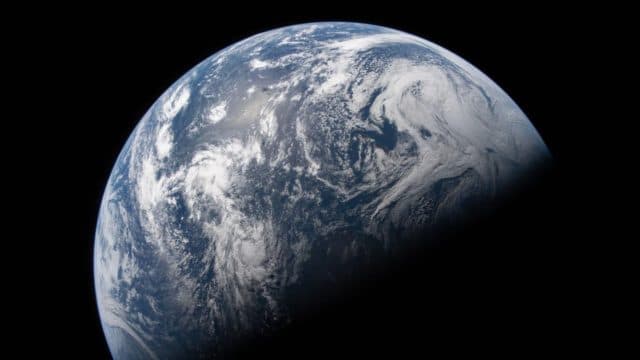
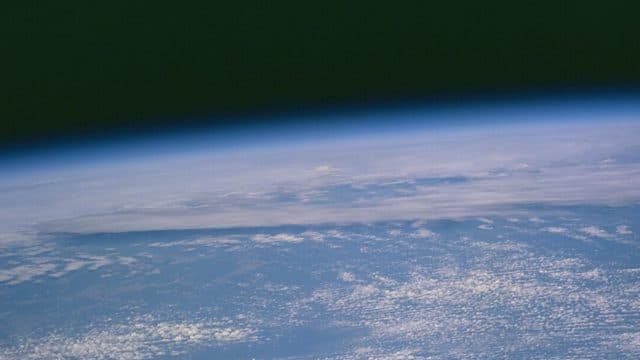
This truth is confirmed in the first line of the Apostles’ Creed, one of the ecumenical creeds of the church which many Christians recite every week: “I believe in God, the Father almighty, creator of heaven and earth.” Christians believe that God created all things from nothing, bringing them into being through his Word, his Son (John 1:1-3). God continually sustains the whole universe, governing all creatures according to his providential care.
The God who created this world also reveals himself to humanity.
God has revealed himself at various times and in multiple ways throughout history, including the written Scriptures and the Incarnation. As it says in the first verses of the book of Hebrews,
In the past God spoke to our ancestors through the prophets at many times and in various ways, but in these last days he has spoken to us by his Son, whom he appointed heir of all things, and through whom also he made the universe. The Son is the radiance of God’s glory and the exact representation of his being, sustaining all things by his powerful word. After he had provided purification for sins, he sat down at the right hand of the Majesty in heaven. (Hebrews 1:1-3, NIV)
The God who created this world is also our Redeemer.
We belong to God because he created us, but when humanity turned from God he bought us back. He redeemed us through the incarnation, life, suffering, death, and resurrection of Jesus Christ.
The Bible is authoritative and sufficient for salvation.
God inspired its human authors and ensured that the Bible truthfully teaches what he intends. The Holy Spirit testifies in our hearts that the Bible’s message is from God, not merely human writing. Christians accept the sufficiency of the Bible for establishing our core beliefs and practices; all that we need to know for salvation is taught there. God certainly can use various means— including the natural world—to teach us new things. But these new things should be compatible with, not contradictory to, what God teaches in Scripture.
God is sovereign over all realms of human endeavor and has given human beings special abilities and responsibilities. Theologian Cornelius Plantinga puts it this way:
God’s creation extends beyond the biophysical sphere to include the vast array of cultural possibilities that God folded into human nature. . . . God’s good creation includes not only earth and its creatures, but also an array of cultural gifts, such as marriage, family, art, language, commerce, and (even in an ideal world) government. The fall into sin has corrupted these gifts but hasn’t unlicensed them. The same goes for the cultural initiatives we discover in Genesis 4, that is, urban development, tent-making, musicianship, and metal-working. All of these unfold the built-in potential of God’s creation. All reflect the ingenuity of God’s human creatures—itself a superb example of likeness to God. – Cornelius Plantinga, Engaging God’s World, 2002.
Applying this idea to the natural sciences, we conclude that God has graciously given humans the ability and responsibility to study the natural world systematically. As with all human endeavors, we do it imperfectly. We must seek to do it as God’s image-bearers, in gratitude for God’s gifts.
Debate the Weather?
Now imagine that debates arise about what should be taught in schools about the weather. Imagine that prominent scientists write popular books about meteorology that state, “From our scientific understanding of the causes of wind and rain, it is clear that no divine being controls the weather.” Imagine that a professional organization of science teachers writes a set of guidelines that state, “Students must learn that all weather phenomena follow from natural causes; weather is unguided and no divine action is involved.” Meanwhile, other people insist that these scientific explanations of rain and wind must be wrong because the Bible clearly teaches that God governs the weather. These people write books and give public speeches saying, “Atheists have invented their godless theories about evaporation and condensation. But we can prove that their so-called scientific theories are false and that the Bible is true.” They go to churches and teach, “If you believe what these scientists are saying about the causes of wind and rain, then you’ve abandoned belief in the Bible.” They petition school boards and courts to require that science classrooms also teach their “storehouses” theory of the weather as an alternate explanation to evaporation and condensation.
If you lived in a world with that sort of debate going on, would you be content to see it simply as a conflict between science and religion? Would you be willing to agree wholly with one side or the other?
Fortunately, we don’t have such debates about what causes the weather. The majority of Christians say that when it comes to the weather, both science and the Bible are correct. God governs the weather, usually through the scientifically understandable processes of evaporation and condensation. And the majority of atheists today would also agree that having a scientific explanation for the weather, by itself, neither proves nor disproves the existence of God. So there are no court battles about what science classrooms should teach about the weather. Debates about creation, evolution, and design have some similarities to the above example, but in many ways they are more difficult. The questions about how to interpret Scripture are more challenging, and these debates raise more theological issues. Still, a good place to start in making sense of these debates is to remember that more than two options exist; it is not simply a choice of science or faith.