What is the Evidence for Evolution?
This article summarizes multiple independent lines of evidence that evolution is the best scientific description of the process by which life has diversified.

istockphoto.com/Wicki58
Evolution is a scientific theory supported by an overwhelming amount of evidence. Some Christians fear that accepting the theory means rejecting God as creator. But that just doesn’t follow. Christians accept scientific theories about the weather, the formation of mountains, and even the conception and development of individual human beings while still acknowledging that God is the creator and sustainer of these things. So giving a scientific description for a process does not rule out a legitimate theological description of the process as well. This article summarizes multiple independent lines of evidence that evolution is the best scientific description of the process by which life has diversified. Think of each of these lines of evidence as a clue to the past, all of which together form a compelling picture of the relatedness of all species.
Forms and structures point to common ancestors
When we examine the bodies of today’s animals in detail, we find some remarkable similarities. For example, the skeletons of four-limbed creatures (what scientists call “tetrapods”) are only slight variations on the same body plan. The bones are longer in some animals, and in others they are fused together, but they are arranged in the same pattern. Skeletons don’t have to be this way for animals to function, and in fact they result in some inefficiencies (how many people do you know with lower back or knee problems?). But this is the sort of pattern we would expect if the body plans of tetrapods changed slowly and diversified over many generations.
We can also look at the bodies of animals today and find features that are similar to what other animals have, but which no longer seem to function (or have different functions). Scientists call these vestigial traits. Some classic examples are non-functioning eyes in blind cave fish, the hip bones on whales, and leg bones buried in the muscles of some snakes. In our own bodies, we can point to the appendix, wisdom teeth, goosebumps, and many other features. These are more clues that today’s animals have a history that extends back to ancestors that were quite different.
Read More About This Topic
- What Does It Mean to Have “Common Ancestry”?
- Common Descent Vs. Common Design
- What Is Genetic Evidence for Human Evolution?
- Testing Common Ancestry
The fossil record reveals intermediate species
If the theory of evolution is correct in its claim that today’s animals can be traced back to common ancestors in the past, it is reasonable to expect that there should be some record of these ancestors in the fossil record. It is often claimed by those who deny evolution that no “intermediate” fossils have ever been found that support the theory’s claims. This just isn’t true. Fossils can’t prove that one species evolved from another, but when we find a succession of them over time with slight modifications, it is difficult to deny the appearance of evolution.
Consider the record of whale evolution that has been preserved in fossils. In just the past few decades, paleontologists have found a remarkable succession of fossils. The oldest known whales, including Pakicetus from around 49 million years ago, looked like land-dwelling mammals but had ears similar to those of modern whales, suggesting adaptations for hearing under water. The slightly younger Ambulocetus shared these ear traits and had feet that were expanded for swimming. Similar species like Maiacetus and Rodhocetus appear later on with feet and spines adapted for more specialized swimming modes. By 40 million years ago, whales like Dorudon and Basilosaurus were fully aquatic animals with a powerful tail that moved up and down through the water during swimming (rather than side to side as in fish) and rudimentary (but fully formed) hind limbs that could no longer support the body on land.
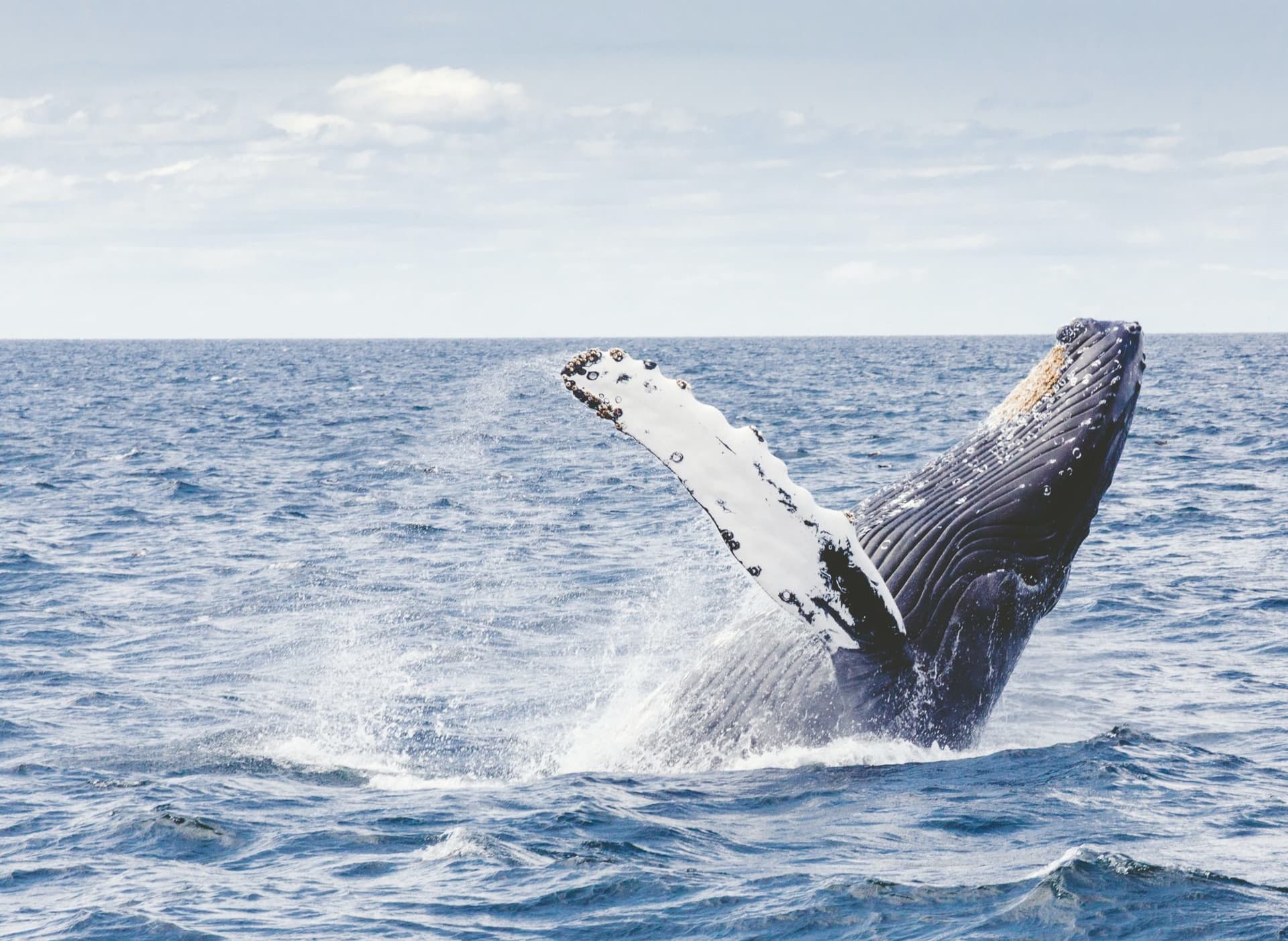
Photo by Thomas Kelley on Unsplash
Of course we don’t have fossils of every species that lived (fossilization is a very rare event). But there are now thousands of fossil specimens—in the whale lineage alone—that fit into this pattern. These include over 60 different species. And closer to home, there are patterns found among the fossils and artifacts in our own lineage that show a transition from four-footed to upright bipedal walking, increase in brain size, and the use of ever more sophisticated tools. The Hall of Human Origins at the Smithsonian Museum of Natural History reports there are now fossils representing more than 6,000 of these “intermediate” individuals.
Read More About This Topic
- What Does The Fossil Record Show?
- The Human Fossil Record
- Does the Cambrian Explosion Pose a Challenge to Evolution?
- Fossils: A Window to God’s Creation
Biogeography predicted by evolution
The theory of evolution predicts patterns of species not just over time in the fossil record, but also in the distribution of species today around Earth—the study of which is called biogeography. The differences between species on islands compared to mainlands provide a compelling example of evolution. Because islands provide isolated habitats where there is little chance of interbreeding with mainland species, evolutionary theory predicts that differences will accumulate and new species will evolve.
The Hawaiian Islands emerged from volcanoes in the middle of the Pacific Ocean, and they are Earth’s most isolated island chain. Before human migration, the only species on the island must have travelled great distances in rare events. After arriving, they adapted over many generations in isolation from their mainland counterparts and in different conditions. This promoted their evolution into new species. So today we find in Hawaii many species of birds, insects, and plants that are found nowhere else on Earth, but are distant cousins of mainland forms.
Other islands were once connected to continents but have moved away because of plate tectonics. In the case of Madagascar, the island was originally connected to the massive landmass that would become South America, Africa, and Australia. At that time species were able to freely inhabit it. But the Indian subcontinent (including Madagascar) broke away about 135 million years ago, and Madagascar separated from it about 88 million years ago, leaving the island isolated in the Indian Ocean. Species we find there today, like lemurs, are found nowhere else in the world, but can be traced to common ancestors on the mainland, dating from a time when the land was close enough for ancient primates to cross the water and then become isolated. Just as God created the islands themselves through natural processes, the species we find on those islands were also created through natural processes we can explain.
There are many other examples of the distribution of species today that fit the pattern of common ancestry (see ring species for another intriguing example).
Read More About This Topic
- How Darwin Developed His Theory
- Evolution & the Orgin of Biological Information
- Biological Evolution: What Makes it Good Science?
Genetics removes all reasonable doubt
The relationships between species inferred from biogeography, the fossil record, and the shapes and structures of animals today now have their most impressive confirmation from the recently developed field of genetics. If we never find another fossil or vestigial trait, genetic evidence puts common ancestry beyond reasonable doubt. Every organism shares the same genetic code, and the pattern of shared genes we’ve recently discovered among species generally matches the relatedness we had concluded from the other kinds of evidence. Genetics, then, enables us to test and confirm hypotheses in a powerful way. Consider just one example from this rich area of research.
Unlike many other animals, we humans are not able to make our own vitamin C. We started realizing this deficiency when long sea voyages became more common. After a couple of months at sea eating only things like dried meat and hardtack biscuits, humans had high rates of scurvy (and many died). But the animals on board (like horses, dogs, and mice) did not contract the disease. We now know that this is due to the human inability to synthesize vitamin C the way these other animals can (and the problem was addressed by the British Navy by supplying their ships with lemon juice for sailors to drink).

The species at the bottom printed in red are unable to produce vitamin C.
By comparing the genetic codes of people and animals, scientists discovered that a specific gene is “broken” in humans, preventing production of one of the enzymes needed for synthesizing vitamin C. It has also been discovered that other primates—chimpanzees, gorillas, orangutans, and monkeys—cannot make their own vitamin C either. So that leads to a very specific prediction: if these primates are related to us through a common ancestor, we would expect the same gene to be broken in them in the same way. And it turns out, that is just what we find. The best explanation is that a mutation event occurred in the common ancestor of these species, rendering all of their descendants unable to make vitamin C.
Some people suggest that God had some reason for designing these species without the ability to make vitamin C, and so used a “common design plan” for them. But the problem is that there are a couple of other species on different parts of the “family tree”—notably guinea pigs and fruit bats—that also can’t make vitamin C. The common design explanation would predict that we’d find the same broken gene in them as the other mammals that can’t make vitamin C. The common ancestry explanation predicts these to be different mutations, because it would be highly unlikely for the same mutation to occur a second time. When the genetic codes of guinea pigs and fruit bats are examined, we find different mutations than the one primates have, which is what common ancestry predicts.
As genetic information has become more widely available in the last two decades, many more of these kinds of nested relationships among species have been found. Common ancestry explains the genetic evidence beautifully, while alternative explanations seem less and less plausible.
Read More About This Topic
- What is The Genetic Evidence for Human Evolution
- What is Genetics?
- Genetic “Scars”: Compelling Evidence for Human Evolution
- Fossils: A Window to God’s Creation
Conclusion
No matter what position a person takes on evolution, it is important to understand why almost all professional biologists affirm the evolution of all life on Earth. At BioLogos, we see God as crafting and governing the entire evolutionary process to bring about the abundance of species we see today. Of course it is possible that God supernaturally created each of the species separately, but did so in the pattern that so strongly suggests common ancestry. But doesn’t the natural order faithfully testify to its creator? The Psalmist believed it did: “The Heavens declare the glory of God; the skies proclaim the work of his hands” (Psalm 19:1). So too we believe that body plans, fossils, biogeography, and the genetic code all testify truly to the way God created.
We may legitimately wonder why God chose to create species in this long and meandering fashion, instead of snapping his fingers and having things appear fully formed. It’s worth remembering that God almost never accomplishes his plans instantaneously in the Scriptures. From Genesis to Revelation, God works with and through his creation, bringing his plans to fruition slowly and carefully. We are admonished many times in the Bible to trust in God and his ways, even if they do not fit our limited human ideas of what is optimal or most expedient. What seems to us to meander—in body plans no less than salvation history—reflects the providence of God.
Related questions
Did we help answer your question? Try these related questions for more:

Common Question

Common Question

Common Question


Common Question

Common Question
Related resources
If you enjoyed reading this Common Question, we recommend you check out the following:

Language of God
Janet Kellogg Ray | Woven and Rooted

Language of God
Sy Garte | Life’s Deeper Logic

Language of God


Language of God